Cookies help us display personalized product recommendations and ensure you have great shopping experience.

By using this site, you agree to the Privacy Policy and Terms of Use.
Accept
SmartData CollectiveSmartData Collective
  • Analytics
    AnalyticsShow More
    unusual trading activity
    Signal Or Noise? A Decision Tree For Evaluating Unusual Trading Activity
    3 Min Read
    software developer using ai
    How Data Analytics Helps Developers Deliver Better Tech Services
    8 Min Read
    ai for stock trading
    Can Data Analytics Help Investors Outperform Warren Buffett
    9 Min Read
    media monitoring
    Signals In The Noise: Using Media Monitoring To Manage Negative Publicity
    5 Min Read
    data analytics
    How Data Analytics Can Help You Construct A Financial Weather Map
    4 Min Read
  • Big Data
  • BI
  • Exclusive
  • IT
  • Marketing
  • Software
Search
© 2008-25 SmartData Collective. All Rights Reserved.
Reading: Moving to the Public Cloud? Do the Math First
Share
Notification
Font ResizerAa
SmartData CollectiveSmartData Collective
Font ResizerAa
Search
  • About
  • Help
  • Privacy
Follow US
© 2008-23 SmartData Collective. All Rights Reserved.
SmartData Collective > IT > Cloud Computing > Moving to the Public Cloud? Do the Math First
Cloud Computing

Moving to the Public Cloud? Do the Math First

paulbarsch
paulbarsch
4 Min Read
public cloud computing
SHARE

A manufacturing executive claims that many companies “didn’t do the math” in terms of rushing to outsource key functions to outside suppliers. Are companies making the same mistake in terms of rushing to public cloud computing infrastructures?

A manufacturing executive claims that many companies “didn’t do the math” in terms of rushing to outsource key functions to outside suppliers. Are companies making the same mistake in terms of rushing to public cloud computing infrastructures?

public cloud computingThe herd mentality—we know it well. Once a given topic (i.e. agile development, Hadoop “Big Data” implementation, etc.) becomes the darling of business and management publications, a gold rush usually follows to implement. Unfortunately, sometimes there isn’t much, or any, thought put into gauging enterprise fit or building a business case for the latest and most fashionable idea.

Take for example the concept of outsourcing. During the early 2000s, cheap labor rates in China and India caused senior managers to see dollar signs as they could cut labor costs nearly in half, while gaining a specialized workforce dedicated to developing and building products and/or servicing customers. 

More Read

cybersecurity and internet of things
Urgent Tips To Guard Against New IoT Cybersecurity Threats
5 Reasons You Should Consider Taking Analytics to the Cloud
IT Executives Taking Lead Role with Both Private and Public Cloud Projects: Survey
4 Certificates Data Security Enthusiasts Should Consider
Data And The Cloud: The 21st Century Lawyer

There was a catch however. When considering topics such as delivery lag times, transportation costs, loss of corporate agility, language and communication barriers and more, the so-called cost savings often failed to materialize.

“About 60% of the companies that offshored manufacturing didn’t really do the math,” says Harry Mosler, an MIT-trained engineer who runs the Reshoring Initiative. “They looked only at the labor rate, they didn’t look at the hidden costs.”

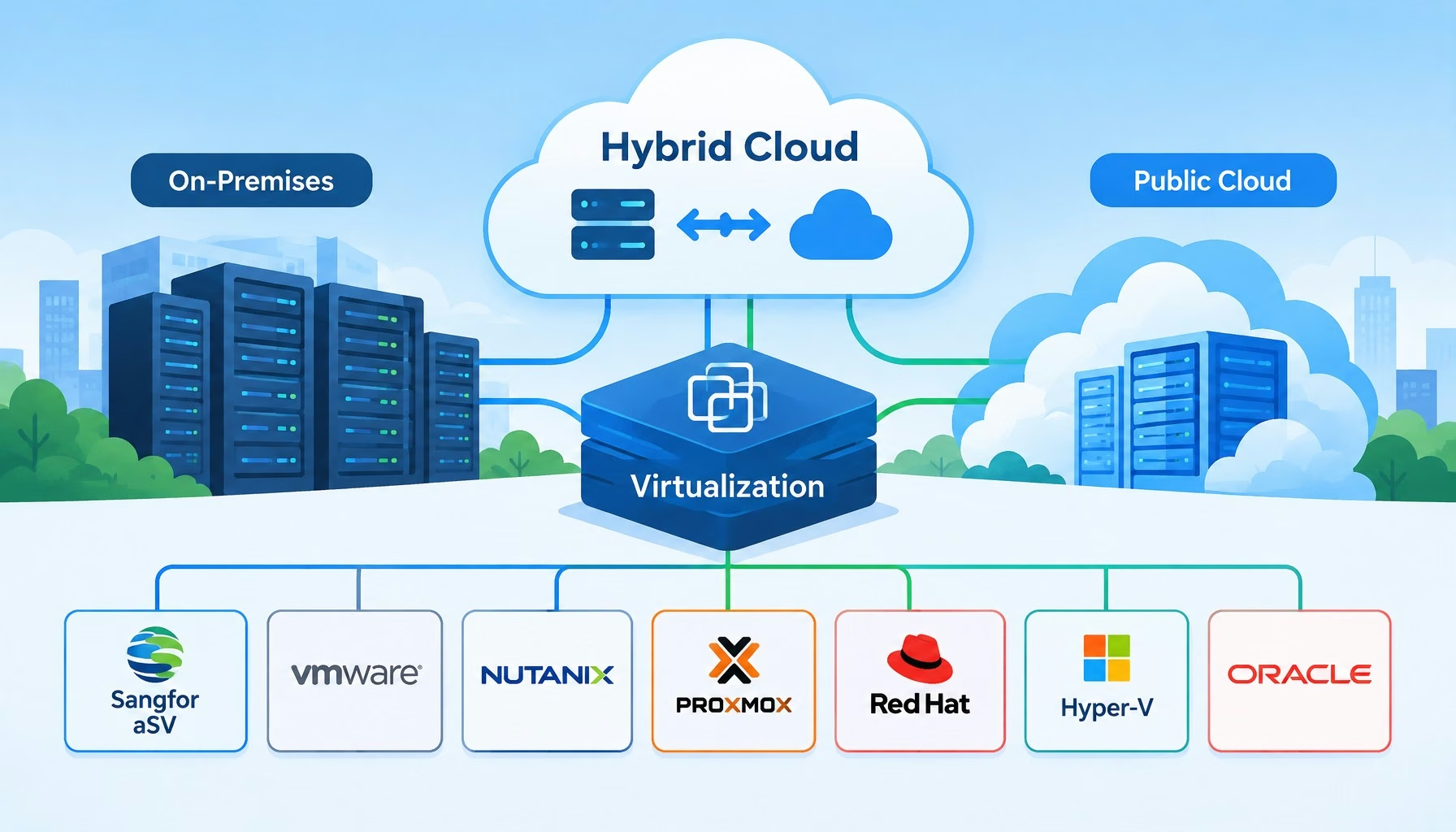
The concept of shifting compute needs to public cloud computing infrastructures is an idea gaining traction. As the C-suite contemplates methods to deliver better, respond to market changes faster and reduce costs, cloud is an increasingly tantalizing option. In fact, the market for public cloud computing is said to be $131B in 2013 and growing, according to a tier one analyst firm.

While companies are choosing cloud for myriad reasons, it’s readily apparent that procuring public infrastructure, development platforms or applications from a cloud provider is really just another form of outsourcing.

This then brings some challenges to the forefront, specifically the need to understand the business case and use cases for cloud computing for your own company. And the needs must go beyond simple cost savings analysis.

Don’t make the same mistakes of those executives who rushed to outsourcing in the past decade. Tally up the cost savings, but also spend time diagnosing “hidden risks” of public cloud in terms of well-known issues of costs of downtime/availability, data security/privacy in a multi-tenant environment and data latency. 

In addition, think about the level of control you want over your IT infrastructure. Are you comfortable relying on another vendor for critical IT infrastructure needs? In case of the inevitable IT failure or worse case cyber-attack, are you one of those who would want to start working a problem right away, rather than opening a trouble ticket and waiting for an answer?

You’ll also need to consider skill sets (tally those you have, and those you’ll need), in addition to architecting your various workloads for cloud infrastructures.

Please don’t get me wrong. For many companies, sourcing computing needs to public infrastructures makes a lot of sense, but when only supported by a thorough business case, and detailed risk analysis.  You’ll need a thorough understanding of what you’re jumping into before “joining the herd,” especially when an on-premise solution might work better.

In other words, “do the math” (figuratively and literally).  
TAGGED:big datacloudcybersecuritydata in the clouddata latencydata securityhadoopinfrastructuremulti-tenantpublic cloud
Share This Article
Facebook Pinterest LinkedIn
Share

Follow us on Facebook

Latest News

data migration risk prevention
Best Approach to Risk Management for Data Migration in Data-Driven Businesses
Big Data Data Management Exclusive Risk Management
AI in branding
How Data Analytics and Data Mining Strengthen Brand Identity Services
Big Data Exclusive
Hidden AI, a risk?
Hidden AI, Real Risk: A Governance Roadmap For Mid-Market Organizations
Artificial Intelligence Exclusive Infographic
unusual trading activity
Signal Or Noise? A Decision Tree For Evaluating Unusual Trading Activity
Analytics Exclusive Infographic

Stay Connected

1.2KFollowersLike
33.7KFollowersFollow
222FollowersPin

You Might also Like

using hadoop for email marketing scalability
Hadoop

Scalability-focused Email Marketing Solutions that Incorporate Hadoop

6 Min Read
CAPEX vs. OPEX
Cloud ComputingCommentaryData WarehousingExclusiveIT

CAPEX for IT: Why So Painful?

4 Min Read
big data
Big DataExclusive

Can Big Data Eliminate Shortcomings of Team Extension Models?

7 Min Read

SnapLogic: Making Big Data Integration as a Service a Hadoop Reality

4 Min Read

SmartData Collective is one of the largest & trusted community covering technical content about Big Data, BI, Cloud, Analytics, Artificial Intelligence, IoT & more.

giveaway chatbots
How To Get An Award Winning Giveaway Bot
Big Data Chatbots Exclusive
data-driven web design
5 Great Tips for Using Data Analytics for Website UX
Big Data

Quick Link

  • About
  • Contact
  • Privacy
Follow US
© 2008-25 SmartData Collective. All Rights Reserved.
Welcome Back!

Sign in to your account

Username or Email Address
Password

Lost your password?