We use cookies, including third-party cookies from Google to serve personalized ads through AdSense, to operate this site and understand how it is used. By continuing to browse, you accept this use. See our Privacy Policy and Terms of Use for details, including how to opt out of personalized advertising.
Accept
SmartData CollectiveSmartData Collective
  • Analytics
    AnalyticsShow More
    chatgpt image jul 21, 2026, 04 34 30 pm
    4 Core Benefits of Predictive Maintenance after Vibration Analysis
    10 Min Read
    How Does Data Mining Boost Customer Satisfaction in Logistics? Harnessing Analytics for Results -- AI-generated illustration
    How Does Data Mining Boost Customer Satisfaction in Logistics? Harnessing Analytics for Results
    11 Min Read
    chatgpt image jul 13, 2026, 04 23 45 pm
    How Data Analytics Helps Companies Improve User Engagement
    19 Min Read
    chatgpt image jul 13, 2026, 03 59 46 pm
    How Data Analytics Improves Multi-Location Search Strategies
    10 Min Read
    cybersecurity efforts
    How Behavioral Analytics and AI Are Redefining Cybersecurity for Boca Raton Businesses
    14 Min Read
  • Big Data
  • BI
  • Exclusive
  • IT
  • Marketing
  • Software
Search
© 2008-25 SmartData Collective. All Rights Reserved.
Reading: IT Doesn’t Matter… Until It Does
Share
Notification
Font ResizerAa
SmartData CollectiveSmartData Collective
Font ResizerAa
Search
  • About
  • Help
  • Privacy
Follow US
© 2008-23 SmartData Collective. All Rights Reserved.
SmartData Collective > Analytics > Predictive Analytics > IT Doesn’t Matter… Until It Does
AnalyticsCommentaryExclusiveITPredictive Analytics

IT Doesn’t Matter… Until It Does

paulbarsch
paulbarsch
5 Min Read
IT Doesn’t Matter... Until It Does
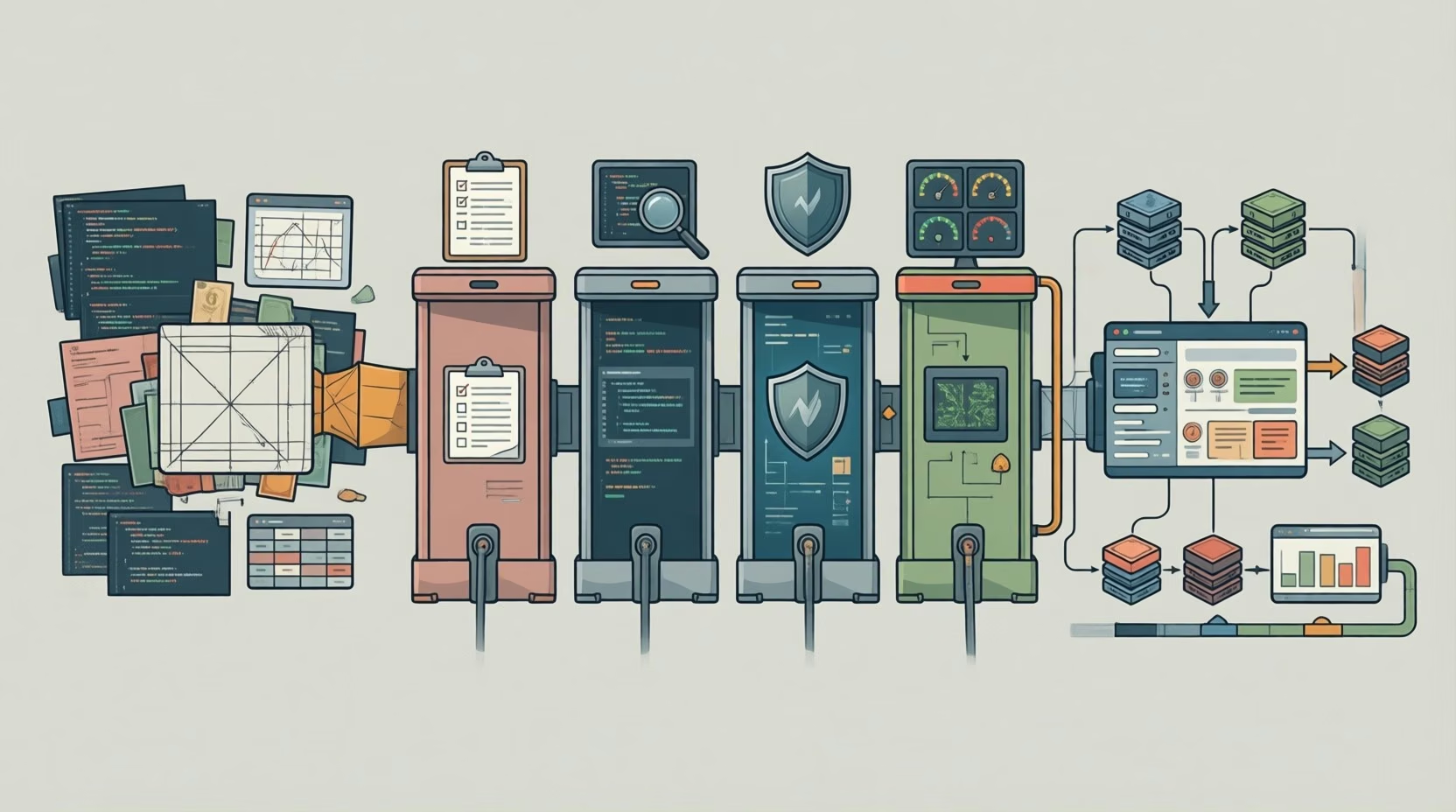
Illustration generated with Qwen Image.
SHARE

While most business leaders equate the Information Technology (IT) department with simply “keeping the lights on,” IT does much more than administer and operate business systems. In fact, with how quickly technology is changing the game in retail, hospitality, healthcare, manufacturing and more, companies that underinvest in IT are in real danger of becoming yesterday’s news.

In May 2003, Harvard Business Review’s Nicholas Carr came out with a stunning article titled, “IT Doesn’t Matter.”  In the article, Carr argued that as information technology becomes more prevalent and widely used, the strategic advantage from adopting new technologies has waned. 

The theme “IT Doesn’t Matter,” of course, clashed heavily with pundits, consultants and vendors of the day who would hear nothing of this offensive concept. Instead, these constituencies argued that while information technology may quickly commoditize, the real value is not in a specific technology, but how various technologies are stitched together and deployed for business improvement.

Today, most business and technology leaders have accepted that information technologies quickly commoditize and that any advantage implementing the latest and greatest may create only temporary competitive advantage. But to underestimate the value of a highly available, optimized and business supporting IT infrastructure is to do so at your peril!

More Read

Michigan Cyber Initiative Reports 'People' as Weakest Link in IT Security
Michigan Cyber Initiative Reports ‘People’ as Weakest Link in IT Security
Converting Analog Signals is Vital to the IoT
Exalytics, Exalogic and Exadata
Alteryx Advances the Process of Customer Analytics
8 Steps to Leveraging Analytics to Create Successful Ecommerce Stores

Take for instance a recent Financial Times column by entrepreneur Luke Johnson. Mr. Johnson is a private equity venture capitalist that regularly invests in ailing companies. After investing in one particular retail outlet, Johnson discovered “the core reason (the company) was in decline: its technology strategy was deeply flawed and it suffered from a huge underinvestment in systems.” In other words, on the surface this company may have looked like a quick and easy fix, but Johnson found out that years of underinvestment in point of sale, networking, data center upkeep, servers and retail applications had left this company in the dust bin.

For this particular retail company, IT didn’t matter, and it showed. The refusal to invest in people, processes and technologies to keep this retailer well stocked and serving customers efficiently was a key contributor to its demise. 

Granted, this is just one case study, but Luke Johnson—an investor in multiple companies—sees a disturbing trend when he says, “most non-tech companies do not take technology seriously enough.”

So does IT matter? The answer is self-evident: IT should be treated as an important and critical function in your company. IT does more than just “sweat the details” of making sure systems are available and performing.  Whatever your business strategy—improving productivity, cutting costs, discovering new markets, changing your product mix, or expanding sales, IT is the enabler. IT allows business to do things—only better. And companies that fail to understand the significance of a healthy investment in IT will likely be next on Mr. Johnson’s list of companies that need VC help to rise from the dead.

The speed of change—in terms of politics, globalization, technology, and markets is un-relenting. And emerging new concepts such as “the internet of things,” wearables, industrial drones and more are coming online quickly.  It’s not enough to simply serve your customer of today well enough; you also need to understand your customer’s needs tomorrow and predict what they’ll be in the next few years. 

And that’s not going to happen if you firmly believe that IT doesn’t matter. 

TAGGED:risky business
Share This Article
Facebook Pinterest LinkedIn
Share

Follow us on Facebook

Latest News

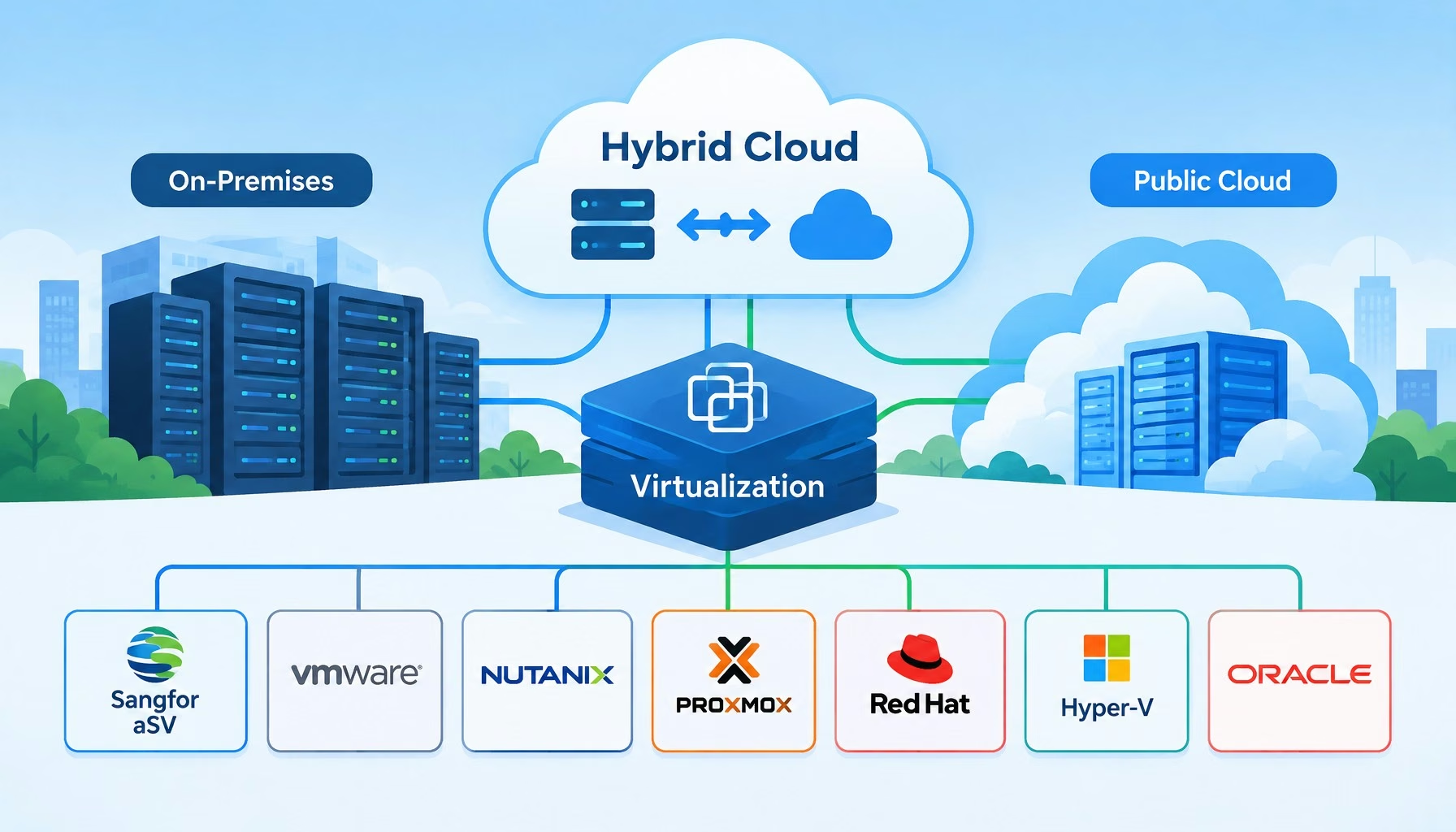
Flat editorial illustration: The article presents a bifurcated enterprise decision: European organizations evaluating VMware alte
Cloud Infrastructure and Workload Migration: A Data-Driven Look at VMware Alternatives in Europe
Exclusive
Synthetic Data vs Real Web Data: Comparison, Limitations, and Collection Methods  -- AI-generated illustration
Synthetic Data vs Real Web Data: Comparison, Limitations, and Collection Methods 
Big Data Exclusive
Illustration of mobile analytics dashboards with ad performance charts connected to backend databases
11 Best Sisense Alternatives for Embedded Analytics
Business Intelligence Exclusive
Analyst points at colorful circular data dashboard on screen - information technology business metrics
How Fragmented Workplace Tech Undermines Reliable Business Metrics and Reporting
Cloud Computing Exclusive Infographic IT

Stay Connected

1.2KFollowersLike
33.7KFollowersFollow
222FollowersPin

You Might also Like

Adapting to Winds of Change
Big DataCloud ComputingCommentaryExclusiveITRisk Management

Adapting to Winds of Change

3 Min Read
Mobile: It's Still a Big Deal
CommentaryExclusiveMobility

Mobile: It’s Still a Big Deal

4 Min Read
Is the Purpose of Analytics Just to Turn a Buck?
AnalyticsBest PracticesBig DataCollaborative DataCulture/LeadershipExclusiveMobilityModelingPredictive AnalyticsSocial Data

Is the Purpose of Analytics Just to Turn a Buck?

4 Min Read
Technology Training Needs a Hands-On Approach
AnalyticsBest PracticesCommentaryExclusiveKnowledge ManagementRisk ManagementSoftware

Technology Training Needs a Hands-On Approach

5 Min Read

SmartData Collective is one of the largest & trusted community covering technical content about Big Data, BI, Cloud, Analytics, Artificial Intelligence, IoT & more.

5 Great Tips for Using Data Analytics for Website UX
Big Data
From Bolts to Bots: How AI Is Fortifying the Automotive Industry
Artificial Intelligence

Quick Link

  • About
  • Contact
  • Privacy
Follow US
© 2008-26 SmartData Collective. All Rights Reserved.
Welcome Back!

Sign in to your account

Username or Email Address
Password

Lost your password?