
We use cookies, including third-party cookies from Google to serve personalized ads through AdSense, to operate this site and understand how it is used. By continuing to browse, you accept this use. See our Privacy Policy and Terms of Use for details, including how to opt out of personalized advertising.
Accept
SmartData CollectiveSmartData Collective
  • Analytics
    AnalyticsShow More
    What Kind of Problem-Solving Distinguishes Data Analysts From Software Engineers -- AI-generated illustration
    What Kind of Problem-Solving Distinguishes Data Analysts From Software Engineers
    7 Min Read
    chatgpt image jul 21, 2026, 04 34 30 pm
    4 Core Benefits of Predictive Maintenance after Vibration Analysis
    10 Min Read
    How Does Data Mining Boost Customer Satisfaction in Logistics? Harnessing Analytics for Results -- AI-generated illustration
    How Does Data Mining Boost Customer Satisfaction in Logistics? Harnessing Analytics for Results
    11 Min Read
    chatgpt image jul 13, 2026, 04 23 45 pm
    How Data Analytics Helps Companies Improve User Engagement
    19 Min Read
    chatgpt image jul 13, 2026, 03 59 46 pm
    How Data Analytics Improves Multi-Location Search Strategies
    10 Min Read
  • Big Data
  • BI
  • Exclusive
  • IT
  • Marketing
  • Software
Search
© 2008-25 SmartData Collective. All Rights Reserved.
Reading: How Data Gave Streaming Music A Competitive Edge
Share
Notification
Font ResizerAa
SmartData CollectiveSmartData Collective
Font ResizerAa
Search
  • About
  • Help
  • Privacy
Follow US
© 2008-23 SmartData Collective. All Rights Reserved.
SmartData Collective > Big Data > How Data Gave Streaming Music A Competitive Edge
Big Data

How Data Gave Streaming Music A Competitive Edge

Larry Alton
Larry Alton
4 Min Read
How Data Gave Streaming Music A Competitive Edge
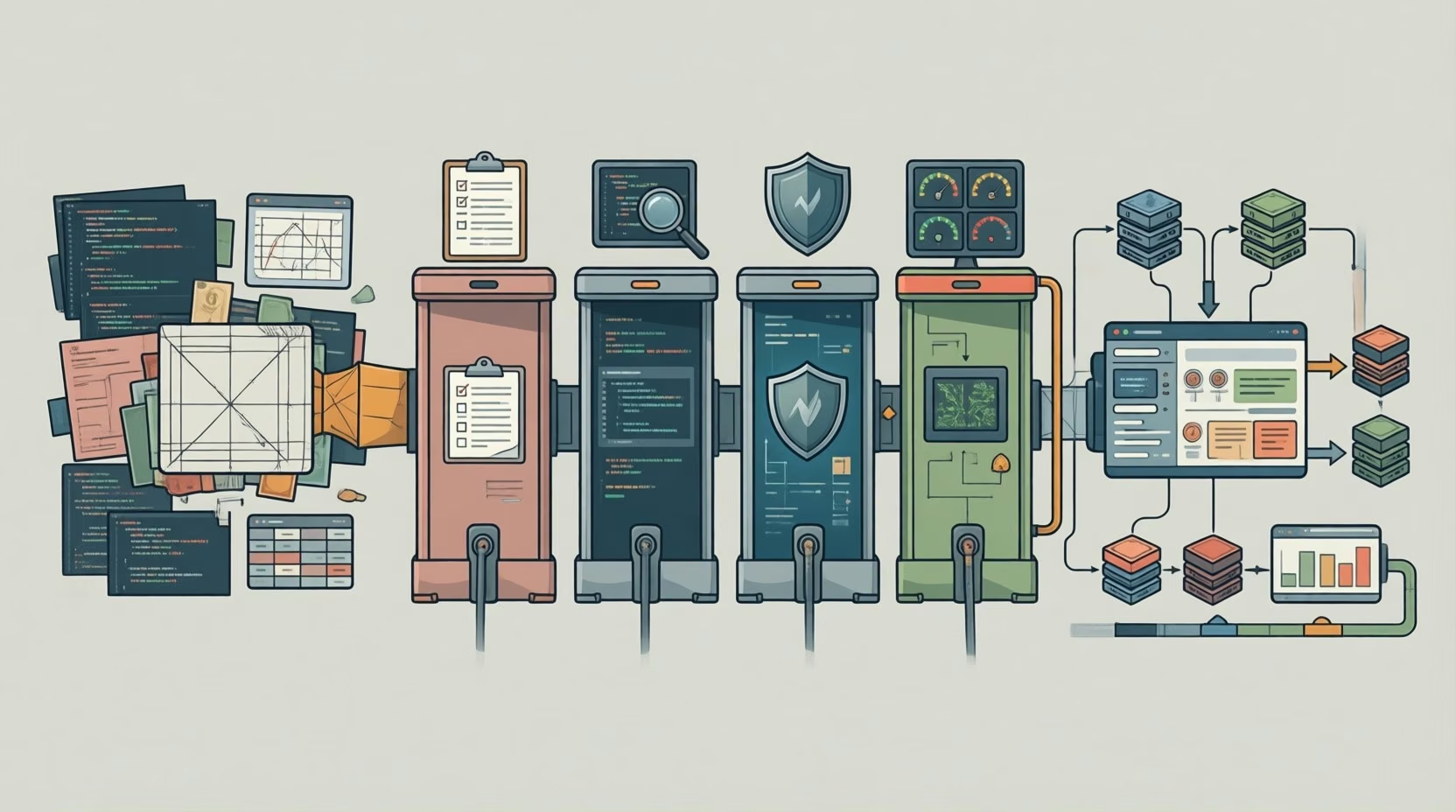
Illustration generated with Qwen Image.
SHARE

When streaming services first launched, artists were skeptical; in fact, many were downright hostile because they were positive these new services would make it impossible to profit from their creative work. And for a while, they were right. Streaming services weren’t designed to support artists and contracts were far from favorable. But as more listeners switch to services like Spotify, AppleMusic, and even SoundCloud, these programs revealed their real advantage: they offered musicians an insight into listener habits and helped them shape data into a competitive edge.

Contents
  • The Trend Machine
  • Amplifying Data Avenues

The Trend Machine

Despite the importance of novelty and originality, musical success has always relied on certain predictable features. For example, in 2016, the artist Alex Da Kid released a single called “Not Easy” based on a unique composition process – to create the song, he had used IBM Watson and Beat to analyze every hit song from the past five years. “Not Easy” reflected the sonic trends found in those songs, in what might be termed song writing via recipe.

In the streaming economy, though, musicians don’t have to be as precise as Alex Da Kid to score a serious win. Instead, many are using the logic of familiarity to engineer hits – and profits. The trick is to make the first thirty seconds of the song sound similar to songs that are already popular, because to receive royalties from streaming services, a song needs to be played for at least thirty seconds. That’s why the first thirty seconds of “Swish Swish” by Katy Perry sound like a Fatboy Slim sample or while others musicians commit the first thirty seconds of a track to big, compelling sounds like the trumpets that open “Despacito.”

Amplifying Data Avenues

Back when everyone bought CDs, musicians had to rely on radio data to see what was catching on; they couldn’t tell what tracks fans were playing on repeat in their rooms or putting onto mixes for their friends. But streaming has changed how musicians understand their songs because they have individual listener data on every track. They register music with Nielsen SoundScan to capture streaming data, Mediabase to track radio airplay, and still receive direct reports from the individual streaming services. Suddenly musicians know every time one of their songs is played – and they’re using all of this data to boost their marketing.

More Read

How Big Data Analytics Reveal Your Most Intimate Secrets
How Credit Providers and Lenders Use Data Effectively
The Role of Big Data In The Maintenance Industry
ChatGPT and Other AI Startups Drive Software Engineer Demand
Datacenters Are Changing The Business Landscape

According to Spotify’s founder Daniel Ek, the platform freely shares their streaming data with artists because it helps musicians use the platform more effectively, which makes Spotify more profitable for everyone – but musicians take that data well beyond new tracks and streaming strategy. No, they’re also using this data in collaboration with labels to plan collaborations, schedule tours, and promote shows and merchandise. In other words, even if streaming is less profitable than older music sales models, it makes up for those losses in data.

Gone are the days when musicians could wall themselves off from streaming services, like Taylor Swift did for years by keeping her songs off these platforms – but then again, why would they want to? These platforms now dominate the music industry, and they offer musicians a new level of access to fans via data. And as streaming services continue to grow and evolve, they promise to introduce even more ways for artists and listeners to connect, and potentially even new ways for musicians to make a profit.

Share This Article
Facebook Pinterest LinkedIn
Share
ByLarry Alton
Follow:
Larry is an independent business consultant specializing in tech, social media trends, business, and entrepreneurship. Follow him on Twitter and LinkedIn.

Follow us on Facebook

Latest News

Flat editorial illustration: The article's core relationship is the engineering transition from an AI prototype to a production-r
From AI Prototype to Production: Observability and Scalability Requirements for Data-Heavy SaaS Applications
Artificial Intelligence Exclusive
Preparing Data Systems and Governance for a Scaling Global Gaming Brand -- AI-generated illustration
Preparing Data Systems and Governance for a Scaling Global Gaming Brand
Big Data Infographic
How Restaurant POS and Ordering Data Reveal Generational Customer Patterns -- AI-generated illustration
How Restaurant POS and Ordering Data Reveal Generational Customer Patterns
Exclusive Infographic
From Trucks To Data: How Telematics Can Improve Freight Transportation -- AI-generated illustration
From Trucks To Data: How Telematics Can Improve Freight Transportation
Big Data Exclusive Infographic

Stay Connected

1.2KFollowersLike
33.7KFollowersFollow
222FollowersPin

You Might also Like

How To Keep Your Data Security Knowledge Up To Date?
Security

How To Keep Your Data Security Knowledge Up To Date?

5 Min Read
a typicmayfair london big dataal view in mayfair
Big DataExclusive

The Role of Data in Shaping the Future of Business in Mayfair

9 Min Read
Major Data Science and Big Data Predictions To Watch In 2019
Big DataData ScienceExclusive

Major Data Science and Big Data Predictions To Watch In 2019

6 Min Read
Mitigating Bias in Machine Learning Datasets
Big DataExclusiveMachine Learning

Mitigating Bias in Machine Learning Datasets

7 Min Read

SmartData Collective is one of the largest & trusted community covering technical content about Big Data, BI, Cloud, Analytics, Artificial Intelligence, IoT & more.

5 Great Tips for Using Data Analytics for Website UX
Big Data
AI chatbots
AI Chatbots Can Help Retailers Convert Live Broadcast Viewers into Sales!
Chatbots

Quick Link

  • About
  • Contact
  • Privacy
Follow US
© 2008-26 SmartData Collective. All Rights Reserved.
Welcome Back!

Sign in to your account

Username or Email Address
Password

Lost your password?