We use cookies, including third-party cookies from Google to serve personalized ads through AdSense, to operate this site and understand how it is used. By continuing to browse, you accept this use. See our Privacy Policy and Terms of Use for details, including how to opt out of personalized advertising.
Accept
SmartData CollectiveSmartData Collective
  • Analytics
    AnalyticsShow More
    chatgpt image jul 21, 2026, 04 34 30 pm
    4 Core Benefits of Predictive Maintenance after Vibration Analysis
    10 Min Read
    How Does Data Mining Boost Customer Satisfaction in Logistics? Harnessing Analytics for Results -- AI-generated illustration
    How Does Data Mining Boost Customer Satisfaction in Logistics? Harnessing Analytics for Results
    11 Min Read
    chatgpt image jul 13, 2026, 04 23 45 pm
    How Data Analytics Helps Companies Improve User Engagement
    19 Min Read
    chatgpt image jul 13, 2026, 03 59 46 pm
    How Data Analytics Improves Multi-Location Search Strategies
    10 Min Read
    cybersecurity efforts
    How Behavioral Analytics and AI Are Redefining Cybersecurity for Boca Raton Businesses
    14 Min Read
  • Big Data
  • BI
  • Exclusive
  • IT
  • Marketing
  • Software
Search
© 2008-25 SmartData Collective. All Rights Reserved.
Reading: Your Guide To Different Telematics Solutions And The Data They Collect
Share
Notification
Font ResizerAa
SmartData CollectiveSmartData Collective
Font ResizerAa
Search
  • About
  • Help
  • Privacy
Follow US
© 2008-23 SmartData Collective. All Rights Reserved.
SmartData Collective > Data Management > Best Practices > Your Guide To Different Telematics Solutions And The Data They Collect
Best PracticesBig DataData CollectionExclusive

Your Guide To Different Telematics Solutions And The Data They Collect

Annie Qureshi
Annie Qureshi
6 Min Read
Your Guide To Different Telematics Solutions And The Data They Collect
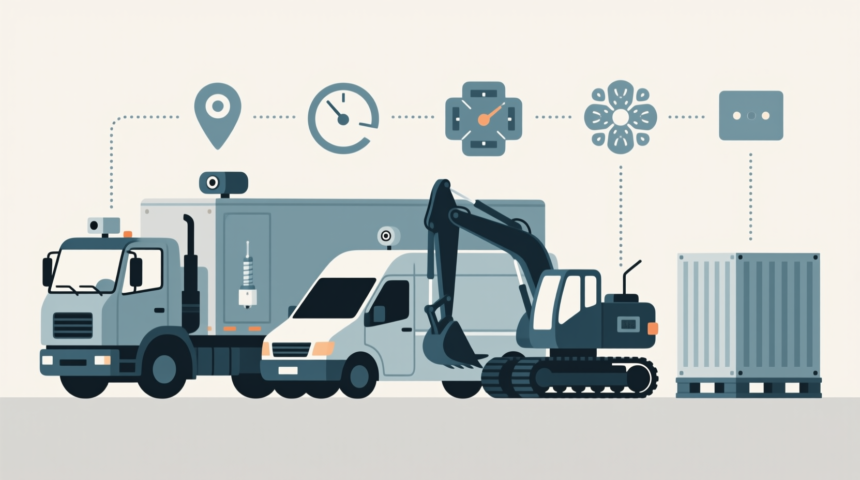
Illustration generated with Qwen Image.
SHARE

Telematics is the latest and greatest buzzword in the automotive industry. Because so many experts predict the imminent end of private vehicle ownership and the ultimate dominance of the vehicle sharing economy, vehicle fleets are growing. Telematics technologies help fleet owners monitor and manage their vehicles to reduce costs and improve efficiencies. In an age when data is of utmost importance, prospective fleet entrepreneurs might be pleased to learn that telematics leverages data to improve the fleet performance. In fact, different telematics solutions can collect and utilize different types of data. Here?s a guide to the types of telematics solutions available and the data each solution employs.

Contents
  • Basic Datasets
  • Advanced Datasets
  • Conclusion

Data Overview

Considering that driving is such a complex activity, there is a tidal wave of information that fleet entrepreneurs can collect. It can be difficult to parse what is important from what isn?t when one isn?t certain what each type of data is and what it is used for, so to fill that need, here is a rough guide to telematics data:

Basic Datasets

This is data that is logged during a single trip and is often collected through vehicle tracking solutions. What constitutes a trip might vary from one type of fleet to the next; a carsharing business might count one member?s use of the vehicle, while a freight shipper might determine one cross-country delivery to be a trip. Regardless, there are certain types of data that should always be noted during any trip, even when a fleet manager lacks advanced tech. This information includes things like the date of the trip, the time of estimated departure and arrival, total driving time and distance traveled. Then, it is easy to verify this information and supplement it with technology, which can provide insights such as:

  • GPS timestamp: when the trip begins and ends as determined by the GPS system
  • GPS speed: vehicle speed collected via GPS system
  • GPS direction: where the vehicle is headed at any time during the trip
  • Vehicle status: whether the ignition is on or off
  • Odometer value: how many miles the vehicle has traveled on this trip and in total
  • Power voltage: how much energy is being consumed by the vehicle
  • Fuel usage: how much fuel is being consumed by the vehicle
  • Events: special occurrences such as power disconnection

Typically, fleet monitoring systems will rely on an accelerometer installed in each vehicle. An accelerometer is an electromechanical device with sensitive motion sensors, which will tell fleet managers information such as:

More Read

Signals In The Noise: Using Media Monitoring To Manage Negative Publicity
McLaren Shows The Way — Telemetry For Your Business?
How Big Data Opens The Door For Awesome Broadband Deals
Data Mining Vital Statistics Yields Fascinating Societal Insights
Are SMEs Equipped To Master Data Science?
  • Harsh acceleration: when drivers accelerate quickly
  • Harsh braking: when drivers stop the car suddenly
  • Harsh cornering: when drivers turn corners without decelerating sufficiently

This dataset constitutes the bare minimum that a fleet entrepreneur should collect to ensure that vehicles and drivers are performing as expected.

Advanced Datasets

For a detailed picture of vehicle and driver performance, entrepreneurs will need to invest in more extensive telematics systems. These will measure fleet activity at a minute level, tracking dozens of metrics to ensure vehicles are performing optimally on every trip. Some common types of data found in these advanced datasets include:

  • Engine load: the torque output of the engine, or how much power the engine is producing
  • Engine hours of operation: how many hours the engine has been in active use
  • Fuel level: how much fuel is available
  • Engine fuel used: how much fuel the engine has consumed over its lifetime
  • Engine fuel rate: how much fuel is consumed over time in use
  • Accelerator pedal position: where the accelerator is positioned relative to acceleration and speed
  • Cruise control switch: when and how long cruise control is active
  • Ambient air temperature: the temperature of the air around the engine, inside the cabin, around the vehicle and more

Perhaps most importantly, entrepreneurs should want their telematics to include information that will diagnose issues quickly and accurately. For that, they will need access to the following kinds of data:

  • Malfunction indicator light: whether this is illuminated or not
  • Manufacturer diagnostic trouble codes: reading the code and understanding their descriptions and locations as well as failure type, status and severity information
  • Proprietary information: reading similar codes unique to certain brands or platforms, which might include information on engine oil, brake fluid, exhaust gas test, etc.

Conclusion

The right telematics solution

for a new fleet entrepreneur will depend on a number of factors, not least of which is cost. It?s important to remember that with complexity comes a greater need for experienced technicians to install and maintain the telematics tech not to mention analysts to make use of the collected data. However, when properly executed, telematics can be exceedingly valuable to fleets, their owners and their users.

TAGGED:auto industryautomobilesautomotive industrycarsdatatelematicstelematics solutions
Share This Article
Facebook Pinterest LinkedIn
Share
ByAnnie Qureshi
Follow:
Annie is a passionate writer and serial entrepreneur. She embraces ecommerce opportunities that go beyond profit, giving back to non-profits with a portion of the revenue she generates. She is significantly more productive when she has a cause that reaches beyond her pocketbook.

Follow us on Facebook

Latest News

Flat editorial illustration: The article's core relationship is the alignment between customer behavioral data (visit frequency,
Data-Driven Loyalty: How Restaurants Use Behavioral Analytics to Optimize Revenue
Exclusive
Flat editorial illustration: The article's core relationship is that reliable eCommerce attribution depends on a unified, well-st
How eCommerce Data Teams Can Build Attribution That Holds Up
Big Data Exclusive
Flat editorial illustration: The article's core relationship is the contrast between fragmented inherited data infrastructure (wh
Data Stack Consolidation as a Data Quality and Governance Strategy for Mid-Market Teams
Big Data Exclusive
Emergency responder and nurse reviewing tablet with data dashboards
Evaluating Workforce Assessment Tools: Looking Beneath the Dashboard at Psychometric Data
Exclusive Software

Stay Connected

1.2KFollowersLike
33.7KFollowersFollow
222FollowersPin

You Might also Like

how to use social media analytics
AnalyticsExclusiveSocial DataSocial Media Analytics

How To Use Social Media Analytics To Increase Your Business Success

6 Min Read
Will Data Analytics Help Mercedes Meet 2030 Carbon Reduction Targets?
Big Data

Will Data Analytics Help Mercedes Meet 2030 Carbon Reduction Targets?

6 Min Read
Data Science Offers Fascinating New Scheduling Solutions
Big DataData ScienceExclusive

Data Science Offers Fascinating New Scheduling Solutions

6 Min Read
5 Sherlock Holmes Quotes That Prove Genius for Data-Driven Decision Making
Uncategorized

5 Sherlock Holmes Quotes That Prove Genius for Data-Driven Decision Making

6 Min Read

SmartData Collective is one of the largest & trusted community covering technical content about Big Data, BI, Cloud, Analytics, Artificial Intelligence, IoT & more.

From Bolts to Bots: How AI Is Fortifying the Automotive Industry
Artificial Intelligence
Chatbots and SEO: How Can Chatbots Improve Your SEO Ranking?
Artificial Intelligence Chatbots Exclusive

Quick Link

  • About
  • Contact
  • Privacy
Follow US
© 2008-26 SmartData Collective. All Rights Reserved.
Welcome Back!

Sign in to your account

Username or Email Address
Password

Lost your password?