Cookies help us display personalized product recommendations and ensure you have great shopping experience.

By using this site, you agree to the Privacy Policy and Terms of Use.
Accept
SmartData CollectiveSmartData Collective
  • Analytics
    AnalyticsShow More
    media monitoring
    Signals In The Noise: Using Media Monitoring To Manage Negative Publicity
    5 Min Read
    data analytics
    How Data Analytics Can Help You Construct A Financial Weather Map
    4 Min Read
    financial analytics
    Financial Analytics Shows The Hidden Cost Of Not Switching Systems
    4 Min Read
    warehouse accidents
    Data Analytics and the Future of Warehouse Safety
    10 Min Read
    stock investing and data analytics
    How Data Analytics Supports Smarter Stock Trading Strategies
    4 Min Read
  • Big Data
  • BI
  • Exclusive
  • IT
  • Marketing
  • Software
Search
© 2008-25 SmartData Collective. All Rights Reserved.
Reading: Definition of ERP
Share
Notification
Font ResizerAa
SmartData CollectiveSmartData Collective
Font ResizerAa
Search
  • About
  • Help
  • Privacy
Follow US
© 2008-23 SmartData Collective. All Rights Reserved.
SmartData Collective > Business Intelligence > Definition of ERP
Business Intelligence

Definition of ERP

EphraimCohen
EphraimCohen
3 Min Read
SHARE

erp_system_definition
At the Microsoft Worldwide Partner conference, I asked several folks to participate in an informal one-question survey. The question was “What is an ERP system?”

Contents
  • Formal Definition
  • The Cloud and ERP

erp_system_definition
At the Microsoft Worldwide Partner conference, I asked several folks to participate in an informal one-question survey. The question was “What is an ERP system?”

All of the Microsoft partners I spoke with were well versed in software and know their specific area of expertise. Many used acronyms such as LMS and RMS without thinking it was possible that I may not know what those things are. Likewise I assumed that everybody knew what ERP was, but in reality, even some technologists need a bit of guidance.

More Read

business intelligence
Forrester: The Era of Self-Service BI is Here
The Retail Data Nightmare: Coming to a Store Near You!
Managing the Soft Bounce- The New Reputation Indicator
Business Objects-Scheduling Servers
Vector Embeddings: The Upcoming Building Blocks for Generative AI

Many of the answers provided were quite good, and most people know that ERP stood for enterprise resource planning. A few notable exceptions include the person who thought that ERP and accounting were “pretty much the same” and the person who argued that ERP referred to “any business software system designed to simplify work.”

Formal Definition

Following the show, somebody who took the poll sent me the following definition:
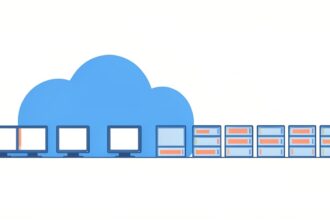
“Enterprise resource planning (ERP) is an Integrated computer-based system used to manage internal and external resources including tangible assets, financial resources, materials, and human resources. It is a software architecture whose purpose is to facilitate the flow of information between all business functions inside the boundaries of the organization and manage the connections to outside stakeholders. Built on a centralized database and normally utilizing a common computing platform, ERP systems consolidate all business operations into a uniform and enterprise wide system environment.

An ERP system can either reside on a centralized server or be distributed across modular hardware and software units that provide “services” and communicate on a local area network. The distributed design allows a business to assemble modules from different vendors without the need for the placement of multiple copies of complex and expensive computer systems in areas which will not use their full capacity.”

The Cloud and ERP

The definition above used to be accurate, but the delivery aspects of ERP are changing. During the conference, Microsoft stressed cloud, cloud, and more cloud. The cloud makes it possible to deliver ERP in new ways, including the ability to deliver services outside the “local area network” described in the formal definition.

The cloud is changing and improving ERP. As many ERP companies are discovering, the cloud and web-based solutions allow you to build and deploy solutions in ways that meet customers’ needs so they no longer have to setup and rely on a complex local area network.


TAGGED:erp
Share This Article
Facebook Pinterest LinkedIn
Share

Follow us on Facebook

Latest News

cloud dataops for metering
Taming the IoT Firehose: How Utilities Are Scaling Cloud DataOps for Smart Metering
Cloud Computing Exclusive Internet of Things IT
ai in video game development
Machine Learning Is Changing iGaming Software Development
Exclusive Machine Learning News
media monitoring
Signals In The Noise: Using Media Monitoring To Manage Negative Publicity
Analytics Exclusive Infographic
data=driven approach
Turning Dead Zones Into Data-Driven Opportunities In Retail Spaces
Big Data Exclusive Infographic

Stay Connected

1.2KFollowersLike
33.7KFollowersFollow
222FollowersPin

You Might also Like

ai-driven ERP software
Artificial Intelligence

Enterprises Are Leveraging the Benefits of AI-Driven ERPs

8 Min Read

Private versus Public Clouds for ERP Software

6 Min Read

Confusion between Cloud ERP and SaaS ERP software

4 Min Read

Getting ROI from ERP

5 Min Read

SmartData Collective is one of the largest & trusted community covering technical content about Big Data, BI, Cloud, Analytics, Artificial Intelligence, IoT & more.

ai chatbot
The Art of Conversation: Enhancing Chatbots with Advanced AI Prompts
Chatbots
giveaway chatbots
How To Get An Award Winning Giveaway Bot
Big Data Chatbots Exclusive

Quick Link

  • About
  • Contact
  • Privacy
Follow US
© 2008-25 SmartData Collective. All Rights Reserved.
Welcome Back!

Sign in to your account

Username or Email Address
Password

Lost your password?