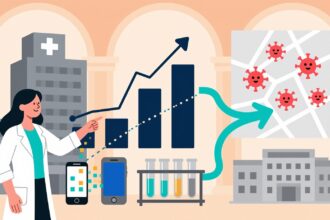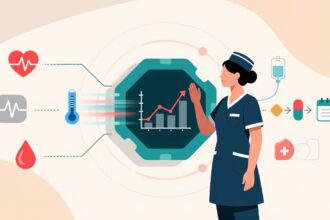
There are a lot of benefits of using big data in healthcare. One of the many ways is through streamlining medical credentialing.
Data analytics is playing a transformative role in medical credentialing, offering a new level of precision and efficiency that enhances patient safety. With the global big data in healthcare market reaching $67 billion in 2023, health systems are investing more than ever in tools to ensure that only qualified professionals provide care.
Medical credentialing can now incorporate cross-referenced digital records, flag inconsistencies in licensure or disciplinary actions, and streamline the verification process. As of 2021, 96% of non-federal acute care hospitals had adopted certified Electronic Health Records (EHR), creating a powerful foundation for real-time data analysis in credentialing workflows.
The complexity of physician licensing adds further urgency to the need for advanced analytics. In 2023, state medical boards issued 30,924 first-time licenses and a total of 142,741 licenses overall. Notably, 23% of physicians are licensed to practice in multiple states—15% hold two active licenses, and 8% hold three or more. Without robust data analytics, tracking credentials across states can be error-prone and inefficient, potentially exposing patients to unqualified care. By leveraging data tools, health systems can ensure that licensure remains current, verified, and accurate across jurisdictions—an essential safeguard in maintaining high standards of patient safety.

You want to think that your doctor knows what they are doing. How can you be sure? They have the job, ok. This means that they must also have….some sort of fancy degree. But what do you know about that degree?
Nothing.
What do you know about the person who is helping you make your most important healthcare decisions? Also nothing.
And yet every day Americans receive some of the best healthcare in the world. Why? How?
You can thank medical credentialing for that. Hospitals, clinics, and other healthcare organizations. They all use credentialing to standardize results and maximize safety.
What is Medical Credentialing?
Just what it sounds like. Medical credentialing is a very granular background check. The hospital or clinic will scour a job candidate’s credentials. They’ll look at their education, sure. They’ll also review their professional history.
What is the caregiver’s success rate? Every doctor or nurse will have some bad outcomes. That alone isn’t disqualifying. But why did these outcomes occur? Is there some sort of pattern that the hospital should be aware of?
Basically, it’s one last assurance that everyone working in a hospital belongs there. It’s also legally mandatory. As a patient you can be sure that you are receiving excellent care. As a provider, you need to stay on your toes. It’s not something to stress over, excactly. It is something to be aware of. As Spike Lee once said—do the right thing. Good results breed success.
What Would Cause a Person to Fail the Verification Process?
Failure to complete the medical credentialing process is rare, primarily because most applicants for positions like doctors or nurses are exactly who they claim to be.
When a candidate does fail verification, it is most often due to a missing or expired credential, such as an outdated license or incomplete certification.
In rarer cases, a hospital might reject a candidate based on their work history, but this is less common. Typically, if a professional’s past actions were severe enough to warrant rejection, they would also have lost their medical license, making them ineligible for the job altogether.
While credentialing follows federal and state regulations, hospitals and clinics may have additional discretionary standards. These can vary slightly between institutions, meaning some facilities may have stricter internal policies.
If you have concerns about the credentialing process at a specific hospital, you can reach out to their customer service department. While they won’t provide details on individual healthcare workers, they should be able to explain their general review process and answer any questions you may have.
In Practice
Ok. Let’s say you want to be a pharmacist. You’ll need a Doctor of Pharmacy (PharmD) degree. That alone is a lengthy credentialing process. Undergraduate work. Then graduate school. Six to ten years later, you’ll be ready to start looking for work. Or will you?
Not quite. Once you’ve completed your PharmD, you’ll still need to get your RPh. What is an RPh? It’s the final credential you need to become a fully registered pharmacist. You’ll need to pass the NAPLEX—a standard exam only available after graduation. Then, and only then, will you be ready to start living that sweet, sweet pharmacist lifestyle.
Medical credentialing will simply ensure that you have completed all of those steps. When you apply for a job, they’ll make sure you’ve checked all the boxes.
How Does Medical Credentialing Help Patients?
At the end of the day, it’s just a final safeguard to make sure hospitals are doing what they need to do. You want your nurses to have passed the NCLEX. You want your pharmacist to have passed the NAPLEX. You don’t want a true crime podcast-type scenario happening at the hospital you frequent.
Do mistakes happen? Sure. You might have seen shows like Dr. Death and never looked at your physician the same way twice. Here’s the thing—they make shows about stories like that because they are incredibly rare. The unqualified surgeon is an urban legend, not a real problem you, as a patient, need to worry about.
You can thank medical credentialing for that.
Incorporating data analytics into medical credentialing processes is not just a technological upgrade—it is a vital step toward safeguarding patient health. This is one of the many benefits of big data in healthcare. As the healthcare industry continues to grow in complexity and scale, leveraging big data ensures that only properly vetted, licensed professionals are entrusted with patient care. By streamlining verification and tracking across multiple states and systems, data analytics strengthens the integrity of credentialing and reinforces the foundation of trust in modern healthcare.