In just a handful of years from now, the Generation Z (post-millennial kids born between 2000 and 2025) will start entering the workplace. Unlike the earlier generations, this is a population that was born after internet became mainstream. Not surprisingly, it is a workforce that shall be extremely comfortable and used to consumer technology. This is both an opportunity and a challenge for businesses – how do you make your workplace smarter to appeal to this crowd while utilizing technology that they are comfortable with to improve workplace efficiency?
Thankfully, technology has already permeated workplaces in a big way. According to a study conducted by Asure Software, nearly 30% of the global workforce today use their own smartphones for work purposes today. Nearly 78% of workers check their emails after work and on weekends. This percentage is only going to increase as more tech-savvy workers enter the workplace. The study also points to the increasing commute time for workers to reach their workplaces. As more businesses open up to telecommuting, there will be an increasing reliance on smart and cloud-based work tools to make time-tracking, collaboration and communication seamless among a workforce that does not meet face-to-face as frequently as they do now.
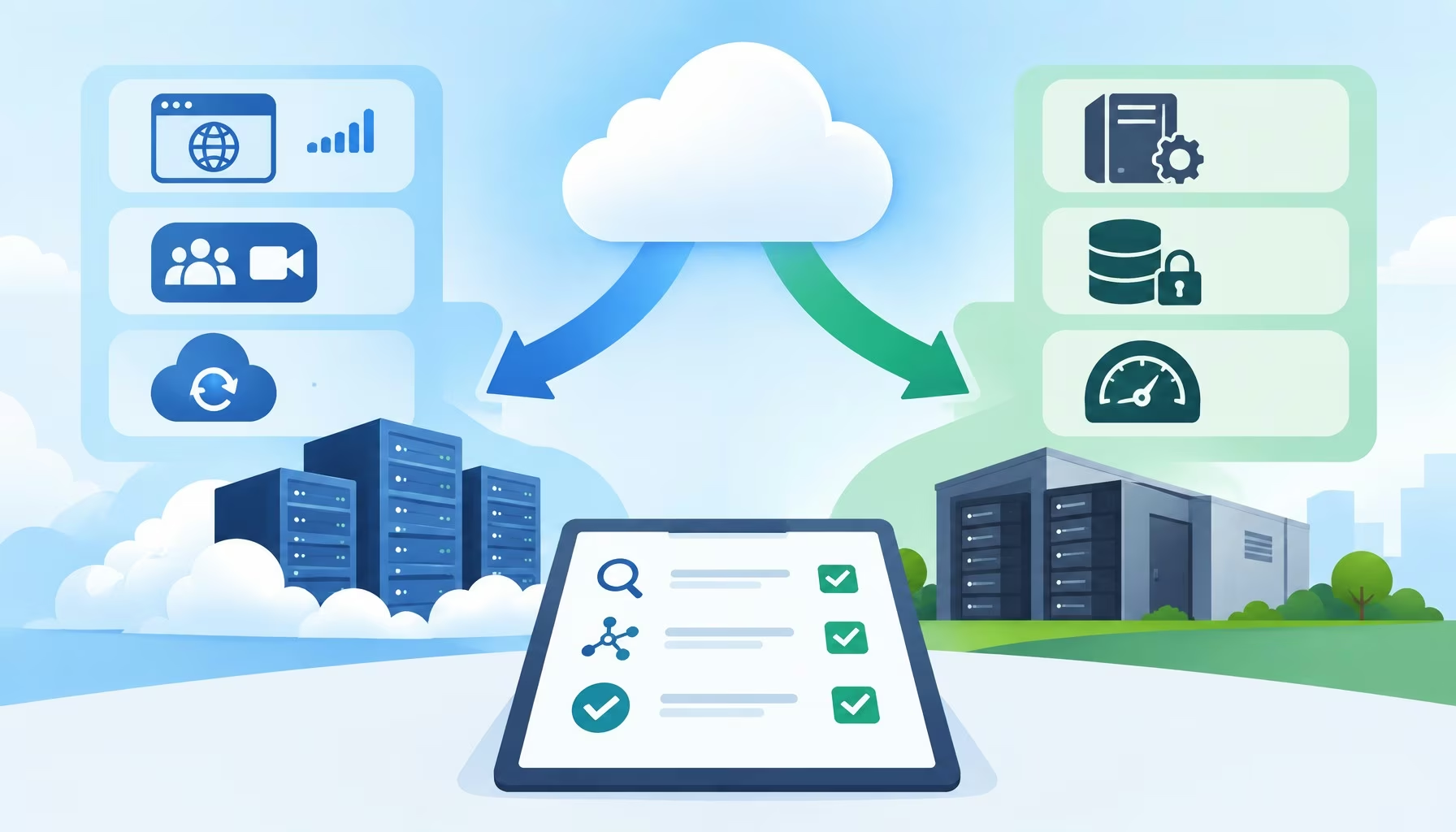
But cloud collaboration and communication tools are just one part of the puzzle. More importantly, the workforce is already global enough to have made these technologies mainstream. The need of the hour is to make your workplace ‘smarter’. This means doing away with all sorts of processes that take the focus of employees away from directly contributing to the company’s bottom-line.
Performance Monitoring: Almost every business today uses some sort of subjective tracking mechanism to understand the performance of individual employees. This is done either through measuring target achievements or through 360 degree feedback. Not only does performance monitoring take away critical employee resource away from actual work, but is also a great sense of frustration among employees who feel they are short-changed. The next decade will see the emergence of smart performance monitoring tools built for specific industries or teams that will intelligently benchmark employee performance. Not only does this take away the ‘politics’ at work, but also makes the entire process more transparent and smart.
More Read
Documentation: Another resource sink for a lot of businesses is documentation and knowledge management. The need to consolidate all information and knowledge within a team for future has made it necessary for employees to spend countless hours collaborating on preparing documents that explain why something works the way they do. But thanks to cloud storage and big data retrieval systems, businesses will eventually move towards a system where everything that an employee does on a work-related software or device is automatically stored and archived in the business storage system. This, combined with intelligent search technology will ensure quick retrieval of necessary information at just a click of a button.
Smart Wearables: Discussions on smart workplaces are mostly restricted to jobs that happen in a cubicle. Like today, a major chunk of the workforce will be involved in field-based tasks in factories and services. Smart sensor-based IoT (Internet of Things) wearables will drastically change the way these employees do work. According to Chris Chasty from iCreon Tech, the smart factories of tomorrow will let all workers wear sensors that will gather vital data that can be accessed by a factory manager sitting in their office. “Imagine a head-up display (HUD) display for a floor manager, which alerts the wearer to spikes in heart rate in a specific area. He can then instantly assess a potentially dangerous situation prior to depending on verbal communication from people close to the problem area”, he says.
We have barely scratched the surface with the potential of IoT and cloud with respect to making the future workplace smarter. But two things are evident – workplaces will soon get rid of processes that are non-valued adding and replace them with technologies that get the job done. Also, these workplaces will come with smarter sensors that will make monitoring much more efficient and useful for managers.