Your system is mission critical. It has hundreds, thousands, or even millions of daily users and it must continue to perform its functions no matter what. But it’s now 10-15 years old, and though it has served its purpose faithfully and is still a solid performer, the time has come to plan for your aging system’s future.
It’s time to make a move, and you know it.
Your system is mission critical. It has hundreds, thousands, or even millions of daily users and it must continue to perform its functions no matter what. But it’s now 10-15 years old, and though it has served its purpose faithfully and is still a solid performer, the time has come to plan for your aging system’s future.
It’s time to make a move, and you know it.

Whether you’re a hospital managing critical patient care records, or a financial institution conducting transactions, or any industry processing payroll or operations data – you need to fully understand the many options, risks, and costs associated with any modernization solution.
But like moving to a new home, the options are endless. Which neighborhood do you want to be in? What’s available in your price range? Is it better to buy or rent? What’s included in the monthly fees? How about security? What type of building do you prefer? What type of amenities do you need today – and what will you need in the future?
For your systems move, the considerations are actually quite comparable. And the “cloud” community offers an amazing assortment of amenities, from efficiencies to services to cost savings.
Location, Location, Location: In the Cloud
The computing industry is witnessing a paradigm shift in the way it operates. There is an acute awareness among consumers and enterprises that access to their IT resources can take the form of a “utility” model known as the “cloud.” This has profoundly reshaped IT processes and the IT marketplace. At its most basic, cloud computing is about the ability to enhance enterprise value through more efficient use of IT resources.
One of the more innovative ways to boost capacity and add capabilities in a cloud environment is by the virtualization of services and infrastructure. While virtualization has been around for quite some time, cloud computing (the new kid on the block) has breathed new life – and purpose – into “older” technologies, and has nudged enterprise evolution one step further down the line.
Virtualization is a method of abstracting applications and their underlying resources from the host hardware. This creates a virtual machine (VM) that hosts the instance of the operating system that was once physical. Sort of like a portable condo unit.
Basic analogy: A VM is to its infrastructure as a condo is to its building. Each VM has its own unique properties with access to shared hardware resources, like an individual condo shares basic common property resources, e.g., hallways, utilities access, elevators, etc.
The Amenities of Virtualization
Central Management: Just as the property owner manages the overall building, cloud technology allows for the central management and sharing of resources for a pool of physical hardware. Meanwhile each VM (condo unit) can then be managed separately from the hardware server (building) that hosts it. Decorate, furnish, paint and accessorize your condo in your own style, and the property management will take care of everything outside your “four walls.”Availability/Reliability: Systems availability is critical particularly during peak utilization times or inclement weather. By making use of virtualization in the cloud, your system can be made to fail over from one server to another – with no impact on users. So when the neighbor above you blows a fuse during your dinner party, or a big storm knocks out power to the building, your power source is seamlessly rerouted and your guests are none the wiser.
Improved Performance/Scalability: During peak utilization times, or when the average load stays high, your application can be given more resources from the cloud to perform better without an interruption in service. No worries about slowed or stalled internet access because everyone in the building is online at the same time.
Efficiency/Elasticity: On the other end of scaling up is scaling down. Because they’re no longer tethered to hardware, applications that are virtualized can dynamically re-allocate resources and scale back during low-demand times. This elasticity maximizes efficiencies and is a key consideration in developing a cloud computing strategy. Systems efficiency is a major thorn in the sides of CIOs, who grapple with servers that operate at as little as 3 to 4% of capacity. The loose condo analogy here: the building has built-in capacity to both meet additional occupancy demands (maybe seasonal) and conserve resources when the building is not fully occupied – without interrupting service or adjusting fees for the individual condo units.
Reduced Cost: Virtualization in the cloud reduces or eliminates the capital cost of upgrading hardware for scaling – since that cost is built into the monthly cost of the cloud services. Instead of 125 individually installed water heaters, it’s one large water heating system – and the cost is already covered in your monthly fee agreement. How great would it be to pick up your condo and effortlessly move it into a nicer building with better amenities? With virtualization, if at any time the overall system performance no longer satisfies service requirements, monitoring services can migrate instances of the OS to more powerful hardware and reestablish service-level guidelines.
Virtualization is just one piece of a multifaceted modernization puzzle. The organizational priorities that would dictate any modernization decision are as varied as homebuyers’ preferences, are ultimately dependent on an organization’s place (and awareness of this place) in its own history, and of course, always start with strategic goals – not technology goals.
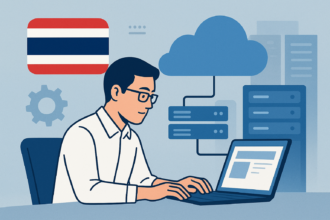
(image: Cloud computing / shutterstock)