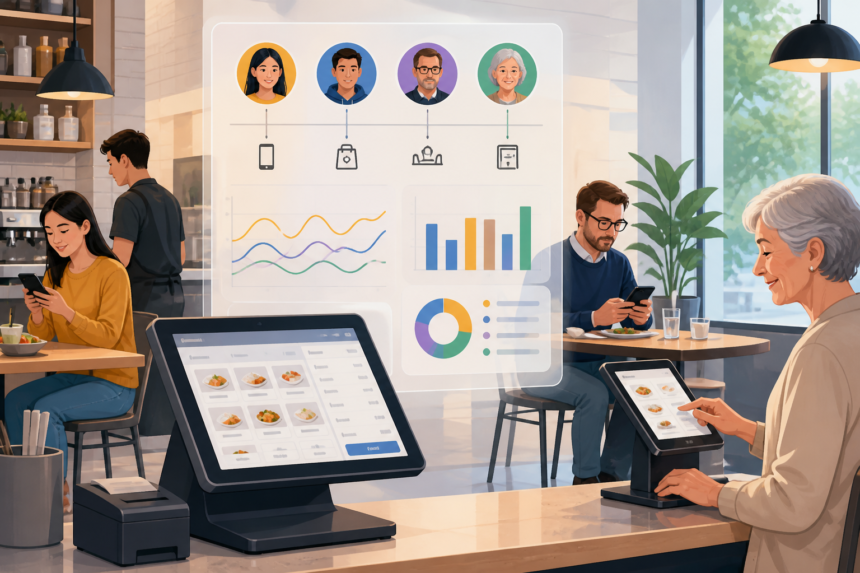
A modern restaurant order taking system captures behavioral telemetry on every transaction, showing operators how different generations actually navigate digital menus by measuring ticket size, modifier depth, and screen-to-payment dwell times. Digital ordering has become a routine part of restaurants and coffee shops. Yet customers do not all approach self-service kiosks or mobile apps in the same way, and QR-code menus create different friction points depending on who is scanning them. Age can influence familiarity with technology, but generation alone does not determine behavior. Businesses gain better behavioral analytics when they study how different customers move through the ordering process and where each group encounters friction.
Younger Customers Often Expect Speed and Control
Millennial and Gen Z customers have spent much of their adult lives using smartphones for shopping and banking. For many, digital food ordering feels like an extension of those habits. According to the National Restaurant Association’s 2025 Off-Premises Restaurant Trends report, 74% of millennials and 65% of Gen Z adults place off-premises orders via mobile apps, compared with 36% of baby boomers who use phone apps to order.
Speed drives loyalty here. Features such as saved payment information and one-click reordering reduce the number of steps required to complete a purchase, while data-driven order customization lets guests swap ingredients or add modifiers without holding up a queue. Younger customers may also appreciate being able to review a menu without feeling rushed at a counter.
That does not mean every additional feature improves the experience. A slow app or forced account creation can quickly erase the convenience digital ordering is supposed to provide, especially when a third-party payment gateway times out mid-checkout or drops a saved loyalty reward during peak lunch traffic.
More Read
Older Customers May Prioritize Clarity
Usability dictates whether older diners complete a self-service transaction or walk over to the register. Some older customers are highly comfortable with digital transactions, while others prefer ordering from an employee. The difference often comes down to usability rather than resistance to technology.
Bad interface design stops orders cold. Small text and unclear buttons create unnecessary barriers on a restaurant customer ordering system, just as deeply nested modifier screens or unfamiliar EMV tap-to-pay prompts cause hesitation at checkout. A kiosk with large labels and a clear path from menu selection to payment may be easier to use than a visually crowded interface with numerous prompts.
Businesses should also consider keeping a staffed ordering option available. Choice can matter more than pushing every customer toward the same channel. Even as chains like Wendy’s and Chili’s invest heavily in digital ordering infrastructure, National Restaurant Association data from February 2026 shows that only 6% of restaurants use AI for customer orders, proving that most operators still rely on human staff alongside self-service screens.
Ordering Data From Your Restaurant POS Ordering System Can Expose Generational Patterns
Point-of-sale transaction logs turn raw check averages and timestamped screen taps into concrete behavioral profiles across age brackets. Digital transactions provide businesses with information that traditional counter service may not capture as consistently. Instead of guessing what guests want, your team can query the POS big data for specific operational metrics:
- Ordering channel and repeat purchases: Compare how often loyalty members return on mobile apps versus in-store registers.
- Average ticket size and customization frequency: Track whether self-service guests add paid modifiers at a higher rate than counter diners.
- Transaction time and loyalty participation: Measure exact seconds elapsed between initial screen tap and payment authorization.
Data collected through restaurant platforms and POS companies can help operators compare behavior across customer groups, provided demographic information is collected appropriately, and privacy requirements are followed. In Deloitte’s Restaurant CXO Survey, 84% of restaurant leaders reported feeling pressure to improve their digital guest experience by using purchase history to reorganize menu items dynamically.
Operators often blame generational habits when kiosk adoption lags, but POS timestamp logs usually point to a clumsy modifier screen or a three-second payment latency that frustrates every age group equally.
Ryan Kh, Editor at SmartData CollectiveThe goal should be finding meaningful patterns. If kiosk orders regularly take longer during certain periods, for example, the issue may involve interface design rather than the age of the customer using it. When Panera Bread rolled out self-order kiosks, the company first had to upgrade kitchen ovens and prep lines to handle the burst cycles created when multiple guests submitted complex customized orders simultaneously.
Avoid Designing Around Stereotypes
Audit completion rates and cart-abandonment timestamps before changing your menu layout for any demographic. Generational categories are useful for broad analysis, but they can become misleading when treated as fixed rules. Digital confidence varies within every age group.
Testing the ordering experience with real customers provides stronger evidence than assuming younger users want every transaction automated or older users dislike technology. Completion rates and abandoned orders show exactly which screen causes drop-offs, while support requests and customer feedback can reveal where actual problems occur during restaurant pos online ordering.
Digital ordering works best when technology accommodates different habits instead of forcing customers into a single behavior. Clear interfaces and accessible design reduce checkout friction, and careful analysis of transaction data from your ordering system for restaurant operations will show you which channels actually lift ticket sizes and repeat visits next quarter. Check out the infographic below for more information.