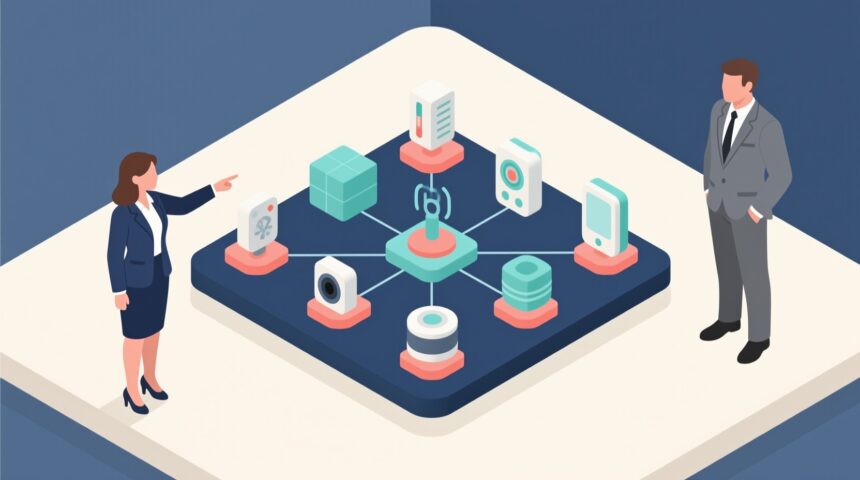
In the last decade, we’ve observed an immense surge in technological advancements. From smart homes to wearables, cars to refrigerators, the Internet of Things (IoT) has successfully penetrated every facet of our lives. But have you ever wondered what makes all this possible? What powers these devices to become more intelligent, responsive, and adaptable? The answer: Cloud Computing.
The market for the Internet of Things (IoT) has exploded in recent years. Precedence Research projects that it will be worth over $1.5 trillion by 2032.
Cloud computing offers unparalleled resources, scalability, and flexibility, making it the backbone of the IoT revolution. This synergy between IoT and cloud platforms is transforming industries, innovating solutions, and simplifying processes. Let’s explore how IoT and Cloud Integration work hand in hand to power the future:
Of course, there are a lot of risks associated with cloud computing. However, there are far more benefits that cannot be overlooked.
More Read
1. Endless Scalability: Cloud’s Biggest Offering To IoT
IoT devices produce an enormous amount of data every second. Processing, storing, and analyzing this data is a monumental task. This is where cloud platforms come to the rescue.
Cloud platforms provide virtually limitless storage and processing capabilities, ensuring that as the number of connected devices grow, the infrastructure can adapt and handle it. The seamless scalability offered by the cloud is indeed its most significant contribution to the IoT ecosystem. As cloud experts often say, the cloud’s capacity to scale is the secret sauce of IoT’s global reach and success.
2. Real-Time Processing And Analysis
One of the critical aspects of IoT is its need for real-time data processing and analytics. Whether it’s a health monitor alerting a user of abnormal heart rates or a smart home system adjusting room temperatures, the reaction time is paramount.
Cloud platforms are built to handle real-time data analytics, processing information as it comes in and providing immediate insights. This instant feedback loop is crucial for IoT devices to function optimally and improve user experiences.
3. Cost-Effective Storage Solutions
With billions of devices producing data, the storage demands are bound to be colossal. Traditional storage solutions would be not only inefficient but also exorbitantly expensive.
Cloud computing provides a cost-effective alternative. Instead of maintaining physical servers, organizations can rent storage space in the cloud, only paying for what they use. As data storage needs increase or decrease, companies can easily adjust their storage plans, ensuring both cost-efficiency and flexibility.
4. Enhanced Security And Compliance
Security is a significant concern when it comes to IoT. The vast number of interconnected devices creates multiple entry points for potential cyber threats.
However, cloud platforms are continually investing in advanced security measures. From encryption to firewalls, identity and access management, and regular compliance checks, cloud platforms offer a robust security infrastructure. It ensures that data transmitted from IoT devices is well-protected against breaches and cyberattacks.
5. Seamless Integration And Interoperability
As the IoT ecosystem expands, devices from different manufacturers need to communicate effectively. Cloud platforms provide tools and frameworks that ensure seamless integration and interoperability. This means that a wearable from Company A can effectively communicate with a smart home system from Company B, making the IoT ecosystem truly interconnected and cohesive.
6. Remote Access And Control
One of the core advantages of the IoT is the ability to access and control devices remotely. Cloud platforms make this possible by hosting applications and interfaces that can be accessed from anywhere, any time.
Whether it’s adjusting your home’s thermostat while you’re on vacation or a manufacturer monitoring equipment in a remote factory, cloud platforms enable 24/7 access, ensuring control and monitoring in real-time.
7. Future-Proofing With Updates And Patches
IoT devices require regular software updates to improve functionalities and fix vulnerabilities. Distributing these updates can be challenging, especially with devices scattered globally. Cloud platforms offer a centralized system where updates and patches can be rolled out universally, ensuring that devices stay up-to-date and secure.
Conclusion
There are so many gamechanging new technologies that have shaped our world in recent years. One of the biggest has been the Internet of Things. In fact, we have gone on to say that the IoT is probably the most impactful new technology of the 21st Century.
The confluence of IoT and Cloud Computing is undeniably ushering in a new era of technological innovation. As more devices become interconnected, the reliance on the cloud will only grow. With its scalability, real-time processing capabilities, cost-effectiveness, and advanced security measures, the cloud is perfectly poised to power the next phase of the IoT revolution.