We use cookies, including third-party cookies from Google to serve personalized ads through AdSense, to operate this site and understand how it is used. By continuing to browse, you accept this use. See our Privacy Policy and Terms of Use for details, including how to opt out of personalized advertising.
Accept
SmartData CollectiveSmartData Collective
  • Analytics
    AnalyticsShow More
    chatgpt image jul 21, 2026, 04 34 30 pm
    4 Core Benefits of Predictive Maintenance after Vibration Analysis
    10 Min Read
    How Does Data Mining Boost Customer Satisfaction in Logistics? Harnessing Analytics for Results -- AI-generated illustration
    How Does Data Mining Boost Customer Satisfaction in Logistics? Harnessing Analytics for Results
    11 Min Read
    chatgpt image jul 13, 2026, 04 23 45 pm
    How Data Analytics Helps Companies Improve User Engagement
    19 Min Read
    chatgpt image jul 13, 2026, 03 59 46 pm
    How Data Analytics Improves Multi-Location Search Strategies
    10 Min Read
    cybersecurity efforts
    How Behavioral Analytics and AI Are Redefining Cybersecurity for Boca Raton Businesses
    14 Min Read
  • Big Data
  • BI
  • Exclusive
  • IT
  • Marketing
  • Software
Search
© 2008-25 SmartData Collective. All Rights Reserved.
Reading: Your Company’s Data Supply Chain
Share
Notification
Font ResizerAa
SmartData CollectiveSmartData Collective
Font ResizerAa
Search
  • About
  • Help
  • Privacy
Follow US
© 2008-23 SmartData Collective. All Rights Reserved.
SmartData Collective > Big Data > Data Mining > Your Company’s Data Supply Chain
Business IntelligenceData Mining

Your Company’s Data Supply Chain

EvanLevy
EvanLevy
5 Min Read
Your Company’s Data Supply Chain
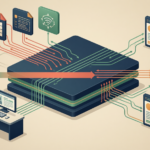
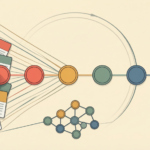
Illustration generated with FLUX.2 [klein 4B] via Cloudflare Workers AI.
SHARE
Chain
photo by BotheredByBees

At Baseline Consulting we’ve been talking for several years about the concept of a data supply chain. But IT executives are only now starting to catch on to its importance.

Over the past 15 years there has been a big push to standardize on off-the-shelf software. This allowed IT organizations to buy instead of build. We’ve migrated from proprietary architectures to Windows and Linux standards. We’ve gone from custom-built applications to packaged CRM and ERP applications. IT adopted this approach because its value is automating business processes and supporting analysis– not inventing new technologies. The problem is that moving data between all of these “packaged systems” still requires custom code.

There’s no question that middleware provides value: it delivers the pre-built data pipes. Unfortunately, these are toolkits requiring developers to write code to connect their packages to the pipes. Most CIOs are blissfully unaware of the amount of custom coding middleware requires. Trust me: IT spends an enormous amount of money on supporting such data migration solutions. Many IT shops still view middleware as sacred ground.

The data warehousing world has enthusiastically adopted ETL tools to reduce custom coding so they can focus on the issues of data accuracy and usability. One fact lost in translation is that ETL integrates data– it’s more than just a pipe. The application world has adopted EAI, ESB, and orchestration to move data quicker. However, there’s no integration. Each application is responsible for integrating the data they receive.
More Read

IBM Makes Big Data Deal for Vivisimo and Supports Cloudera Hadoop
Big Data in the Sports Industry
How to Integrate Finance and Operations by Leveraging Cloud Storage
Healthcare Has a Problem: Big Data & The Law of Seven
The Architecture Value Proposition

So, there’s even more custom code. Code to connect an application to the pipes. Code to integrate and cleanup the data they receive from the pipes.
Custom code to move data around isn’t the answer. Orchestration, message passing, and data movement just creates a labyrinth of pipes. There are no economies of scale. The data doesn’t get better.

Walmart learned years ago that it was impractical to have a custom (and separate) distribution system for every supplier. They knew the cost benefits of a standard distribution system; this meant they needed to standardize the size of the trailers, the size of the boxes, and the way the boxes were packed and shipped. The benefits of a supply chain is that standardization occurs at the most cost effective point: the source. Walmart’s distribution success was measured by its ability to accept new suppliers and manage more shipments.

Most CIOs don’t recognize that they have a data supply chain. Instead of building a custom distribution system for each suppler (each business application), they should be focused on a single data supply chain. Middleware supports the creation of custom distribution solutions, but not the standardization of data. A data supply chain can only be successful if the data is standardized. Otherwise everyone is forced to write custom code to standardize, clean, and integrate the data.
Link to original post

TAGGED:data quality
Share This Article
Facebook Pinterest LinkedIn
Share

Follow us on Facebook

Latest News

Flat editorial illustration: The article's core relationship is the alignment between customer behavioral data (visit frequency,
Data-Driven Loyalty: How Restaurants Use Behavioral Analytics to Optimize Revenue
Exclusive
Flat editorial illustration: The article's core relationship is that reliable eCommerce attribution depends on a unified, well-st
How eCommerce Data Teams Can Build Attribution That Holds Up
Big Data Exclusive
Flat editorial illustration: The article's core relationship is the contrast between fragmented inherited data infrastructure (wh
Data Stack Consolidation as a Data Quality and Governance Strategy for Mid-Market Teams
Big Data Exclusive
Emergency responder and nurse reviewing tablet with data dashboards
Evaluating Workforce Assessment Tools: Looking Beneath the Dashboard at Psychometric Data
Exclusive Software

Stay Connected

1.2KFollowersLike
33.7KFollowersFollow
222FollowersPin

You Might also Like

Can Business Automation Solve Your Data Quality Problems?
Big Data

Can Business Automation Solve Your Data Quality Problems?

6 Min Read
TDWI World Conference Chicago 2009
Business IntelligenceData Warehousing

TDWI World Conference Chicago 2009

14 Min Read
The Challenges and Solutions of Big Data Testing
Big DataData ManagementData QualitySoftware

The Challenges and Solutions of Big Data Testing

7 Min Read
Selling the Business Benefits of Data Quality
Data Quality

Selling the Business Benefits of Data Quality

0 Min Read

SmartData Collective is one of the largest & trusted community covering technical content about Big Data, BI, Cloud, Analytics, Artificial Intelligence, IoT & more.

AI chatbots
AI Chatbots Can Help Retailers Convert Live Broadcast Viewers into Sales!
Chatbots
The Art of Conversation: Enhancing Chatbots with Advanced AI Prompts
Chatbots

Quick Link

  • About
  • Contact
  • Privacy
Follow US
© 2008-26 SmartData Collective. All Rights Reserved.
Welcome Back!

Sign in to your account

Username or Email Address
Password

Lost your password?