Big data has made the field of cybersecurity a lot more complicated. On the one hand, many cybersecurity professionals are using big data technology to fortify their defenses and more easily respond to cybersecurity threats. Unfortunately, hackers have access to the same technology. They are using big data to orchestrate more viscous attacks than ever before.
Data breaches are becoming more common as hackers use deadlier, data-driven strategies. One report showed that there were 1,862 data breaches in 2021 alone.
Fortunately, some permission settings can do wonders to reduce these risks. Even the most data-savvy hackers will not be able to infiltrate your systems very easily with the right controls in place. One of the best ways to stop them is by using the Principle of Least Privilege.
The Principle of Least Privilege is the Key to Stopping Data Breaches
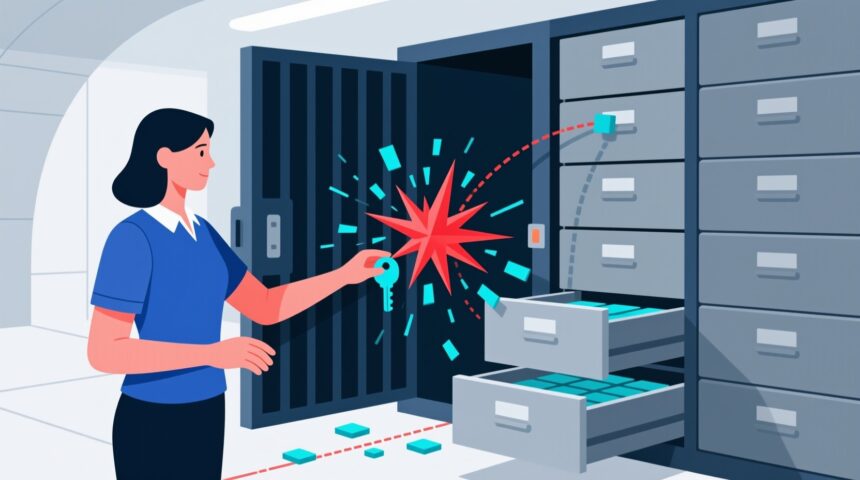
The principle of least privilege is an idea that proposes that the end-users should be given the minimum number of permissions and access in the system. Namely, their level of access should be limited only to the necessities that are required and that are absolutely mandatory for them to carry out their work. The reasoning behind it is that companies can reduce the potential damage an attacker can do in case of a breach. For example, if a low-level account gets hacked, the least privilege access principle eliminates the possibility of a data breach being spread out laterally.
More Read

In addition to minimizing the attack surface, the PoLP principle provides other benefits too. Limiting end-users access only to applications and files they are familiar with reduces the human error factor from potential unintentional mistakes. It also helps to contain the malware spread in case one of the users or the applications gets infected. Finally, the PoLP approach prevents internal leaks and makes them easier to track by limiting the number of users who have access to sensitive data.
Defining Privilege Creep and PoLP in an Effort to Fight Data Breaches
Companies that have not implemented the principle of least privilege are at risk of developing privilege creep, which is one of the biggest threats of a data breach. It is a process in which users and identities are provided a large amount of access and privileges that are not necessary for them to do their jobs.
This process is usually initiated by a lack of supervision and gradually becomes impossible to manage. Besides being a data security risk, privilege creep can also make your company non-compliant to quite a few standards, including SOX, ISO 27001, and PCI DSS.
Preventing privilege creep should be a priority to any organization, and regarding this, there are a few rules you need to follow:
- Establishing and enforcing an access control policy that includes access authorization and administration.
- Integrating solid identity governance and regular reviews of the privilege and access of the employees.
- Reducing the number of departments that manage the access and privilege of end-users.
- Implementing reasonable provisioning and de-provisioning of end-users and employees in collaboration with the security team.
Even though these processes are essential for the security and compliance of your organization, they can be quite challenging and burdensome. Thankfully, there are plenty of automated software solutions that can help you with reducing privilege creep and help you adopt the PoLP.
Why Is PoLP Important?
When implemented properly, the PoLP approach can be very beneficial for your organization. Namely, it can be the tool necessary to bridge the gap between usability and security. It’s no secret that having a policy like this can protect critical data by minimizing the attack surface. It can bring better stability to your system by limiting the access to databases and programs end-users can edit and configure. PoLP can also improve the overall “security health” of your company by keeping malware infections contained and preventing them from spreading out. It can reduce the chances of internal leaks while also helping you stay compliant at the same time.
However, there are some downsides to it too. End-users are usually not happy with this principle, but they need to understand that it is highly beneficial to adopt it. Even if they are not abusing their privileged rights and access, low-level accounts can be – and often are – a common target for attackers. This policy is not set in place as a punishment that complicates end-users’ lives – rather, it is there to help the organization control the damage in case of a cyber-attack. Preventing the attacker’s access and inhibiting them from moving laterally through the databases & files is essential to protect sensitive information and important data.
Principle of Least Privilege is Important for Fighting Data Breaches as Hackers Become Data-Savvier
Hackers are becoming more knowledgeable about big data and finding new ways to utilize it to launch more devastating attacks. Fortunately, there are some ways to minimize the risks of a data breach.
PoLP can act as a security policy that will help organizations to minimize the attack surface in the case of a data breach or a cyber-attack. It does well to prevent and limit the damage done by internal and external attacks. Of course, there are other advantages to implementing it too, like greater system stability, compliance, and malware containment.
On the other hand, refusing to implement PoLP can lead to privilege creep, which is a state in which there are too many over-privileged identities that it is too difficult to deal with. Properly implementing PoLP and preventing privilege creep is best done with the help of an automated software solution that can be found online.