We use cookies, including third-party cookies from Google to serve personalized ads through AdSense, to operate this site and understand how it is used. By continuing to browse, you accept this use. See our Privacy Policy and Terms of Use for details, including how to opt out of personalized advertising.
Accept
SmartData CollectiveSmartData Collective
  • Analytics
    AnalyticsShow More
    Flat editorial illustration: The article connects AI and marketing analytics with managerial judgment grounded in consumer behavi
    How an Online MBA in Marketing Connects AI and Data Analytics
    11 Min Read
    What Kind of Problem-Solving Distinguishes Data Analysts From Software Engineers -- AI-generated illustration
    What Kind of Problem-Solving Distinguishes Data Analysts From Software Engineers
    7 Min Read
    chatgpt image jul 21, 2026, 04 34 30 pm
    4 Core Benefits of Predictive Maintenance after Vibration Analysis
    10 Min Read
    How Does Data Mining Boost Customer Satisfaction in Logistics? Harnessing Analytics for Results -- AI-generated illustration
    How Does Data Mining Boost Customer Satisfaction in Logistics? Harnessing Analytics for Results
    11 Min Read
    chatgpt image jul 13, 2026, 04 23 45 pm
    How Data Analytics Helps Companies Improve User Engagement
    19 Min Read
  • Big Data
  • BI
  • Exclusive
  • IT
  • Marketing
  • Software
Search
© 2008-25 SmartData Collective. All Rights Reserved.
Reading: Big Data is the Key to the Future of Multi-Device Marketing
Share
Notification
Font ResizerAa
SmartData CollectiveSmartData Collective
Font ResizerAa
Search
  • About
  • Help
  • Privacy
Follow US
© 2008-23 SmartData Collective. All Rights Reserved.
SmartData Collective > Big Data > Big Data is the Key to the Future of Multi-Device Marketing
Big DataExclusiveMarketing

Big Data is the Key to the Future of Multi-Device Marketing

Ryan Kh
Ryan Kh
6 Min Read
Multi-device marketing
SHARE

Digital marketers must reach customers across multiple devices. According to Criteo Mobile eCommerce Report, 40% of all online transactions involve multiple devices. Brands that failed to engage customers across different platforms are leaving their digital strategy to chance.

Contents
  • Challenges acquiring data across different channels
  • Establishing a Consumer Identity is the Key to Collecting Big Data
  • Cross-Device Marketing Relies Heavily on Big Data

Traditionally, multi-device marketing has focused on in-store marketing and improving ecommerce channels, but there are numerous other applications. Companies that employ digital signage can utilize multi-device data to improve their own engagement strategies.

Unfortunately, optimizing a multi-device marketing campaign is often very difficult. Marketers typically only see one device in their analytics reports, even though the customer usually uses three to engage with them. Big data scientists are developing new solutions to help marketers track customers across different platforms.

Challenges acquiring data across different channels

A recent study from eMarketer found that most marketers are struggling to track their cross-device marketing campaigns. The report found only 30% of marketers used any channel tracking at all. Nearly two-thirds that tried tracking data across channels failed to do so effectively.

More Read

Managing Application Access When Corporate VPNs Reach Capacity Limits -- AI-generated illustration
Managing Application Access When Corporate VPNs Reach Capacity Limits
Transforming Data Into Action [PART 1]
VPNs Are Crucial for Data Security on Public Wi-Fi
The Promise of Big Data: How it will Impact Roles, Company Culture and the Industry in High Performance Environments
TV By the Numbers: Measuring My Viewing Habits Online

Establishing a Consumer Identity is the Key to Collecting Big Data

When analyzing customer behavior across devices, data is highly fragmented. Marketers have a hard time parsing together information to tell a coherent story about an individual customer’s behavior. Finding patterns with multiple customers is even more challenging.

MarketingLand’s Mike Sands states that the only solution is to identify the customer’s identity at the beginning of the engagement process.

“As consumers engage with a brand across devices, they create fragmented identities within each platform. So marketers lack a connected view of the customer journey.

But a single view can be created by deterministically matching a brand’s first-party data across all of these devices and tying it back to the individual customer in a privacy-safe way. When brands can recognize their customers as people, they are able to target ads with precision and offer the right experience in the right context as consumers switch between web, mobile, email and brick-and-mortar stores.

Mastering cross-device identity is the key to delivering better experiences, making the most of marketing budgets and improving measurement for continued optimization. What’s more, marketers will be ready for a future where new devices will open up opportunities to engage with customers in new ways.”

There are a variety of ways that you can identify your customers. Here are the two main approaches to identify the customer and collect data on them:

  • Deterministic cross-device matching. Deterministic cross-device matching involves collecting identifying information on your customers at the beginning of the engagement process. This information is usually a customer’s email address. If you collect this information during the first stage of engagement, you can use it to monitor customer behavior in the future, regardless of the devices they use.
  • Probabilistic models. Probabilistic models are used to draw patterns between two devices, so you can tell if they appear to belong to the same individual. Probabilistic models track when two devices connect to the same networks, travel together and use similar apps.

There are advantages and drawbacks to each of these models. Deterministic cross-device matching is nearly 100% accurate, since any given email only belongs to a single customer. However, there is no guarantee that you can acquire it at the beginning of the engagement funnel. If you can’t use deterministic cross-device matching to identify the customer at the initial stages of your campaign, you will miss crucial data on the effectiveness of the targeting strategy of your campaign, initial creatives and other critical variables.

Probabilistic models can be used to collect data on customers at any stage of the campaign. However, they aren’t as reliable. Their accuracy is especially limited for local campaigns in small communities, because you may be trying to draw comparisons between multiple customers that use the same WiFi networks and often travel in the same social circles (meaning their devices will often be together, which creates a greater level of uncertainty about your ability to identify a given device or customer).

Your best solution is to use both together. Try to identify a customer using probabilistic matching and confirm your hypothesis with a deterministic cross-device matching model.

Cross-Device Marketing Relies Heavily on Big Data

Data is the lynchpin of any marketing strategy. It is even more important for marketing on multiple devices, since it is difficult to understand customer’s behavior. However, acquiring data is a challenge. Fortunately, there a couple of new models that can make it easier.


TAGGED:big dataMulti-Device Marketing
Share This Article
Facebook Pinterest LinkedIn
Share
ByRyan Kh
Follow:
Ryan Kh is an experienced blogger, digital content & social marketer. Founder of Catalyst For Business and contributor to search giants like Yahoo Finance, MSN. He is passionate about covering topics like big data, business intelligence, startups & entrepreneurship. Email: ryankh14@icloud.com

Follow us on Facebook

Latest News

Flat editorial illustration: The article’s core relationship is that restoring a refrigeration system does not establish trustwor
After the Cyberattack, Can You Trust the Machine?
Artificial Intelligence News
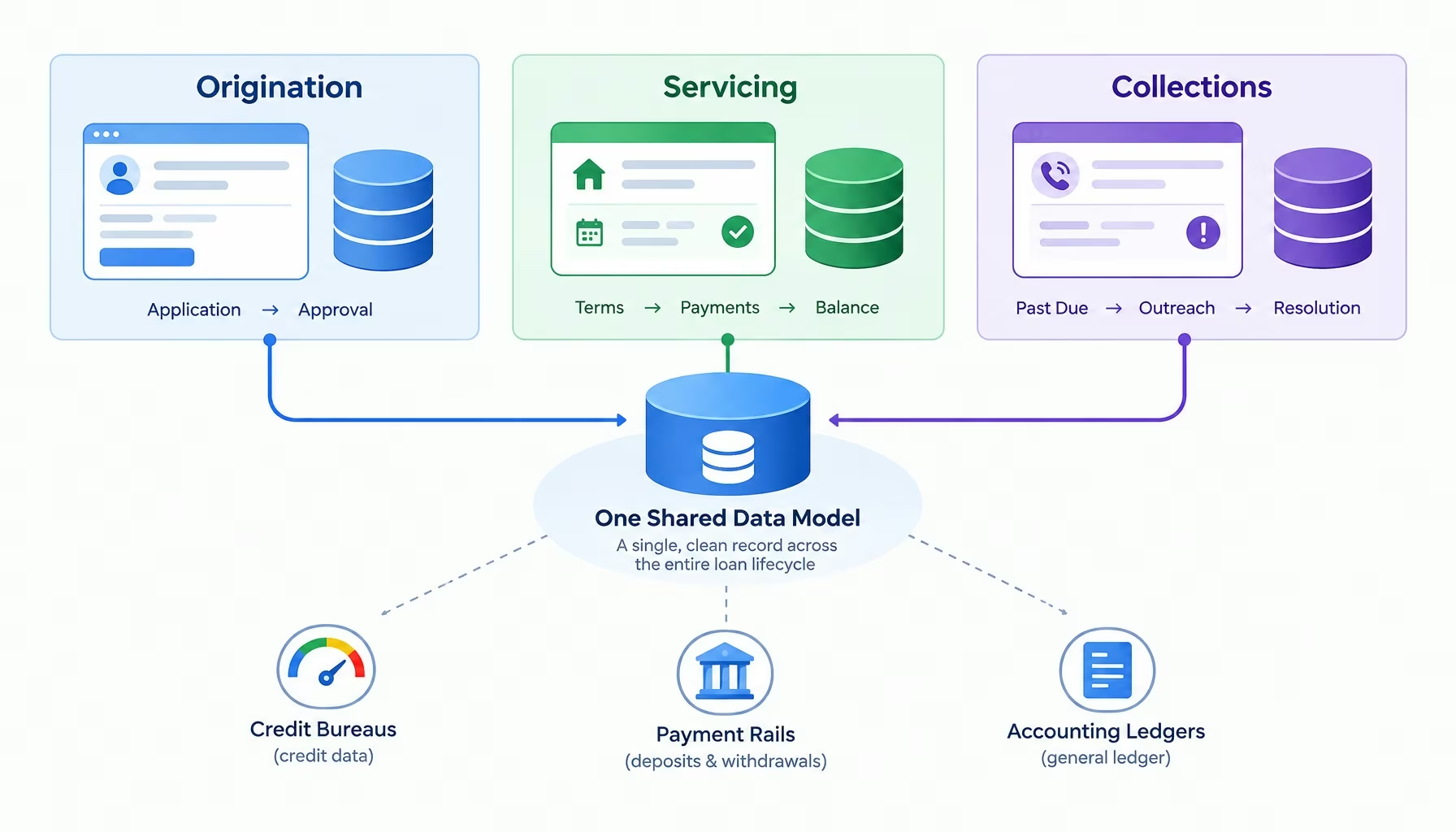
Flat editorial illustration: A technology-editorial comparison of disconnected origination, servicing, and collections records dr
The Data Reconciliation Problem Inside Disconnected Lending Systems
Big Data Exclusive Fintech
Flat editorial illustration: The article connects AI and marketing analytics with managerial judgment grounded in consumer behavi
How an Online MBA in Marketing Connects AI and Data Analytics
Analytics Artificial Intelligence Big Data Exclusive
Flat editorial illustration: The article connects commercial drone capture with integrated software workflows that organize and r
Drone Technology as a Business Investment: Calculating ROI, Costs, and Long-Term Value
Business Intelligence Marketing Software

Stay Connected

1.2KFollowersLike
33.7KFollowersFollow
222FollowersPin

You Might also Like

5 Ways Big Data Is Impacting The Self-Storage Industry
Big DataExclusive

5 Ways Big Data Is Impacting The Self-Storage Industry

7 Min Read
Bad Data Mistakes
Big DataData Quality

The Lessons We can Learn from Bad Data Mistakes Made Throughout History

7 Min Read
The Exceedingly Prominent Role of Big Data Today
Big Data

The Exceedingly Prominent Role of Big Data Today

6 Min Read
Importance Of Using Data Analytics To Optimize Lead Pipelines
Analytics

Importance Of Using Data Analytics To Optimize Lead Pipelines

5 Min Read

SmartData Collective is one of the largest & trusted community covering technical content about Big Data, BI, Cloud, Analytics, Artificial Intelligence, IoT & more.

From Bolts to Bots: How AI Is Fortifying the Automotive Industry
Artificial Intelligence
Artificial Intelligence for eCommerce: A Closer Look
Artificial Intelligence

Quick Link

  • About
  • Contact
  • Privacy
Follow US
© 2008-26 SmartData Collective. All Rights Reserved.
Welcome Back!

Sign in to your account

Username or Email Address
Password

Lost your password?