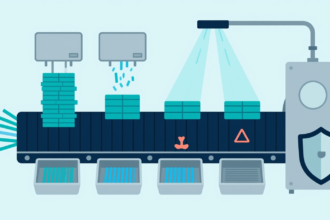
Big data isn’t just industry speak anymore. By now, universities are teaching it in their MBA and marketing programs – and preparing data scientists within their engineering or mathematics programs. Most companies, for that matter, are using big data is one way or another, most often utilizing an ad tech platform like a DMP, to gain insights into customer behavior and increase ROI on ad spend.
Big data isn’t just industry speak anymore. By now, universities are teaching it in their MBA and marketing programs – and preparing data scientists within their engineering or mathematics programs. Most companies, for that matter, are using big data is one way or another, most often utilizing an ad tech platform like a DMP, to gain insights into customer behavior and increase ROI on ad spend. And there are multiple multi-million dollar partnerships, investments and acquisitions of big data platforms that readily visualize findings from batch computing large data sets (AKA, Hadoop).
Finally, big data is growing into the very big boots its buzz has built, but there’s a semi-unexpected problem about big data that few have truly addressed: varying sources.
The necessary data to lead a data-driven company or strategy is far reaching. It encompasses everything from enterprise financial data quarter-over-quarter to bounce rates week-over-week. Worse, for your individual teams, each department needs different data sets, often visualized to cater to the team with action items dedicated to increasing the productivity and efficiency of said department. In other words, what your sales team uses and what your marketing team uses aren’t often going to be the same data platform, and if it is, its likely that one of those teams is suffering for it.
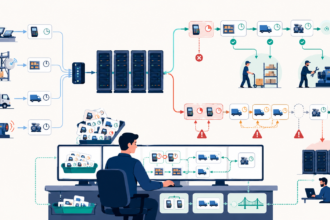
DMPs attempt to address this issue and can harness data from multiple sources including spreadsheets, social media, purchased third-party data and more. This allows companies to segment their users in order to increase the ROI of ad spend.
However, outside of the ad team, DMPs don’t offer much to any other team. For marketing departments, there is no action item. Nothing creative, nothing visual – just deep segmentation that might inform future creative copy decisions. For the sales team, there may be quantitative data with which to prove to sponsors, partners or clients the relativity of a particular brand within the already existing customer base, but there is nothing qualitative about it. After all, much of that data is simply purchased anonymized user transactions or scraped via tracking cookies – neither of which are the most trustworthy sources to begin with, no matter how expensive.
What companies now need is a distributed data warehouse built specifically for solving the problem of fragmented data sources and uses. After all, in the big data world, the current main issues are thus:
- The experience is fragmented for everyone
- Fragmentation creates silos, and silos prevent actionability (rendering data worthless)
- Companies fail to scale, reach ROI or abandon big data practices entirely due to lost revenue
A distributed data warehouse addresses each of these problems, beginning with a holistic approach that, with user consent, pulls first-, second- and purchased third-party data (if necessary) into a visualized platform that allows for easy customer segmentation. The point here is to create the ultimate customer experience by using their shared data points to delight and surprise, in the most convenient way possible. A distributed data warehouse enables companies with the following:
- Company-wide data platform easily utilized across multiple teams
- Action-based platform that collects user data, protects user data and allows for optimal customer outreach, brand affinity identification and premium sponsorship amplification (in other words, a DDW gives you all the power of an agency without the expense of an agency)
- Easily identifiable ROI metrics including decreased ad spend for increased engagement, and tens of thousands of collected data points within minutes, all of which can be counted as an asset (think: Facebook’s $190B valuation means each individual user is worth about $150. A DDW proves and secures that value).
In the end, a distributed data warehouse is a data concierge service for large companies, at which data platforms and services are fragmented, causing an inability to scale any data-driven strategies across the board. It’s about collecting big data ethically, storing it securely, making it understandable and accessible for all teams, and then putting actionability to it with ease, so that no one ever has to wait to make their data useful. Because it’s the waiting that fails to produce ROI – and solving the data fragmentation problem is the best place to start.