Cookies help us display personalized product recommendations and ensure you have great shopping experience.

By using this site, you agree to the Privacy Policy and Terms of Use.
Accept
SmartData CollectiveSmartData Collective
  • Analytics
    AnalyticsShow More
    unusual trading activity
    Signal Or Noise? A Decision Tree For Evaluating Unusual Trading Activity
    3 Min Read
    software developer using ai
    How Data Analytics Helps Developers Deliver Better Tech Services
    8 Min Read
    ai for stock trading
    Can Data Analytics Help Investors Outperform Warren Buffett
    9 Min Read
    media monitoring
    Signals In The Noise: Using Media Monitoring To Manage Negative Publicity
    5 Min Read
    data analytics
    How Data Analytics Can Help You Construct A Financial Weather Map
    4 Min Read
  • Big Data
  • BI
  • Exclusive
  • IT
  • Marketing
  • Software
Search
© 2008-25 SmartData Collective. All Rights Reserved.
Reading: Data May Require Unique Data Quality Processes
Share
Notification
Font ResizerAa
SmartData CollectiveSmartData Collective
Font ResizerAa
Search
  • About
  • Help
  • Privacy
Follow US
© 2008-23 SmartData Collective. All Rights Reserved.
SmartData Collective > Business Intelligence > CRM > Data May Require Unique Data Quality Processes
CRM

Data May Require Unique Data Quality Processes

SteveSarsfield
SteveSarsfield
7 Min Read
SHARE

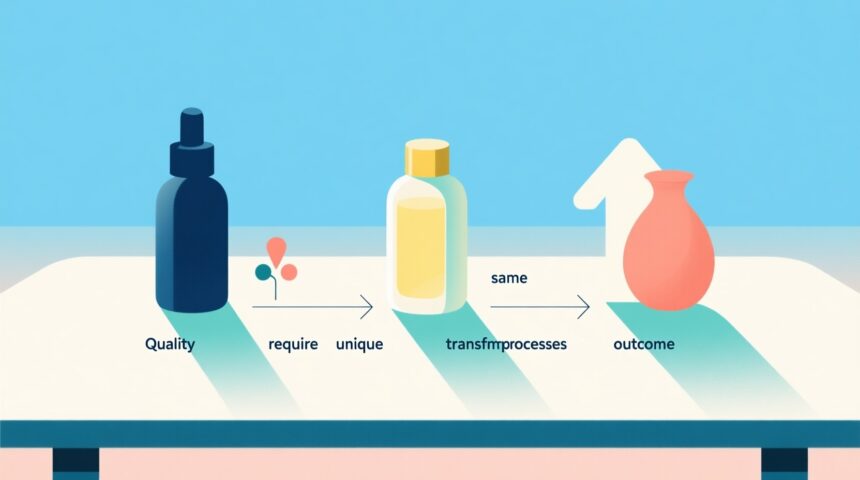
A few things in life have the same appearance, but the details can vary widely.  For example, planets and stars look the same in the night sky, but traveling to them and surviving once you get there are two completely different problems. It’s only when you get close to your destination that you can see the difference.

All data quality projects can appear the same from afar but ultimately can be as different as stars and planets. One of the biggest ways they vary is in the data itself and whether it is chiefly made up of name and address data or some other type of data.

Name and Address Data
A customer database or CRM system contains data that we know much about. We know that letters will be transposed, names will be comma reversed, postal codes will be missing and more.  There are millions of things that good data quality tools know about broken name and address data since so many name and address records have been processed over the years. Over time, business rules and processes are fine-tuned for name and address data.  Methods of matching up names and addresses become more and more powerful.

Data quality solutions also understand what name and …

More Read

Enterprise politics vs. the imperative of social software
Aloofix v2.0
Electronic Substitution in the New Economy
No wizard, just you and the data
Does President Obama’s Chief Performance Officer Validate Performance Management?


A few things in life have the same appearance, but the details can vary widely.  For example, planets and stars look the same in the night sky, but traveling to them and surviving once you get there are two completely different problems. It’s only when you get close to your destination that you can see the difference.

All data quality projects can appear the same from afar but ultimately can be as different as stars and planets. One of the biggest ways they vary is in the data itself and whether it is chiefly made up of name and address data or some other type of data.

Name and Address Data
A customer database or CRM system contains data that we know much about. We know that letters will be transposed, names will be comma reversed, postal codes will be missing and more.  There are millions of things that good data quality tools know about broken name and address data since so many name and address records have been processed over the years. Over time, business rules and processes are fine-tuned for name and address data.  Methods of matching up names and addresses become more and more powerful.

Data quality solutions also understand what name and addresses are supposed to look like since the postal authorities provide them with correct formatting. If you’re somewhat precise about following the rules of the postal authorities, most mail makes it to its destination. If we’re very precise, the postal services can offer discounts. The rules are clear in most parts of the civilized world. Everyone follows the same rules for name and address data because it makes for better efficiency.

So, if we know what the broken item looks like and we know what the fixed item is supposed to look like, you can design and develop processes that involve trained, knowledgeable workers and automated solutions to solve real business problems. There’s knowledge inherent in the system and you don’t have to start from scratch every time you want to cleanse it.

ERP, Supply Chain Data
However, when we take a look at other types of data domains, the picture is very different. There isn’t a clear set of knowledge what is typically input and what is typically output and therefore you must set up processes for doing so. In supply chain data or ERP data, we can’t immediately see why the data is broken or what we need to do to fix it. ERP data is likely to be sort of a history lesson of your company’s origins, the acquisitions that were made, and the partnership changes throughout the years. We don’t immediately have an idea about how the data should ultimately look. The data that exists in this world is specific to one client or a single use scenario which cannot be handled by existing out-of-the-box rules

With this type of data you may find the need to collaborate more with the business users of the data, who expertise in determining the correct context for the information comes more quickly, and therefore enable you to effect change more rapidly. Because of the inherent unknowns about the data, few of the steps for fixing the data are done for you ahead of time. It then becomes critical to establish a methodology for:

  • Data profiling in order to understanding what issues and challenges.
  • Discussions with the users of the data to understand context, how it’s used and the most desired representation. Since there are few governing bodies for ERP and supply chain data, the corporation and its partners must often come up with an agreed-upon standard.
  • Setting up business rules, usually from scratch, to transform the data
  • Testing the data in the new systems

I write about this because I’ve read so much about this topic lately. As practitioners you should be aware that the problem is not the same across all domains. While you can generally solve name and address data problems with a technology focus, you will often rely more on collaboration with subject matter experts to solve issues in other data domains.

Covering the world of data integration, data governance, and data quality from the perspective of an industry insider.

Link to original post

TAGGED:data quality
Share This Article
Facebook Pinterest LinkedIn
Share

Follow us on Facebook

Latest News

data migration risk prevention
Best Approach to Risk Management for Data Migration in Data-Driven Businesses
Big Data Data Management Exclusive Risk Management
AI in branding
How Data Analytics and Data Mining Strengthen Brand Identity Services
Big Data Exclusive
Hidden AI, a risk?
Hidden AI, Real Risk: A Governance Roadmap For Mid-Market Organizations
Artificial Intelligence Exclusive Infographic
unusual trading activity
Signal Or Noise? A Decision Tree For Evaluating Unusual Trading Activity
Analytics Exclusive Infographic

Stay Connected

1.2KFollowersLike
33.7KFollowersFollow
222FollowersPin

You Might also Like

Garbage in the Lockers and Gold on the Streets

4 Min Read
data integrity
Big Data

3 Huge Reasons that Data Integrity is Absolutely Essential

7 Min Read

The Data-Information Continuum

7 Min Read

Microwavable Data Quality

4 Min Read

SmartData Collective is one of the largest & trusted community covering technical content about Big Data, BI, Cloud, Analytics, Artificial Intelligence, IoT & more.

ai chatbot
The Art of Conversation: Enhancing Chatbots with Advanced AI Prompts
Chatbots
data-driven web design
5 Great Tips for Using Data Analytics for Website UX
Big Data

Quick Link

  • About
  • Contact
  • Privacy
Follow US
© 2008-25 SmartData Collective. All Rights Reserved.
Welcome Back!

Sign in to your account

Username or Email Address
Password

Lost your password?