With limited customer service resources, companies are challenged to deliver access to service in an expedient, fair and cost-effective manner. Since customers hate to wait, how can a company balance available resources and service—to effectively meet and/or exceed customer expectations? Queue management can help.
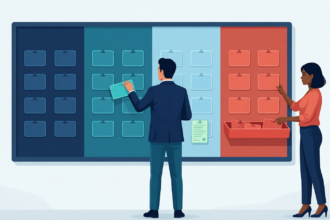
Where customers have to wait in line for service, you can be sure the science of queue management is involved. Queue management is the design of customer flow to and possibly through some function (cashier, customer service, help desk agent etc.). Processes can be documented, calculated and optimized and are sometimes enabled or automated by technology. But not all queues are created equal.
In a WSJ article, “Justice—Wait for it on the Checkout Line,” author Carl Bialik discusses how different industries react and adjust to improving customer wait times. For example, in an effort to speed service and ensure fairness (first come, first served) Wendy’s has long implemented a single line to order food. And most airlines, with the exception of the red carpet treatment for frequent fliers, also have implemented a single line for customer service.
Undoubtedly, most of us have experienced the aggravation of Murphy’s Law of queues — that the line next to you, will finish first. To address this issue, most transactional businesses (with the exception of grocery stores) have implemented a single line (or queue) for service. A single queue helps speed service and more importantly, gives waiting customers a sense of fairness that they will be served in an orderly fashion.
So your customer wants fair, but he/she probably also wants fast. And while you may think you’re delivering speedy service, your customer likely perceives something entirely different.
The above WSJ article cites a study by Richard Larson, a professor at MIT, which showed that customers waiting in line for a Boston Bank “overestimated their wait times by 23%”! So, customers often think they wait longer than they actually do, and get especially irritated when others get service (unfairly) after arriving later.
Now let’s add something else to the mix – suppose you are a business that has segmented your customer base and identified your most profitable customers. What if you wanted to design processes for them to “jump the queue”—allowing them to go first?
For example, in an effort to reward their most valuable customers, airlines often let passengers with status board an aircraft first. Some airlines employ priority baggage handling where bags in effect “jump the queue” by coming off the conveyor belt first. Passengers without status often look at this special treatment as unfair—at least until they achieve a level of status and start accruing special benefits!
Indeed, it’s a tricky balance to deliver a different level of service to a customer segment – especially when that treatment is visible to your entire customer base.
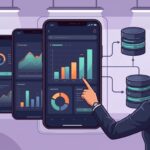
Technology can and should play a critical role in optimizing customer queues, especially when there is more demand than resources:
- A global grocer based out of the UK uses sensor technology to “count” how many people enter a store location and then “predict how many tills will be needed up to an hour in advance and monitor average waiting times and queue lengths.”
- Disney uses technology to create “virtual queues” such as FastPass to “track guest activity and smooth out demand by scheduling a future time slot for guests to return to an attraction.” This practice helps reduce wait times and allows guests to enjoy more attractions in the park instead of waiting in long lines.
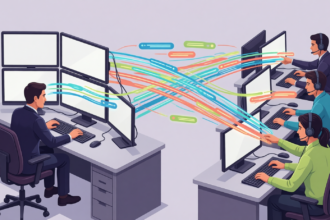
- Automated call distribution systems allow for the intelligent routing of priority customers to agents with the right skills to assist them.
When it comes to customer service, every business must consider its capacity, and required service levels based on customer expectations and then balance these variables with available resources, costs and fixed architectural constraints.
However, a word of warning; getting the service queue wrong could be a prime reason why your customers aren’t coming back. Richard Larson, the aforementioned MIT professor, says he remembers a time—23 years ago, when he wasn’t served on a first-come-first-serve basis at a local department store. He hasn’t been back since.
Questions:
- The WSJ article notes that at grocery stores there seems little time to exchange pleasantries with cashiers as management systems track the speed of each transaction. In the name of optimization are we sacrificing a “better” customer experience?
- Is self-checkout the savior for long wait times?
- When it comes to waiting in line—would you take fairness over fast? What about “valuable” customers that get to go first—any resentment?