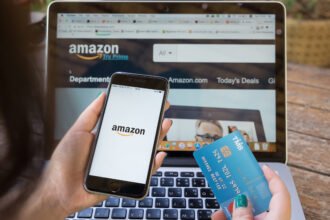
For all that buzz around Amazon’s sophisticated analytics and its targeted book recommendations, it is worth asking in Kevin Hillstrom’s priceless, heretic style: Is it just hype or does it really make the big difference for their business?
Do we really buy from Amazon because of the recommendations, personalized emails, the behavioral targeting through widgets?
Or do we buy from Amazon because they always have the cheapest price? (Not to the least because of the 3rd-party vendors and used books that are linked in.)
If they stopped being the least expensive would we still be buying from Amazon?
In other words, are they really competing on analytics? Or are they competing on price?
What is our willingness to pay extra for the kind of “marketing as a service” that Amazon has perfected?
Of course… this question isn’t really about Amazon, in the end. Much rather, I am trying to double check what the true value of sophisticated analytics and targeted marketing are. All hype aside.
Separate things: What you will buy vs. where you will buy it
There is no doubt that Amazon is the go-to place for doing your research on books.
But being the greatest place for researching books doesn’t necessarily mean that people will buy the books there if they can get them cheaper elsewhere.
I imagine we all go to many web sites to research what car, electronics, gear, etc. we should buy. Where we will buy the item that we settle on tends to be a different question though. We might check on eBay or Craigslist, for example.
So are we giving too much credit to Amazon’s sophisticated analytics and marketing?
The answer…
As Anil Batra was joking yesterday when I saw him at the OMMA Metrics and Measurement in San Francisco, a typical consultant’s answer to such a question could be: “That depends on … what it depends on.”
It depends on…
Of course, I don’t have Amazon’s data. But I think that the answer will indeed differ by buyer segment:
- High value prospects that buy books frequently and in higher quantities will likely appreciate the convenience and time savings. But given that these people buy so many books they would also be the segment that could get the biggest total savings by being disloyal to Amazon.
- Infrequent buyers that are strapped for time will value the convenience over a few bucks of savings per book.
- Infrequent buyers that are strapped for money but not for time would be more likely to put in the extra 5 minutes for buying the book at the cheapest vendor. Most books aren’t big ticket items. So this effect will likely be much less pronounced than, say, with electronics. But it would be there to a certain degree.
In the end, maybe the answer has not all that much to do with frequency but is a function of
- how much money vs. time buyers can save.
- how much value the individual puts on money vs. time
Time is money and money can buy time
The more time Amazon can save its book researchers, the more of them would buy their books on Amazon (assuming price is fixed). Still, those buyers who value money a lot more than convenience and time would be the hardest, if not impossible, to keep.
Anything else they could do?
Barnes and Noble has (or had) essentially a frequent buyer card. You could pay an annual fee and would get x % discounts on anything you buy.
But that really is just a return to the strategy of competing on price.
Could Amazon withhold access to book research features unless a buyer… purchased something in the last 12 months or joined some kind of for-pay club? That would be a return to subscription based content. Seems like it would backfire badly.
Bottom-line
It appears that the true value of all those analytics and targeted marketing for the retailer are in drawing the crowd into their (online) store. They get a shot at making sales (and cross-sales) that they wouldn’t otherwise have.
But converting researchers into buyers requires more than just targeted marketing. It also requires convenience, a “good enough” price, and of course customer satisfaction with previous transactions.
How would you go about measuring the value of targeted marketing effort XYZ?
If you have to measure ROI of targeted marketing effort XYZ you would probably do it through controlled testing.
That would be easy for Amazon’s targeted emails.
It would be harder for their book recommendations because you would wonder where they disappeared to if you fell into the control group.
Oh… but you could make them deliberately untargeted. Say you find that dinosaur book that the individual bought and shipped to somebody as a gift 3 years ago and recommend more dinosaur books.