Cookies help us display personalized product recommendations and ensure you have great shopping experience.

By using this site, you agree to the Privacy Policy and Terms of Use.
Accept
SmartData CollectiveSmartData Collective
  • Analytics
    AnalyticsShow More
    media monitoring
    Signals In The Noise: Using Media Monitoring To Manage Negative Publicity
    5 Min Read
    data analytics
    How Data Analytics Can Help You Construct A Financial Weather Map
    4 Min Read
    financial analytics
    Financial Analytics Shows The Hidden Cost Of Not Switching Systems
    4 Min Read
    warehouse accidents
    Data Analytics and the Future of Warehouse Safety
    10 Min Read
    stock investing and data analytics
    How Data Analytics Supports Smarter Stock Trading Strategies
    4 Min Read
  • Big Data
  • BI
  • Exclusive
  • IT
  • Marketing
  • Software
Search
© 2008-25 SmartData Collective. All Rights Reserved.
Reading: Your Company’s Data Supply Chain
Share
Notification
Font ResizerAa
SmartData CollectiveSmartData Collective
Font ResizerAa
Search
  • About
  • Help
  • Privacy
Follow US
© 2008-23 SmartData Collective. All Rights Reserved.
SmartData Collective > Big Data > Data Mining > Your Company’s Data Supply Chain
Business IntelligenceData Mining

Your Company’s Data Supply Chain

EvanLevy
EvanLevy
5 Min Read
SHARE
Chain
photo by BotheredByBees

At Baseline Consulting we’ve been talking for several years about the concept of a data supply chain. But IT executives are only now starting to catch on to its importance.

Over the past 15 years there has been a big push to standardize on off-the-shelf software. This allowed IT organizations to buy instead of build. We’ve migrated from proprietary architectures to Windows and Linux standards. We’ve gone from custom-built applications to packaged CRM and ERP applications. IT adopted this approach because its value is automating business processes and supporting analysis– not inventing new technologies. The problem is that moving data between all of these “packaged systems” still requires custom code.

There’s no question that middleware provides value: it delivers the pre-built data pipes. Unfortunately, these are toolkits requiring developers to write code to connect their packages to the pipes. Most CIOs are blissfully unaware of the amount of custom coding middleware requires. Trust me: IT spends an enormous amount of money on supporting such data migration solutions. Many IT shops still view middleware as sacred ground.

The data warehousing w…

More Read

Cyberlaw scholar Jonathan Zittrain of Harvard: Ubiquitous human…
How to Utilize Artificial Intelligence in Your eCommerce SEO Strategy
How Big Data Technology Impacts Investments and Trading
PAW: Completing the visitor targeting cycle
How BI and Data Analytics Pros Used Twitter in December

Chain
photo by BotheredByBees

At Baseline Consulting we’ve been talking for several years about the concept of a data supply chain. But IT executives are only now starting to catch on to its importance.

Over the past 15 years there has been a big push to standardize on off-the-shelf software. This allowed IT organizations to buy instead of build. We’ve migrated from proprietary architectures to Windows and Linux standards. We’ve gone from custom-built applications to packaged CRM and ERP applications. IT adopted this approach because its value is automating business processes and supporting analysis– not inventing new technologies. The problem is that moving data between all of these “packaged systems” still requires custom code.

There’s no question that middleware provides value: it delivers the pre-built data pipes. Unfortunately, these are toolkits requiring developers to write code to connect their packages to the pipes. Most CIOs are blissfully unaware of the amount of custom coding middleware requires. Trust me: IT spends an enormous amount of money on supporting such data migration solutions. Many IT shops still view middleware as sacred ground.

The data warehousing world has enthusiastically adopted ETL tools to reduce custom coding so they can focus on the issues of data accuracy and usability. One fact lost in translation is that ETL integrates data– it’s more than just a pipe. The application world has adopted EAI, ESB, and orchestration to move data quicker. However, there’s no integration. Each application is responsible for integrating the data they receive.

So, there’s even more custom code. Code to connect an application to the pipes. Code to integrate and cleanup the data they receive from the pipes.
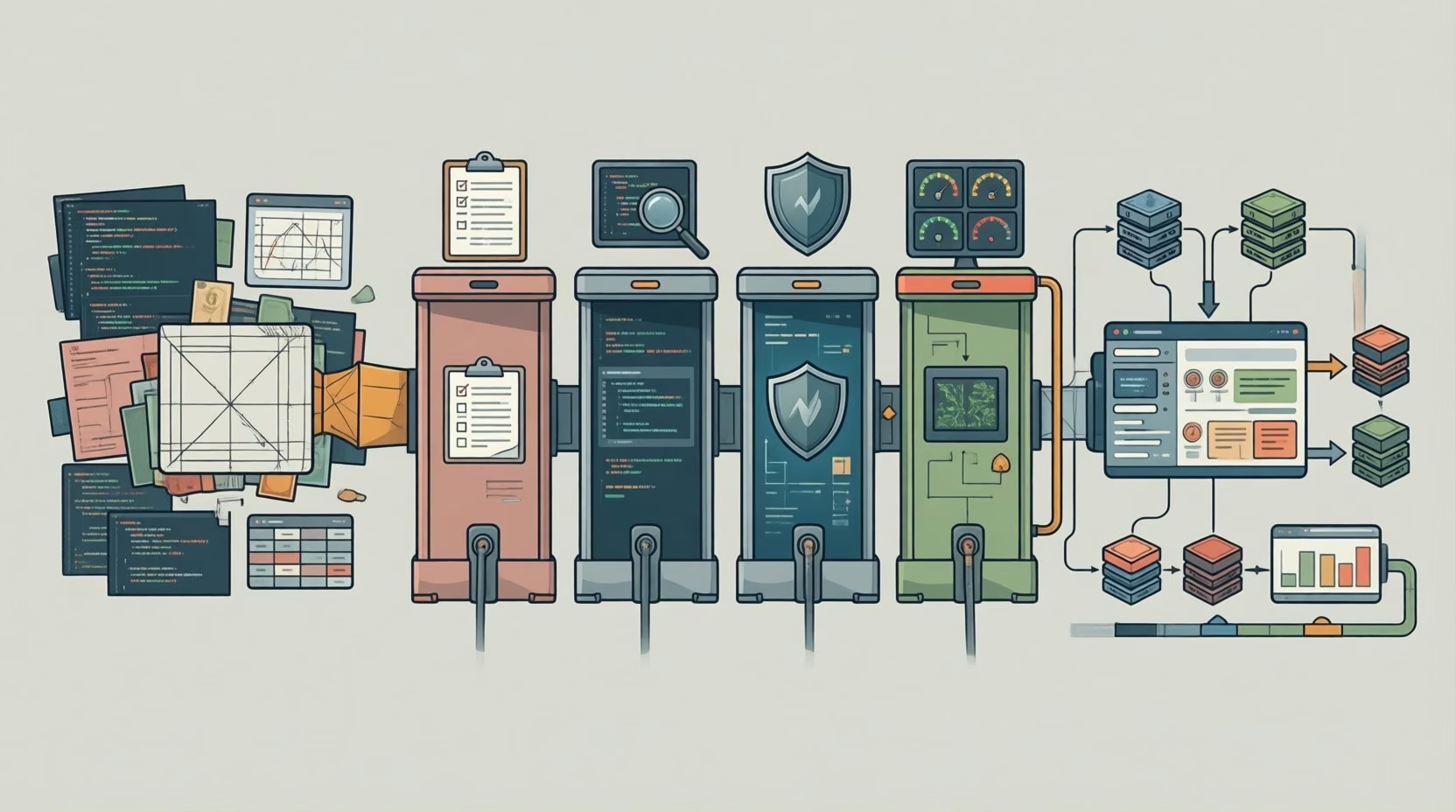
Custom code to move data around isn’t the answer. Orchestration, message passing, and data movement just creates a labyrinth of pipes. There are no economies of scale. The data doesn’t get better.

Walmart learned years ago that it was impractical to have a custom (and separate) distribution system for every supplier. They knew the cost benefits of a standard distribution system; this meant they needed to standardize the size of the trailers, the size of the boxes, and the way the boxes were packed and shipped. The benefits of a supply chain is that standardization occurs at the most cost effective point: the source. Walmart’s distribution success was measured by its ability to accept new suppliers and manage more shipments.

Most CIOs don’t recognize that they have a data supply chain. Instead of building a custom distribution system for each suppler (each business application), they should be focused on a single data supply chain. Middleware supports the creation of custom distribution solutions, but not the standardization of data. A data supply chain can only be successful if the data is standardized. Otherwise everyone is forced to write custom code to standardize, clean, and integrate the data.
Link to original post

TAGGED:data quality
Share This Article
Facebook Pinterest LinkedIn
Share

Follow us on Facebook

Latest News

data security issues with annotation outsourcing
Data Annotation Outsourcing and Risk Mitigation Strategies
Big Data Exclusive Security
NO-CODE
Breaking down SPARC Emulation Technology: Zero Code Re-write
Exclusive News Software
online business using analytics
Why Some Businesses Seem to Win Online Without Ever Feeling Like They Are Trying
Exclusive News
edi compliance with AI
AI Is Transforming EDI Compliance Services
Exclusive News

Stay Connected

1.2KFollowersLike
33.7KFollowersFollow
222FollowersPin

You Might also Like

Thoughts About Online Reputation

8 Min Read

Converting Data into Decisions

5 Min Read

5 Simple Tidbits to Include in Your Data Error Report

5 Min Read

Poor Quality Data Sucks

9 Min Read

SmartData Collective is one of the largest & trusted community covering technical content about Big Data, BI, Cloud, Analytics, Artificial Intelligence, IoT & more.

ai is improving the safety of cars
From Bolts to Bots: How AI Is Fortifying the Automotive Industry
Artificial Intelligence
data-driven web design
5 Great Tips for Using Data Analytics for Website UX
Big Data

Quick Link

  • About
  • Contact
  • Privacy
Follow US
© 2008-25 SmartData Collective. All Rights Reserved.
Welcome Back!

Sign in to your account

Username or Email Address
Password

Lost your password?