Cookies help us display personalized product recommendations and ensure you have great shopping experience.

By using this site, you agree to the Privacy Policy and Terms of Use.
Accept
SmartData CollectiveSmartData Collective
  • Analytics
    AnalyticsShow More
    How Does Data Mining Boost Customer Satisfaction in Logistics? Harnessing Analytics for Results -- AI-generated illustration
    How Does Data Mining Boost Customer Satisfaction in Logistics? Harnessing Analytics for Results
    11 Min Read
    chatgpt image jul 13, 2026, 04 23 45 pm
    How Data Analytics Helps Companies Improve User Engagement
    19 Min Read
    chatgpt image jul 13, 2026, 03 59 46 pm
    How Data Analytics Improves Multi-Location Search Strategies
    10 Min Read
    cybersecurity efforts
    How Behavioral Analytics and AI Are Redefining Cybersecurity for Boca Raton Businesses
    14 Min Read
    data driven risk management in heatlhcare
    How Data Analytics Is Changing Healthcare Risk Management
    17 Min Read
  • Big Data
  • BI
  • Exclusive
  • IT
  • Marketing
  • Software
Search
© 2008-25 SmartData Collective. All Rights Reserved.
Reading: De-anonymizing Social Networks
Share
Notification
Font ResizerAa
SmartData CollectiveSmartData Collective
Font ResizerAa
Search
  • About
  • Help
  • Privacy
Follow US
© 2008-23 SmartData Collective. All Rights Reserved.
SmartData Collective > Uncategorized > De-anonymizing Social Networks
Uncategorized

De-anonymizing Social Networks

Daniel Tunkelang
Daniel Tunkelang
3 Min Read
SHARE

Just saw via this article on Techmeme that my friend Vitaly Shmatikov co-authored a paper on “De-anonymizing Social Networks“.

Here’s the abstract as a teaser:

Operators of online social networks are increasingly sharing potentially sensitive information about users and their relationships with advertisers, application developers, and data-mining researchers. Privacy is typically protected by anonymization, i.e., removing names, addresses, etc.

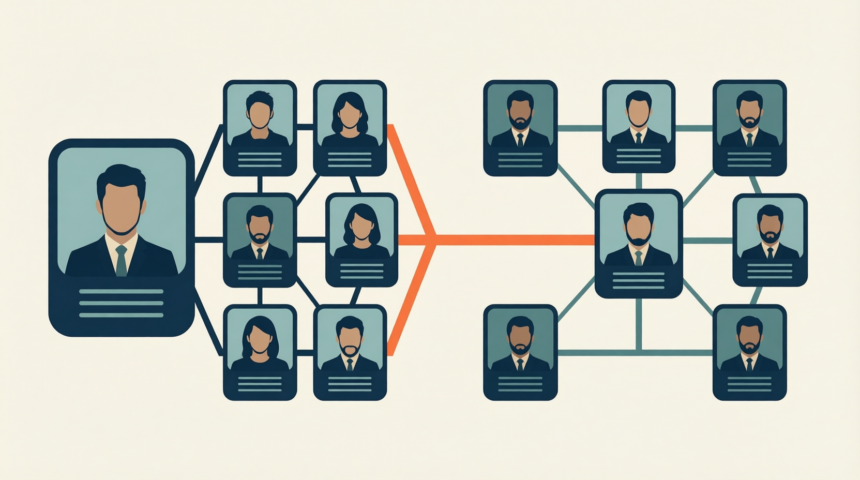
We present a framework for analyzing privacy and anonymity in social networks and develop a new re-identification algorithm targeting anonymized social-network graphs. To demonstrate its effectiveness on real-world networks, we show that a third of the users who can be verified to have accounts on both Twitter, a popular microblogging service, and Flickr, an online photo-sharing site, can be re-identified in the anonymous Twitter graph with only a 12% error rate.

Our de-anonymization algorithm is based purely on the network topology, does not require creation of a large number of dummy “sybil” nodes, is robust to noise and all existing defenses, and works even when the overlap between the target network and the…

More Read

How to Get Management to Pay Attention to Your Research Results
Early Indications September 2009: Universities and an Information Economy
The Banality of Crowds
MDM Can Challenge Traditional Development Paradigms
Charlie Rose, Customer Service, and the Master Twitter Record

Just saw via this article on Techmeme that my friend Vitaly Shmatikov co-authored a paper on “De-anonymizing Social Networks“.

Here’s the abstract as a teaser:

Operators of online social networks are increasingly sharing potentially sensitive information about users and their relationships with advertisers, application developers, and data-mining researchers. Privacy is typically protected by anonymization, i.e., removing names, addresses, etc.

We present a framework for analyzing privacy and anonymity in social networks and develop a new re-identification algorithm targeting anonymized social-network graphs. To demonstrate its effectiveness on real-world networks, we show that a third of the users who can be verified to have accounts on both Twitter, a popular microblogging service, and Flickr, an online photo-sharing site, can be re-identified in the anonymous Twitter graph with only a 12% error rate.

Our de-anonymization algorithm is based purely on the network topology, does not require creation of a large number of dummy “sybil” nodes, is robust to noise and all existing defenses, and works even when the overlap between the target network and the adversary’s auxiliary information is small.

Link to original post

Share This Article
Facebook Pinterest LinkedIn
Share

Follow us on Facebook

Latest News

11 Best AI Tools for Critical Thinking in Research -- AI-generated illustration
11 Best AI Tools for Critical Thinking in Research
Artificial Intelligence Exclusive
Top 7 GTM Intelligence Tools with MCP Integration in 2026 -- AI-generated illustration
Top 7 GTM Intelligence Tools with MCP Integration in 2026
Artificial Intelligence Exclusive News
What Is Fine Tuning AI Models And When Should You Actually Do It? -- AI-generated illustration
What Is Fine Tuning AI Models And When Should You Actually Do It?
Artificial Intelligence Exclusive
Industrial IoT (IIoT) Implementation: A Step-by-Step Guide for Manufacturers -- AI-generated illustration
Industrial IoT (IIoT) Implementation: A Step-by-Step Guide for Manufacturers
Exclusive

Stay Connected

1.2KFollowersLike
33.7KFollowersFollow
222FollowersPin

You Might also Like

SOA adoption trends — what the data tells us

1 Min Read

eMarketing Futures

3 Min Read

News, Search Experience, and Value

5 Min Read

First Thing Monday Blog’s New Home

0 Min Read

SmartData Collective is one of the largest & trusted community covering technical content about Big Data, BI, Cloud, Analytics, Artificial Intelligence, IoT & more.

ai is improving the safety of cars
From Bolts to Bots: How AI Is Fortifying the Automotive Industry
Artificial Intelligence
data-driven web design
5 Great Tips for Using Data Analytics for Website UX
Big Data

Quick Link

  • About
  • Contact
  • Privacy
Follow US
© 2008-26 SmartData Collective. All Rights Reserved.
Welcome Back!

Sign in to your account

Username or Email Address
Password

Lost your password?