We use cookies, including third-party cookies from Google to serve personalized ads through AdSense, to operate this site and understand how it is used. By continuing to browse, you accept this use. See our Privacy Policy and Terms of Use for details, including how to opt out of personalized advertising.
Accept
SmartData CollectiveSmartData Collective
  • Analytics
    AnalyticsShow More
    What Kind of Problem-Solving Distinguishes Data Analysts From Software Engineers -- AI-generated illustration
    What Kind of Problem-Solving Distinguishes Data Analysts From Software Engineers
    7 Min Read
    chatgpt image jul 21, 2026, 04 34 30 pm
    4 Core Benefits of Predictive Maintenance after Vibration Analysis
    10 Min Read
    How Does Data Mining Boost Customer Satisfaction in Logistics? Harnessing Analytics for Results -- AI-generated illustration
    How Does Data Mining Boost Customer Satisfaction in Logistics? Harnessing Analytics for Results
    11 Min Read
    chatgpt image jul 13, 2026, 04 23 45 pm
    How Data Analytics Helps Companies Improve User Engagement
    19 Min Read
    chatgpt image jul 13, 2026, 03 59 46 pm
    How Data Analytics Improves Multi-Location Search Strategies
    10 Min Read
  • Big Data
  • BI
  • Exclusive
  • IT
  • Marketing
  • Software
Search
© 2008-25 SmartData Collective. All Rights Reserved.
Reading: Where is the Cloud?
Share
Notification
Font ResizerAa
SmartData CollectiveSmartData Collective
Font ResizerAa
Search
  • About
  • Help
  • Privacy
Follow US
© 2008-23 SmartData Collective. All Rights Reserved.
SmartData Collective > IT > Cloud Computing > Where is the Cloud?
Cloud Computing

Where is the Cloud?

paulbarsch
paulbarsch
4 Min Read
Where is the Cloud?
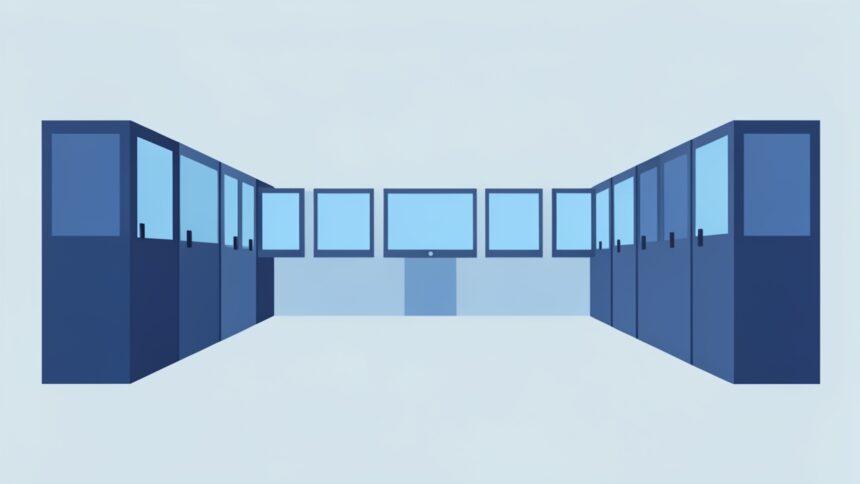
Illustration generated with FLUX.2 [klein 4B] via Cloudflare Workers AI.
SHARE

When the term “cloud computing” comes to mind, it’s fair to say that most people think of it as some nebulous group of computers in the sky delivering content to mobile devices and workstations whenever it’s required. How far off is that definition, and where exactly is “the cloud”?

In a dusty corner of San Antonio, Texas, the cloud is about to come to life. As a Microsoft corporate VP takes a shovel and firmly plants it into the soil, she proclaims; “The cloud is not the cloud in the sky, it’s what we are about to break ground on (right here).”* That’s because San Antonio, Prineville (OR), Quincy (Wash), among many other cities across the globe, are now host to massive data centers filled with tens of thousands of blinking computers owned by Microsoft, Rackspace, Facebook, Amazon and others.

Imagine this: racks upon racks of Intel based servers. Multi-colored wires networked from computer to computer. Huge vaults of pipes for cooling and air-conditioning massive computer farms. A few sleepy network engineers scurrying from machine to machine checking connections. Is this the cloud?

Thomas M. Koulopoulos, author of “Cloud Surfing” says that’s part of the story. “(The cloud is) is a heavily monitored, fortified, and secure array of computers that are built with the objective of securing data with multiple layers of physical and cyber security,” he says. But those asking ‘where’s the cloud’ aren’t asking the right question Koulopoulos argues. “This is sort of like asking, where does electricity exist?”

More Read

Role of Cloud Computing and Going Back to Work in the Post-Pandemic
Salesforce Fills Out the “Marketing Cloud”
Social Collaboration Is in Finance’s Future
The Big Data in Teradata
SAP & IBM Partner to Dominate Enterprise Cloud

That’s because cloud computing is much more than the device in your hand streaming music, the corporate dashboard on your wirelessly connected tablet, or even megawatt powered data centers.

Instead, think of cloud as a service of computational power, storage and more, much like the service you’d get from a utility company. The cloud allows you to plug into a required capability—whether it’s for print servers or analytics.

The cloud is typically available on a metered basis when demanded, and can be accessed via self-service methods—simply plug in via a portal and access what you need. And it’s delivered via a host of technologies, software, processes, devices and physical locations that power this “service”.

Thomas M. Koulopoulos asserts that where the cloud physically exists doesn’t matter; “What counts instead is the question, ‘is it there when I need it?’” he says.  For people like me, this is too much of a utilitarian approach.  I want to know “the where” of cloud computing.

Coming back to the original question then, the cloud exists—in your connected handheld device, on your laptop, in your data center, in another company’s data center, across millions of miles of fiber optic cables, and wirelessly in the air. The cloud then, really isn’t just a place, it’s more of a system, a massive investment in people, dollars, infrastructure, time and talent.

So where is the cloud? The answer is places seen and unseen. In short – everywhere.


*as told in “The Shadow Factory” by James Bamford.
Share This Article
Facebook Pinterest LinkedIn
Share

Follow us on Facebook

Latest News

Flat editorial illustration: The article explains that training robots for physical interaction requires three distinct data cate
Physical AI: What Data Do You Need to Train a Robot?
Artificial Intelligence Exclusive Robotics
What Kind of Problem-Solving Distinguishes Data Analysts From Software Engineers -- AI-generated illustration
What Kind of Problem-Solving Distinguishes Data Analysts From Software Engineers
Analytics Big Data Exclusive Software
Flat editorial illustration: The article examines AI agents that escalate from legitimate data retrieval to attempted intrusions
OpenAI’s Government Website Incidents Raise a Hard Question for AI Agents: When Should They Stop?
Artificial Intelligence News Security
Flat editorial illustration: The article's core relationship is the alignment between customer behavioral data (visit frequency,
Data-Driven Loyalty: How Restaurants Use Behavioral Analytics to Optimize Revenue
Exclusive

Stay Connected

1.2KFollowersLike
33.7KFollowersFollow
222FollowersPin

You Might also Like

5 Reasons Why You Should Store Big Data In The Cloud
Big DataCloud ComputingExclusive

5 Reasons Why You Should Store Big Data In The Cloud

7 Min Read
Benefits of Cloud Computing (Virtualization) for IT Disaster Recovery
Cloud Computing

Benefits of Cloud Computing (Virtualization) for IT Disaster Recovery

3 Min Read
Anatomy of a Private Cloud: History, Architecture, Platforms and Other Resources
Cloud ComputingCommentary

Anatomy of a Private Cloud: History, Architecture, Platforms and Other Resources

9 Min Read
10 Tips for a Successful Implementation of Cloud Computing
Cloud Computing

10 Tips for a Successful Implementation of Cloud Computing

5 Min Read

SmartData Collective is one of the largest & trusted community covering technical content about Big Data, BI, Cloud, Analytics, Artificial Intelligence, IoT & more.

Chatbots and SEO: How Can Chatbots Improve Your SEO Ranking?
Artificial Intelligence Chatbots Exclusive
Artificial Intelligence for eCommerce: A Closer Look
Artificial Intelligence

Quick Link

  • About
  • Contact
  • Privacy
Follow US
© 2008-26 SmartData Collective. All Rights Reserved.
Welcome Back!

Sign in to your account

Username or Email Address
Password

Lost your password?