If you are an analytics professional, then cloud analytics is in your future — if you’re not already doing it.
If you are an analytics professional, then cloud analytics is in your future — if you’re not already doing it.

I’ve talked to lots of companies that claim that cloud analytics isn’t for them. But they’re wrong, not least because their marketing department is almost certainly already using some form of cloud analytics today (to track ads or social sentiment).
What will tip people towards using more cloud analytics?
Cloud Offers Better Security
Let’s start with the elephant in the room. Where do you keep your own worldly wealth? Do you keep your money at home under the mattress? No — because you know that banks are more secure, cheaper, and more convenient.
We’ve had 600 years or so to get used to the idea that banks are safer than keeping our money under the mattress. Right now, we’re in the cloud equivalent of the middle ages, where most people feel like they have to invest in their own castle and guards in order to protect themselves.
But constructing a castle and paying for guards is very expensive, and most people are realizing that the risk/reward ratio no longer makes sense: a bank with lots of customers can afford a much bigger, better “castle”, at a fraction of the cost to each customer.
People are generally comfortable with accessing sensitive corporate data on telephones (e.g. your CEO’s email, which is probably the most sensitive data in the company) without a second thought. The data is travelling across public networks, and the only thing stopping people from accessing it is security protocols — just like with cloud infrastructures.
In addition, where do organizations keep their mission-critical backups? Offsite. How do they get that information to the offsite backup? Typically over the internet. So why is the cloud so scary again?
Ironically, it’s often the banks — who ask us to entrust our money to their “cloud infrastructure” — who claim that they could never do the same with their data.
I believe the dangers of cloud security are now largely in people’s imagination — or, at least, need to be traded off against the pragmatic reality of companies’ own data security measures, which have shown to be inadequate time and time again.
Cloud Offers More Convenience
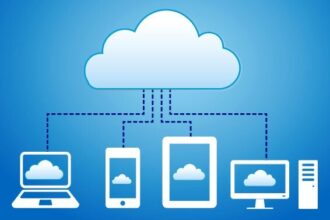
Unlike storing money under the mattress, modern banks let us access our cash from any ATM around the world. Modern cloud architectures do the same, making it convenient to access your information from anywhere, on any device.
If your users are clamoring for BI access from their phones and laptops, the data is already going over public networks — it’s probably easier and faster to provide it to them using a cloud-based solution.
Cloud deployments also mean it’s easier to get new functionality to users faster. Imagine if the only way to update money was to go to every individual household and painstakingly do an “upgrade” — making any change would be slow and painful. Cloud architectures will (also) win because innovation can happen faster, increasing the pain of staying on-premise.
The Data is Increasingly Already in The Cloud
Historically, there has been one solid reason against using cloud analytics: the cost of data movement. Maybe it doesn’t make economic or practical sense today to move massive amounts of information up to the cloud — although I suspect most organizations have never actually looked into what it would entail, and would be pleasantly surprised.
But more and more applications are in the cloud, so the argument flips — why bring all that data on-premise? And with the arrival of “big data,” all the trends point to the importance of information from outside your organization rising much faster than the information inside it.
It already makes economic sense to do some marketing and cloud-application analytics in the cloud. Over time, it will make more and more economic sense to keep the external data up in the cloud (partner data, sensor data, market benchmark data, etc.) and send some of your data up to join it.
Cloud Platforms Are More Flexible
Cloud platforms allow you to scale your data resources up and down faced with different needs. Need to do a new trial on a massive data set? You can quickly spin up some analytics in, say, the Amazon cloud (e.g. HANA One, with as many servers as you need, and switch them all off the next day.
Want to prototype some new analytics? You can pull together trial data and create some dummy dashboards quickly and easily, without having to first pay out for a new sandbox server.
Integrated On-premise and Cloud
As usual, it’s not about cloud or on-premise, it’s about both. You should work with a cloud analytics vendor that can provide a seamless experience across cloud and on-premise (e.g. take a look at the new SAPLumira on-premise server and cloud.saplumira.com)
What About Compliance?
Clearly, if it’s illegal for you to store something in the cloud, then you can’t do it (at least, not for that part of your data). But there’s been a steep rise in the number of cloud providers that (for example) provide data centers around the world to ensure your data doesn’t leave your country or legal jurisdiction.
As you can tell, I think your analytics future is cloudy, and it’s time for all BI professionals to start making plans.
Disagree with me? Please let me know. And happy cloud analytics!