Cookies help us display personalized product recommendations and ensure you have great shopping experience.

By using this site, you agree to the Privacy Policy and Terms of Use.
Accept
SmartData CollectiveSmartData Collective
  • Analytics
    AnalyticsShow More
    warehouse accidents
    Data Analytics and the Future of Warehouse Safety
    10 Min Read
    stock investing and data analytics
    How Data Analytics Supports Smarter Stock Trading Strategies
    4 Min Read
    predictive analytics risk management
    How Predictive Analytics Is Redefining Risk Management Across Industries
    7 Min Read
    data analytics and gold trading
    Data Analytics and the New Era of Gold Trading
    9 Min Read
    composable analytics
    How Composable Analytics Unlocks Modular Agility for Data Teams
    9 Min Read
  • Big Data
  • BI
  • Exclusive
  • IT
  • Marketing
  • Software
Search
© 2008-25 SmartData Collective. All Rights Reserved.
Reading: War Games: A New Type of Competitive Analytical Tool
Share
Notification
Font ResizerAa
SmartData CollectiveSmartData Collective
Font ResizerAa
Search
  • About
  • Help
  • Privacy
Follow US
© 2008-23 SmartData Collective. All Rights Reserved.
SmartData Collective > Data Management > Best Practices > War Games: A New Type of Competitive Analytical Tool
AnalyticsBest PracticesPredictive Analytics

War Games: A New Type of Competitive Analytical Tool

Brett Stupakevich
Brett Stupakevich
3 Min Read
SHARE

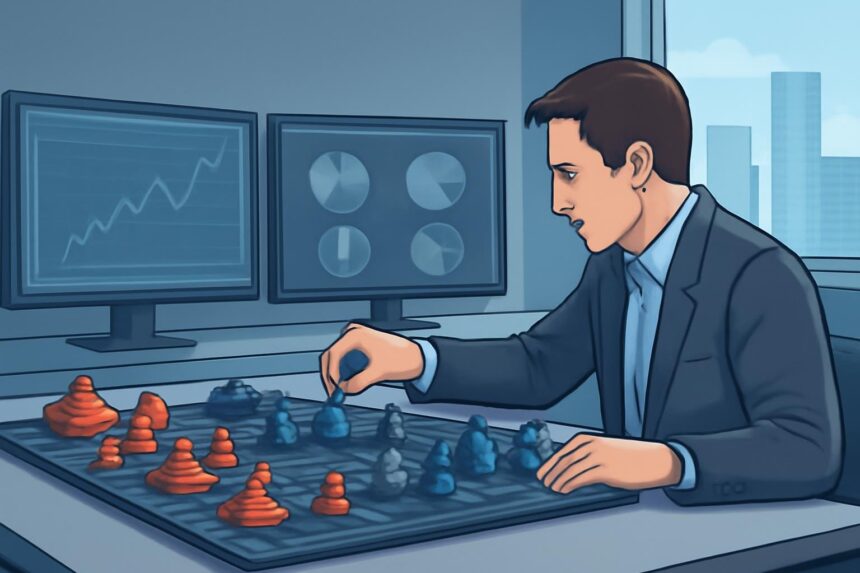
Corporate Battle War Games photo (business analytics)

Steve McDonnell
Spotfire Blogging Team

Corporate Battle War Games photo (business analytics)

More Read

Underestimating the tails
Tips for Developing a Super HR Analytics Team
What Does Big Data Mean for the Future of Social Media?
Al Ries talks to Tom H. C. Anderson about Marketing…
Too much information for forecasting?

Steve McDonnell
Spotfire Blogging Team

Data analytics plays a key role in corporate strategy development. With any new strategy, executives will analyze, forecast and predict future outcomes before adopting and implementing a strategy. But it’s not always possible to incorporate every strategic move a competitor might make into an analysis and it can be easy for executives to be influenced by beliefs that may no longer be entirely true. To combat this, some companies are using war games to help executives see their blind spots, anticipate competitor attacks or responses to strategy and create plans to address them if they happen.

An article in the March/April 2011 issue of Analytics Magazine describes the benefits and best practices of using war games in business. In a one-day war game focused on competitive analysis, a company would typically create teams – one for the company and several others representing competitors. Teams conduct research on the competitor they represent prior to game day. The teams are given a basic set of assumptions, a shared understanding of the situation, some standard rules for interacting. Then they battle it out by creating a better understanding of competitor perspectives of the market, predicting the most likely competitor moves and testing options of how to deal with competitor reactions. While war games have their origin in advanced analytics such as operations research and organizational modeling, game day analytics are more qualitative than quantitative. Post-battle analytics often bring quantitative analysis into the mix.

The article describes several key components for success when using war games as an analytical tool in a business setting:

  • Develop scenarios that force participants to address all the issues so that they will recommend actions that might not have previously been thought of.
  • Select a group of participants who can come up with new ideas and are willing to voice and defend those ideas.
  • Don’t place your most senior people on the “home” team — place them on competitor teams instead.
  • Include a “troublemaker” on each team who will challenge everyone with unconventional ideas and approaches.
  • Include more than just senior decision-makers, especially if they share a common point of view, to ensure that new ideas are generated and considered.
  • Accept all ideas unless there is very strong evidence that an idea simply would not work.
  • As you play, pay attention to indicators or warnings that might alert you to threats that are occurring or are about to occur.
  • Conduct a review session and discuss the lessons learned from the game. Explore unanswered questions or scenarios in a future war game.
  • Subscribe to our blog to stay informed on corporate war games and other data analytics topics.

     

TAGGED:strategy
Share This Article
Facebook Pinterest LinkedIn
Share

Follow us on Facebook

Latest News

Diverse Research Datasets
The 5 Best Platforms Offering the Most Diverse Research Datasets in 2026
Big Data Exclusive
macro intelligence and ai
How Permutable AI is Advancing Macro Intelligence for Complex Global Markets
Artificial Intelligence Exclusive
warehouse accidents
Data Analytics and the Future of Warehouse Safety
Analytics Commentary Exclusive
stock investing and data analytics
How Data Analytics Supports Smarter Stock Trading Strategies
Analytics Exclusive

Stay Connected

1.2KFollowersLike
33.7KFollowersFollow
222FollowersPin

You Might also Like

Salesforce Fills Out the “Marketing Cloud”

6 Min Read

Sales Models and Analytics

8 Min Read

Moneyball, a Must-watch Movie for the Business Analytics Savvy

8 Min Read

Facts not fears, confidence not certainty, critical thinking not wishful thinking

5 Min Read

SmartData Collective is one of the largest & trusted community covering technical content about Big Data, BI, Cloud, Analytics, Artificial Intelligence, IoT & more.

data-driven web design
5 Great Tips for Using Data Analytics for Website UX
Big Data
AI and chatbots
Chatbots and SEO: How Can Chatbots Improve Your SEO Ranking?
Artificial Intelligence Chatbots Exclusive

Quick Link

  • About
  • Contact
  • Privacy
Follow US
© 2008-25 SmartData Collective. All Rights Reserved.
Go to mobile version
Welcome Back!

Sign in to your account

Username or Email Address
Password

Lost your password?