We use cookies, including third-party cookies from Google to serve personalized ads through AdSense, to operate this site and understand how it is used. By continuing to browse, you accept this use. See our Privacy Policy and Terms of Use for details, including how to opt out of personalized advertising.
Accept
SmartData CollectiveSmartData Collective
  • Analytics
    AnalyticsShow More
    chatgpt image jul 21, 2026, 04 34 30 pm
    4 Core Benefits of Predictive Maintenance after Vibration Analysis
    10 Min Read
    How Does Data Mining Boost Customer Satisfaction in Logistics? Harnessing Analytics for Results -- AI-generated illustration
    How Does Data Mining Boost Customer Satisfaction in Logistics? Harnessing Analytics for Results
    11 Min Read
    chatgpt image jul 13, 2026, 04 23 45 pm
    How Data Analytics Helps Companies Improve User Engagement
    19 Min Read
    chatgpt image jul 13, 2026, 03 59 46 pm
    How Data Analytics Improves Multi-Location Search Strategies
    10 Min Read
    cybersecurity efforts
    How Behavioral Analytics and AI Are Redefining Cybersecurity for Boca Raton Businesses
    14 Min Read
  • Big Data
  • BI
  • Exclusive
  • IT
  • Marketing
  • Software
Search
© 2008-25 SmartData Collective. All Rights Reserved.
Reading: Using Procurement Analytics to Simplify Your Supplier Reconciliation
Share
Notification
Font ResizerAa
SmartData CollectiveSmartData Collective
Font ResizerAa
Search
  • About
  • Help
  • Privacy
Follow US
© 2008-23 SmartData Collective. All Rights Reserved.
SmartData Collective > Big Data > Data Quality > Using Procurement Analytics to Simplify Your Supplier Reconciliation
AnalyticsBusiness IntelligenceData ManagementData QualityData VisualizationData WarehousingDecision ManagementKnowledge ManagementPredictive AnalyticsRisk ManagementSoftware

Using Procurement Analytics to Simplify Your Supplier Reconciliation

Keith Peterson
Keith Peterson
4 Min Read
Using Procurement Analytics to Simplify Your Supplier Reconciliation
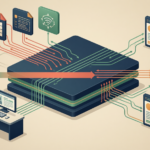
Illustration generated with FLUX.2 [klein 4B] via Cloudflare Workers AI.
SHARE

Ask finance managers to name a necessary evil of their responsibilities and many will cite reconciling goods received against invoices not received (“GR-NI”). The GR-NI issue is time-consuming to manage but not exactly mission critical to finding new business. 

Because of that it often gets demoted to the lowest of priorities.  Not dealing with GR-NI, however, creates financial liabilities and can introduce significant risk to your business operations. 

The primary GR-NI concern is that a supplier delivers goods to the business – but the invoices for those goods never arrive in the Accounts Payable department.  The AP team must pull lists of goods received and compare that to invoices in the AP database to find these gaps.  These provisions may add up over time.  And, without an automated way to monitor and resolve discrepancies, the piles of paper just keep adding up.  These piles have risk – liabilities are incorrectly stated, provisions in the GR-NI account tie-up capital, supplier relationships may suffer, and credits may be missed. 

However, with a simple software-based supplier reconciliation process in place, an organization can automate this cumbersome process to save hundreds to thousands of man hours every year. And with the same system, it can improve its audit processes and even automate the process of supplier communication to resolve issues as they arise. 

More Read

Can Big Data Help You Manage Your Workforce Better?
Hadoop Code Reuse and Step-by-step Ways to Simplify Business Computing
Data Quality: A Cause and Effect Story
Predictive Analysis: Toys that Rock for the Holidays
Social Business and Digital Strategy

For example, one of our clients, a vegetable processor, works with over 2,000 suppliers and receives nearly 300,000 invoices every year. Using a manual approach to invoice reconciliation, they tied up four AP staff members for a week every month to reconcile dozens of statements from across 2,000 vendor accounts.  Inadequate audit controls, misstated liabilities, and frustration of dealing with vendors chasing invoice status all took their toll. 

Implementing a new GR-NI process needs some focus and targets to be successful. For example, our client focused on critical preferred supplier relationships with high volume to start.  This limited the initial number of suppliers to the 200 most critical ones. 

A simple overview of their process:

  • Creation of a database to integrate financial and orders data;
  • Routine upload of AP ledger(s) to the system;
  • Cross-reference orders with invoices received;
  • Build chart visuals to highlight discrepancies by amount and supplier type;
  • Output supplier lists prioritized for review and contact; and
  • Track results in system to improve overall supplier processes. 

Key elements of solution are:

  • A method to get statements into the system regardless of format and source;
  • Cross-link matching of companies and multi-level parent-child relationships resolved;
  • Automatic generation of statements in PDF and spreadsheet formats; and
  • Electronic report distribution to suppliers. 

To maximize value, look for the operational areas in your company that can benefit from better processes. Tedious tasks like resolving goods received-not invoiced issues may not fall on your radar.  But automating and improving these processes can deliver serious positive impact.  Halo’s platform is an ideal solution for supplier reconciliation processes. 

Share This Article
Facebook Pinterest LinkedIn
Share

Follow us on Facebook

Latest News

Illustration of mobile analytics dashboards with ad performance charts connected to backend databases
11 Best Sisense Alternatives for Embedded Analytics
Business Intelligence Exclusive
Analyst points at colorful circular data dashboard on screen - information technology business metrics
How Fragmented Workplace Tech Undermines Reliable Business Metrics and Reporting
Cloud Computing Exclusive Infographic IT
Using Multi-Source Data and Analytics to Detect Operational Drift Across Franchise Networks -- AI-generated illustration
Using Multi-Source Data and Analytics to Detect Operational Drift Across Franchise Networks
Exclusive Infographic
Beyond The First Impression: The Long-Lasting Impact Of Sensory Marketing -- AI-generated illustration
Beyond The First Impression: The Long-Lasting Impact Of Sensory Marketing
Infographic Marketing

Stay Connected

1.2KFollowersLike
33.7KFollowersFollow
222FollowersPin

You Might also Like

3 Ways Big Data Is Changing Financial Institutions Forever
AnalyticsBig DataBusiness IntelligenceData MiningDecision ManagementModelingPredictive AnalyticsSocial DataSocial Media Analytics

3 Ways Big Data Is Changing Financial Institutions Forever

8 Min Read
The Control of Personal Data by Large Powerful Corporations [VIDEO]
Data ManagementPrivacy

The Control of Personal Data by Large Powerful Corporations [VIDEO]

0 Min Read
Big Data and Cloud Computing Demand a Cognitive Shift
AnalyticsCloud ComputingSocial DataTransparencyUnstructured Data

Big Data and Cloud Computing Demand a Cognitive Shift

4 Min Read
For Simplicity's Sake – Learn from Peyton Manning!
Cloud ComputingCommentaryCulture/Leadership

For Simplicity’s Sake – Learn from Peyton Manning!

4 Min Read

SmartData Collective is one of the largest & trusted community covering technical content about Big Data, BI, Cloud, Analytics, Artificial Intelligence, IoT & more.

5 Great Tips for Using Data Analytics for Website UX
Big Data
The Art of Conversation: Enhancing Chatbots with Advanced AI Prompts
Chatbots

Quick Link

  • About
  • Contact
  • Privacy
Follow US
© 2008-26 SmartData Collective. All Rights Reserved.
Welcome Back!

Sign in to your account

Username or Email Address
Password

Lost your password?