We use cookies, including third-party cookies from Google to serve personalized ads through AdSense, to operate this site and understand how it is used. By continuing to browse, you accept this use. See our Privacy Policy and Terms of Use for details, including how to opt out of personalized advertising.
Accept
SmartData CollectiveSmartData Collective
  • Analytics
    AnalyticsShow More
    What Kind of Problem-Solving Distinguishes Data Analysts From Software Engineers -- AI-generated illustration
    What Kind of Problem-Solving Distinguishes Data Analysts From Software Engineers
    7 Min Read
    chatgpt image jul 21, 2026, 04 34 30 pm
    4 Core Benefits of Predictive Maintenance after Vibration Analysis
    10 Min Read
    How Does Data Mining Boost Customer Satisfaction in Logistics? Harnessing Analytics for Results -- AI-generated illustration
    How Does Data Mining Boost Customer Satisfaction in Logistics? Harnessing Analytics for Results
    11 Min Read
    chatgpt image jul 13, 2026, 04 23 45 pm
    How Data Analytics Helps Companies Improve User Engagement
    19 Min Read
    chatgpt image jul 13, 2026, 03 59 46 pm
    How Data Analytics Improves Multi-Location Search Strategies
    10 Min Read
  • Big Data
  • BI
  • Exclusive
  • IT
  • Marketing
  • Software
Search
© 2008-25 SmartData Collective. All Rights Reserved.
Reading: Transforming Fragmented Decision Making
Share
Notification
Font ResizerAa
SmartData CollectiveSmartData Collective
Font ResizerAa
Search
  • About
  • Help
  • Privacy
Follow US
© 2008-23 SmartData Collective. All Rights Reserved.
SmartData Collective > Business Intelligence > Decision Management > Transforming Fragmented Decision Making
Decision Management

Transforming Fragmented Decision Making

JulieHunt
JulieHunt
4 Min Read
Transforming Fragmented Decision Making
Illustration generated with FLUX.2 [klein 4B] via Cloudflare Workers AI.
SHARE

Many midsized organizations are uncertain about how to proceed with business intelligence and analytics – or if they should even jump in. But if these organizations fail to include various data analytics as inputs to strategic and tactical decisions throughout the enterprise, they may be blocking their abilities to compete, grow and keep pace with dynamic market and economic changes. Key opportunities may be missed; detrimental risks may pop up without warning.

Many midsized organizations are uncertain about how to proceed with business intelligence and analytics – or if they should even jump in. But if these organizations fail to include various data analytics as inputs to strategic and tactical decisions throughout the enterprise, they may be blocking their abilities to compete, grow and keep pace with dynamic market and economic changes. Key opportunities may be missed; detrimental risks may pop up without warning.

Like larger enterprises, midsized organizations have a lot of data from a large variety of sources. Most decision-making calls for more timely data that can be used to point the way for the future, not just looking at what happened in the past. Too often spreadsheets become the key data source – unfortunately spreadsheets may not yield the necessary analysis, particularly when the situation calls for data from multiple disparate sources.                

More software solutions are available that should work well for midsized organizations and are more cost-effective, including cloud services that offer analytics anywhere, anytime. But many midsized organizations have real hurdles to implementing agile analytics and decision-making processes. They may not have enough IT resources or analytics experts to effectively go from data to insights, and then on to decisions and actions. Data isn’t the only resource that needs attention – business processes are data’s partner in analytics that ultimately engender business improvement. And just like larger enterprises, midsized organizations may not have the essential alignment between Business and IT, working together to make sure analytics make sense for the business needs of the organization.       

Companies can benefit greatly from analytics that support initiatives that impact the entire organization and reveal solid business value. For instance, to learn more about customers, organizations need to analyze: whether products and services meet customer needs, how customers want to interact with the company for different activities, and how different segments of customers prefer to make purchases. An activity like customer segmentation doesn’t just benefit marketing – it makes a significant difference for corporate customer strategies, innovation, product groups, and sales.

Centralizing analytics can eliminate redundant effort to glean intelligence from data sources, while reducing effort and cost. Often departments in midsized organizations rely too much on their own silos of data and don’t include a wide variety of data sources. Centralizing advanced analytics should dynamically work to eliminate data silos in the organization and bring different perspective into the formulation of analytical models and a wider breadth of benefit to the overall organization. Midsized companies will find the best success when all functions across the enterprise work in harmony.


Share This Article
Facebook Pinterest LinkedIn
Share

Follow us on Facebook

Latest News

How Restaurant POS and Ordering Data Reveal Generational Customer Patterns -- AI-generated illustration
How Restaurant POS and Ordering Data Reveal Generational Customer Patterns
Exclusive Infographic
From Trucks To Data: How Telematics Can Improve Freight Transportation -- AI-generated illustration
From Trucks To Data: How Telematics Can Improve Freight Transportation
Big Data Exclusive Infographic
The Airflow Problems Hiding Inside Data Centers -- AI-generated illustration
The Airflow Problems Hiding Inside Data Centers
Big Data Exclusive Infographic
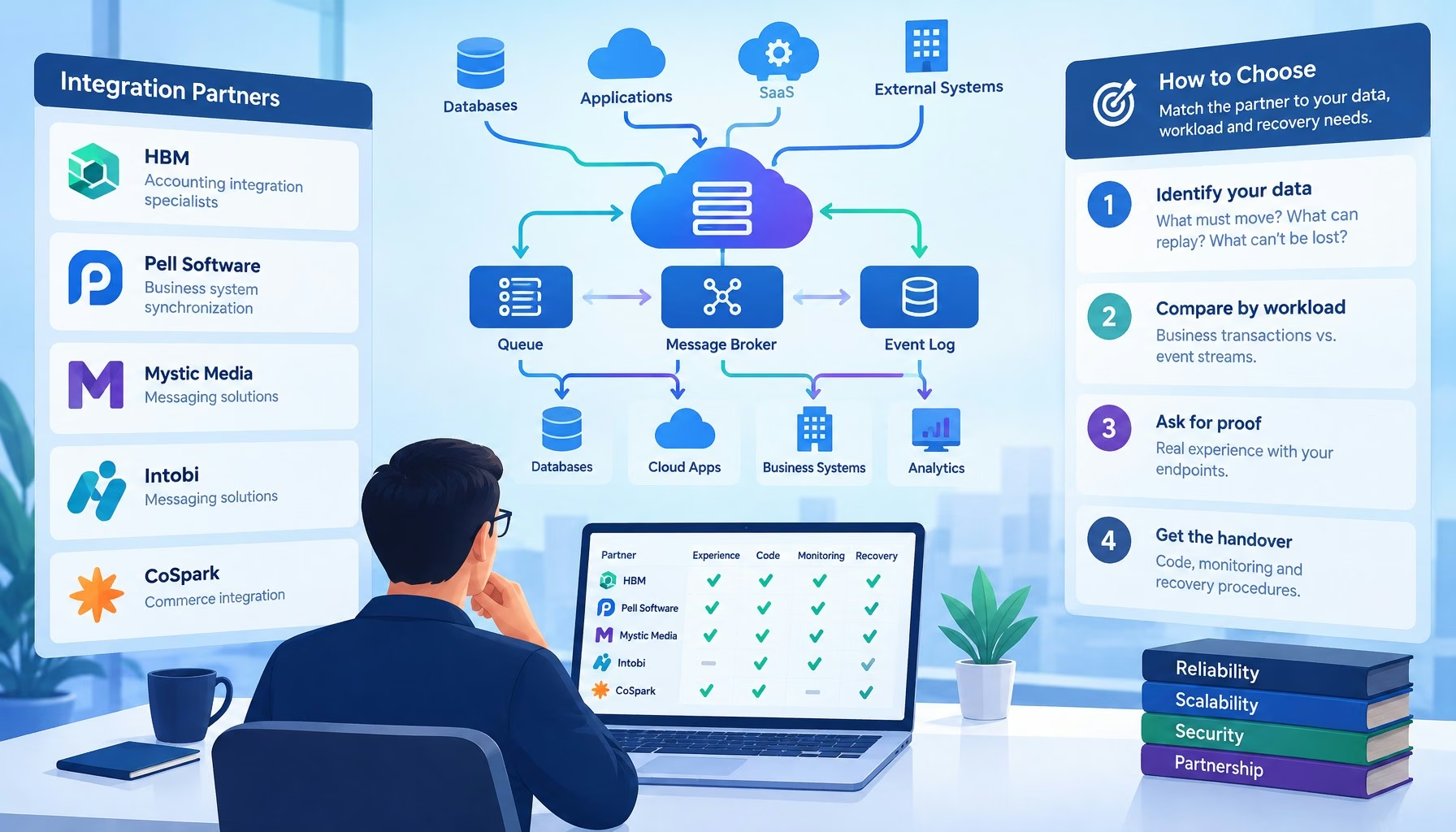
Technical architecture diagram and decision framework for choosing an integration partner for data pipelines: service bus, brokers, and azure-native middleware compared
Choosing an Integration Partner for Data Pipelines: Service Bus, Brokers, and Azure-Native Middleware Compared
Development Exclusive

Stay Connected

1.2KFollowersLike
33.7KFollowersFollow
222FollowersPin

You Might also Like

Zero Latency: An Obsession with Velocity
AnalyticsData WarehousingDecision ManagementExclusiveText Analytics

Zero Latency: An Obsession with Velocity

5 Min Read
Tackling Big Data on Police Use of Force
AnalyticsData MiningData WarehousingDecision ManagementStatistics

Tackling Big Data on Police Use of Force

10 Min Read
Managing Projects in the Cloud
Business IntelligenceCloud ComputingCollaborative DataCRMDecision ManagementExclusiveKnowledge ManagementWorkforce AnalyticsWorkforce Data

Managing Projects in the Cloud

8 Min Read
Big Data - Big Change or Big Hype?
CommentaryCulture/LeadershipDecision Management

Big Data – Big Change or Big Hype?

5 Min Read

SmartData Collective is one of the largest & trusted community covering technical content about Big Data, BI, Cloud, Analytics, Artificial Intelligence, IoT & more.

From Bolts to Bots: How AI Is Fortifying the Automotive Industry
Artificial Intelligence
ai chatbot
How AI Website Chatbots Improve Customer Support and Lead Generation
Chatbots Exclusive

Quick Link

  • About
  • Contact
  • Privacy
Follow US
© 2008-26 SmartData Collective. All Rights Reserved.
Welcome Back!

Sign in to your account

Username or Email Address
Password

Lost your password?