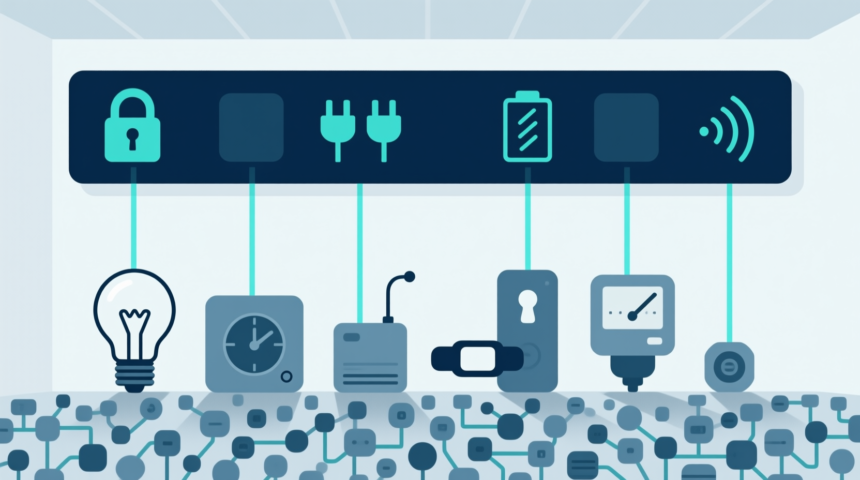
The hype surrounding the Internet of Things (IoT) is immense. The basic premise behind the IoT is to connect everyday objects to the internet through tiny sensors, allowing them to communicate with businesses, consumers, and each other. The potential for innovation is certainly there, and startups and major corporations have already come up with some intriguing ideas from internet-connected refrigerators to app-controlled light fixtures to smart clothing. A lot of people see the Internet of Things as the next great frontier of technology and consumer products, but just because many are predicting it doesn?t make it inevitable. Notable obstacles have appeared that may end up hindering the rapid spread of the Internet of Things. While these hurdles can be overcome, companies and industries should make note of them to prepare for what may be a hard-to-navigate future.
Internet Availability
The Internet of Things sounds good in principle, giving consumers unparalleled convenience and access to the latest technology, but there is one requirement that can?t be ignored: the internet. Without an actual internet connection, the IoT can?t function. While that may not be a problem for the majority of people, there are still many places in the world without an internet connection. Many companies, including Google, are trying to rectify this issue, but any solutions are still years away. Even countries that do have high connectivity to the internet, like the United States, will often have spots where that connection is spotty or even non-existent. Worldwide internet connections have to happen for the IoT to become a fully functioning reality.
Significant Expenses
It?s one thing to embed a sensor in a new consumer product; it?s another thing to place them on items and structures that are already widely dispersed throughout the world. One idea for the Internet of Things is to place sensors on roads, traffic lights, utility grids, and buildings, but doing so represents an expensive venture. Many companies, while optimistic about the potential of the IoT, have yet to be convinced it?s an investment worth making on such a large scale. Progress has been made concerning the expenses of the IoT, particularly in the creation of cheaper sensors, but more progress is needed before organizations truly embrace using them in everything. Until then, the full implementation of the Internet of Things will likely be delayed.
Privacy and Security
In the wake of major security breaches at Home Depot and Target, along with the recent iCloud celebrity photo scandal, privacy and security are clearly on the minds of businesses and individuals. For now, the IoT only appears to raise those concerns exponentially. When everything from a toaster to a shirt is connected to the web, what does that mean for personal privacy and sensitive data? Companies will need to show they can protect customer information if consumers will ever trust wearing shoes that keep track of where they go and how many steps they take.
Data Surge
It?s estimated that by 2020, around 26 billion items and objects will be part of the Internet of Things. With that increase in internet-connected items will come a surge of new data being generated. As of right now, many companies aren?t prepared to handle the amount of data that needs to be collected to make the IoT function well. There are many things businesses need to do to prepare their organizations for these new demands. New storage capabilities are needed, which can be done through in-house storage options or through cloud storage. New hardware is needed to handle an increased workload and more processing power. Businesses also need more effective data mining and the equipment to analyze data in real time. Once these technologies are adopted by more companies, the spread of the IoT will likely increase.
Consumer Awareness
While businesses may talk excitedly about the Internet of Things, consumers are largely unaware of it. In a recent survey of 2,000 people, 87% of consumers said they had never even heard of the IoT. While hearing about the Internet of Things doesn?t necessarily signify a consumer would not use an item connected to the IoT, the survey results show a lack of awareness and understanding about what can be gained from it. If this lack of knowledge about the IoT leads to lack of interest, a major driving force for widespread adoption will be missing. Having said that, there is a lot of interest in wearable technology, which could be a gateway for more connected items. As a result, many companies are focusing on wearable tech. Even so, other uses of the Internet of Things may take several years to really catch on.
These and many other hurdles represent some significant challenges businesses will have to contend with over the next few years, but many view it as a challenge worth facing. The number of developers specifically devoted to the Internet of Things is expected to increase to 4.5 million by 2020, a big jump from the 300,000 currently doing so. With more attention being paid to the IoT, solutions will likely come, and with them new innovations and creative applications. Consumers can expect a much more connected life as a greater understanding of the IoT is put into practice.





![What the Internet of Things Means for Physical Industries [VIDEO]](https://www.smartdatacollective.com/wp-content/uploads/2014/04/internet-things-means-physical-industries-video-330x220.jpg)