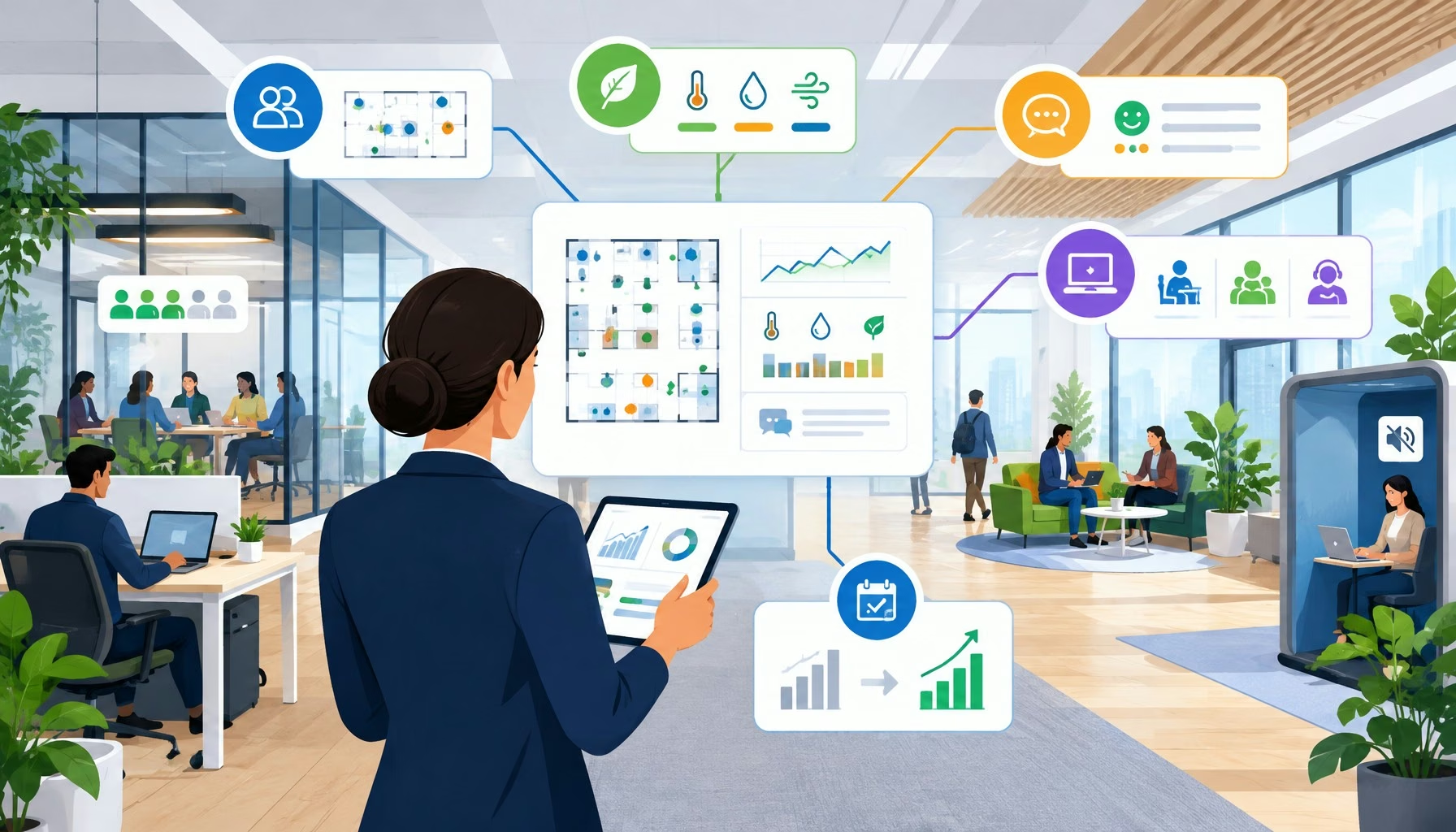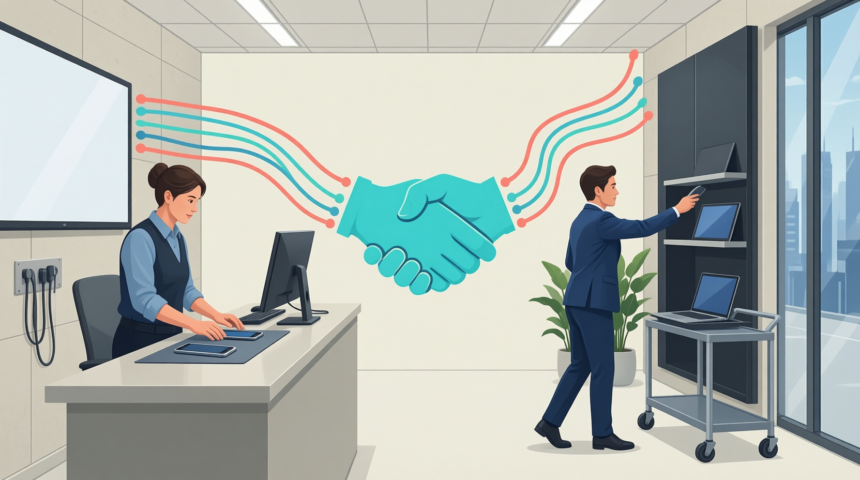
The modern office is nothing like it was in the past. In fact, in many cases it’s not even a physical location. Improvements in technology have allowed us to work from anywhere, whether right at home or flying on a plane. Our lives have become increasingly demanding, meaning we require better tools to help us get the same amount of work done while we’re on the go.
This has significantly contributed to improvements in mobile technology. Within the past few years we’ve shrunk our machines, cut their wires and made our cell phones smarter. These developments aren’t just for personal convenience either. Sure, the ability to access social media and take quick pictures is great, but mobile devices are also incredibly useful for sending and accessing information from almost anywhere. It’s this benefit that has caused such rapid integration of smartphones into the workforce.
Today, a majority of industry professionals are looking to ditch their bulky desktops and laptops in exchange for smartphones and tablets. These smaller devices are incredibly portable and becoming faster, quickly approaching the functionality and speeds of larger devices. Not to mention, improvements in cloud computing and a growing number of business apps are increasing their potential tenfold.
Despite all these benefits, there are still many roadblocks keeping employees from going fully mobile with their work. One of the biggest of course is the continued resistance to BYOD (What is BYOD?) initiatives. Let’s take the time to discuss what hurdles we still need to overcome before we can sever all cords and completely mobilize the workplace.

Going BYOD
BYOD is the largest contributing factor as to whether or not a company will successfully mobilize their workforce. Companies should know, if they haven’t already noticed, that regardless of whether they have a BYOD policy in place, employees will continue to use their personal devices at work. Seeing as how security is a key component of BYOD, adopting the right policy will actually help protect company data, as employees will better understand what is expected of them. In addition, IT can then understand what devices are being used on the network and create customized security plans to protect company information.
Improving the Cloud
Mobile technology is nearly synonymous with cloud access. For one, minimal storage capabilities on these devices rely on the cloud in order to store and access larger files. However, app usage and virtualization all require cloud capabilities in order to access and share information. If you expect your employees to work remotely, perform to the same extent as before, and get the most out of their mobile devices, you’ll need to invest in the right cloud solutions.
Increasing Mobile Capabilities
Even with cloud storage there still needs to be a number of improvements to current mobile devices if they’re expected to handle the majority of office work. For one, internal storage will need improvement. While cloud computing does allow for less storage, there are times when you’ll need greater internal storage when networks are down or saving information on a physical drive is necessary. Improvements in flash storage have significantly introduced greater storage capacity and are slowly becoming much more affordable. Second, the power from these devices, whether processing speed or graphics, will also need to improve. Those working in entertainment or analytical fields require the extra power to handle multitasking, data processing and video editing.
Building Better, More Secure Business Apps
One of the bigger roadblocks facing full mobile integration is the still small amount of enterprise business apps. Even word processing apps are just starting to reach mobile devices and function as well as their traditional PC equivalents. That being said, the full versions of these programs require powerful devices in order to operate. Second, the security surrounding these apps will also need to improve. Mobile comes with security risks. For the moment, many people don’t consider their phones to be computers, even though many use them for the same types of things. As a result, they don’t think to protect them, making them vulnerable to external cyber attacks. A great range of enterprise apps will need to be introduced, with the right amount of security, before people can fully switch to mobile.