We use cookies, including third-party cookies from Google to serve personalized ads through AdSense, to operate this site and understand how it is used. By continuing to browse, you accept this use. See our Privacy Policy and Terms of Use for details, including how to opt out of personalized advertising.
Accept
SmartData CollectiveSmartData Collective
  • Analytics
    AnalyticsShow More
    What Kind of Problem-Solving Distinguishes Data Analysts From Software Engineers -- AI-generated illustration
    What Kind of Problem-Solving Distinguishes Data Analysts From Software Engineers
    7 Min Read
    chatgpt image jul 21, 2026, 04 34 30 pm
    4 Core Benefits of Predictive Maintenance after Vibration Analysis
    10 Min Read
    How Does Data Mining Boost Customer Satisfaction in Logistics? Harnessing Analytics for Results -- AI-generated illustration
    How Does Data Mining Boost Customer Satisfaction in Logistics? Harnessing Analytics for Results
    11 Min Read
    chatgpt image jul 13, 2026, 04 23 45 pm
    How Data Analytics Helps Companies Improve User Engagement
    19 Min Read
    chatgpt image jul 13, 2026, 03 59 46 pm
    How Data Analytics Improves Multi-Location Search Strategies
    10 Min Read
  • Big Data
  • BI
  • Exclusive
  • IT
  • Marketing
  • Software
Search
© 2008-25 SmartData Collective. All Rights Reserved.
Reading: Marketing and IT: Building the Company Success
Share
Notification
Font ResizerAa
SmartData CollectiveSmartData Collective
Font ResizerAa
Search
  • About
  • Help
  • Privacy
Follow US
© 2008-23 SmartData Collective. All Rights Reserved.
SmartData Collective > IT > Marketing and IT: Building the Company Success
ITMarketing

Marketing and IT: Building the Company Success

Editor SDC
Editor SDC
7 Min Read
Marketing and IT: Building the Company Success
Illustration generated with Qwen Image.
SHARE

Have you ever wondered how big the gap between marketing and IT is? Can that gap be bridged? There is an on-going talk about how the two very different disciplines should work towards cross-functional collaboration for the purpose of positive business outcomes, and ultimately the business’s success.

Contents
  • Who is right?
  • Why collaborate?
  • Factors affecting the two departments
  •  

Who is right?

Marketing and IT departments differ in a number of ways but the main differences between the two lie in the structural dissimilarities of their organisational missions, as well as the differences in their skill sets. It is for this reason that they have difficulty understanding the way in which each department does its job. While IT focuses on stability, disaster recovery, security, maintenance and data integrity, marketing works towards acquiring more customers quickly, differentiating in the marketplace, embracing disruptive innovation and adapting to changes in the market.

While marketers may find that IT isn’t concerned with the customer and slows down business by going through the long process of defining requirements, specifications and ensuring there are no loopholes in security for example; some IT experts tend to see marketers as ‘spin makers’ in the sense that they are frequently thinking of new ways to bend the truth and focus on the performance of upcoming campaigns, instead of long-term integration of data into corporate systems. So, who is right in this case? The reality is that there is no right answer here, as both marketing and IT experts possess both positive and negative attributes. If marketing and IT departments were to join forces they would help the company accomplish its objectives quicker, as well as bring harmony and balance between the two.

Why collaborate?

It might seem like these two departments cannot work together as they do not understand each other’s priorities and have a language of their own, however this is not entirely the case, nor should it be. Integrating the two departments can only help a business deliver better outcomes. For a truly collaborative relationship between IT and marketing, traditional barriers need to be broken down in order for each team to benefit from the other’s skill sets.

More Read

Mobile and Decision Management [VIDEO]
5 Reasons You Should Consider Taking Analytics to the Cloud
Data-Driven BPM: Making “Big Data” Actionable
Mobile BI Mistakes: Know Your Organization
5 Step Process For Insightful Data Driven Business Decision Making

Today’s businesses are affected by various external factors and if they wish to maintain their competitive advantage, adapting to the ongoing market and technology trends is crucial.

Factors affecting the two departments

As the marketing landscape is continually evolving and crossing over into the digital sphere like mobile computing, social media and Big Data, marketing departments require the assistance of IT to manage, process and analyse vast amounts of data using sophisticated technology and tools. Both departments have a mutual interest in establishing an innovative culture – marketing tries to stimulate innovation by identifying new products and services to satisfy emerging customer needs and put emphasis on automation, while IT experts work towards applying technology in new ways to help the organisation achieve its mission.

While technology is a key enabler of any effective marketing program, the rise of multiple customer channels pushes IT to work closely with marketing. The main barrier between the two departments lies in the fact that time to market, speed of reaction and business priorities does not move at the same pace in the IT sector, as it does in marketing. Marketing needs to move at the speed of the customers, which means that sometimes it is changing messaging by minute, whereas IT professionals are cautious and tend to work towards minimising and controlling the risk, which is often not in line with the speed of customers.
IT and marketing must consider a range of technologies to gather customer data, analyse it to provide customer insights, distribute customer information and deliver exceptional customer experience.


In order for the two departments to effectively and efficiently collaborate, both need to overcome their misconceptions and misunderstandings about the other team. Regular staff meetings will enable both departments to understand the needs of the other team and build mutual respect and trust between them. This will help with gathering valuable customer data in a consistent way by both departments and enable analysis of that data to create actionable insights that support specific business outcomes. As such, the company will be able to thrive in the ‘age of the customer’ as marketing and IT together, with their skills and capacity, will shift the company towards the rapidly changing customer needs. Additionally, both departments will focus on using the technology to increase revenue and competitive advantage.

All business departments ultimately have the same goal which is to work towards building the company’s success. However, in order to effectively acquire customers and make sales, establishing efficient communication and working relationship between all departments needs to be taken into consideration. Likewise, there is a need for marketing and IT departments to work together towards positive business outcomes. For the sake of building a company’s success, a combination of both IT infrastructure stability and marketing innovation needs to exist.

The post Marketing and IT – building the company success appeared first on The GCOMM Post.
Share This Article
Facebook Pinterest LinkedIn
Share

Follow us on Facebook

Latest News

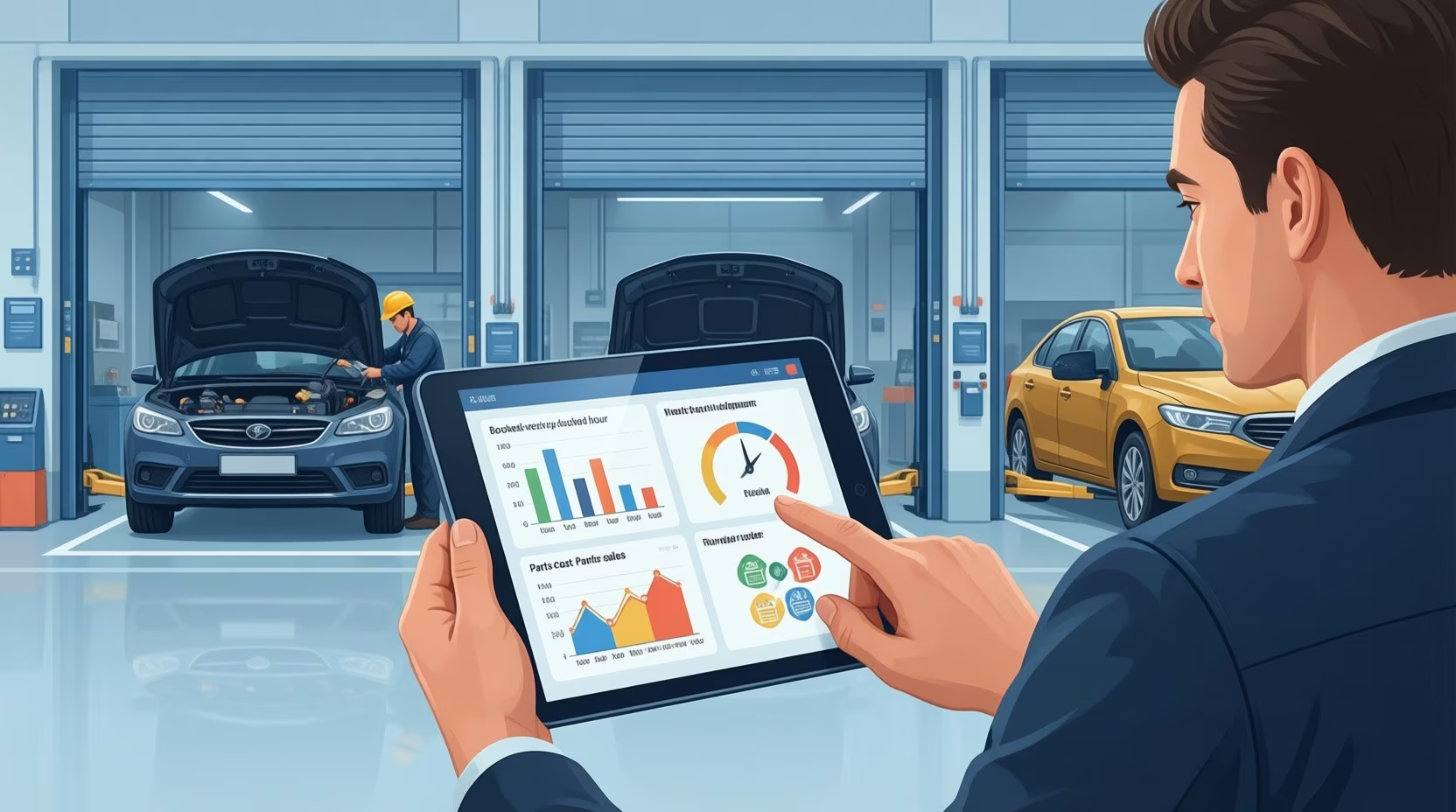
Flat editorial illustration: The article connects weekly technician productivity and related shop metrics to timely scheduling an
Workforce Analytics for Auto Repair Shops: Reading Technician Productivity Weekly
Business Intelligence Exclusive
Flat editorial illustration: A business-editorial depiction of two account-growth routes: data-guided targeted advertising and cr
Targeted Ads and Cross-Promotion: Using Audience Segments and Platform Statistics to Grow
Exclusive Social Data
Flat editorial illustration: Business and SaaS-editorial concept: a prospective development team proves its fit by testing a boun
Hiring a Dedicated Development Team for Your Existing Stack and Delivery Process
Development Exclusive
Flat editorial illustration: The article is about modernizing legacy software incrementally without stopping live operations. A t
7 Top Legacy Software Modernization Companies in Europe for 2027
Exclusive Software

Stay Connected

1.2KFollowersLike
33.7KFollowersFollow
222FollowersPin

You Might also Like

Best Practice Linux Guide: Your Cloud Strategy
Cloud ComputingITSecuritySoftware

Best Practice Linux Guide: Your Cloud Strategy

5 Min Read
cloud customer support
Business IntelligenceCloud ComputingExclusive

How Cloud Customer Support Helps Your Business Grow

9 Min Read
New Generation of Big Data Security Risks Raises Questions About VPNs
Big DataData ManagementExclusiveNewsPolicy and GovernancePrivacyRisk ManagementSecurity

New Generation of Big Data Security Risks Raises Questions About VPNs

5 Min Read
Know Your S#*!: Maximize Web Conversion with A/B Testing
CRMExclusiveInside CompaniesMarketingPredictive Analytics

Know Your S#*!: Maximize Web Conversion with A/B Testing

8 Min Read

SmartData Collective is one of the largest & trusted community covering technical content about Big Data, BI, Cloud, Analytics, Artificial Intelligence, IoT & more.

The Art of Conversation: Enhancing Chatbots with Advanced AI Prompts
Chatbots
ai chatbot
How AI Website Chatbots Improve Customer Support and Lead Generation
Chatbots Exclusive

Quick Link

  • About
  • Contact
  • Privacy
Follow US
© 2008-26 SmartData Collective. All Rights Reserved.
Welcome Back!

Sign in to your account

Username or Email Address
Password

Lost your password?