We use cookies, including third-party cookies from Google to serve personalized ads through AdSense, to operate this site and understand how it is used. By continuing to browse, you accept this use. See our Privacy Policy and Terms of Use for details, including how to opt out of personalized advertising.
Accept
SmartData CollectiveSmartData Collective
  • Analytics
    AnalyticsShow More
    chatgpt image jul 21, 2026, 04 34 30 pm
    4 Core Benefits of Predictive Maintenance after Vibration Analysis
    10 Min Read
    How Does Data Mining Boost Customer Satisfaction in Logistics? Harnessing Analytics for Results -- AI-generated illustration
    How Does Data Mining Boost Customer Satisfaction in Logistics? Harnessing Analytics for Results
    11 Min Read
    chatgpt image jul 13, 2026, 04 23 45 pm
    How Data Analytics Helps Companies Improve User Engagement
    19 Min Read
    chatgpt image jul 13, 2026, 03 59 46 pm
    How Data Analytics Improves Multi-Location Search Strategies
    10 Min Read
    cybersecurity efforts
    How Behavioral Analytics and AI Are Redefining Cybersecurity for Boca Raton Businesses
    14 Min Read
  • Big Data
  • BI
  • Exclusive
  • IT
  • Marketing
  • Software
Search
© 2008-25 SmartData Collective. All Rights Reserved.
Reading: Investigating the Relationship Between Big Data and Road Safety
Share
Notification
Font ResizerAa
SmartData CollectiveSmartData Collective
Font ResizerAa
Search
  • About
  • Help
  • Privacy
Follow US
© 2008-23 SmartData Collective. All Rights Reserved.
SmartData Collective > Big Data > Investigating the Relationship Between Big Data and Road Safety
Big Data

Investigating the Relationship Between Big Data and Road Safety

Larry Alton
Larry Alton
5 Min Read
Investigating the Relationship Between Big Data and Road Safety
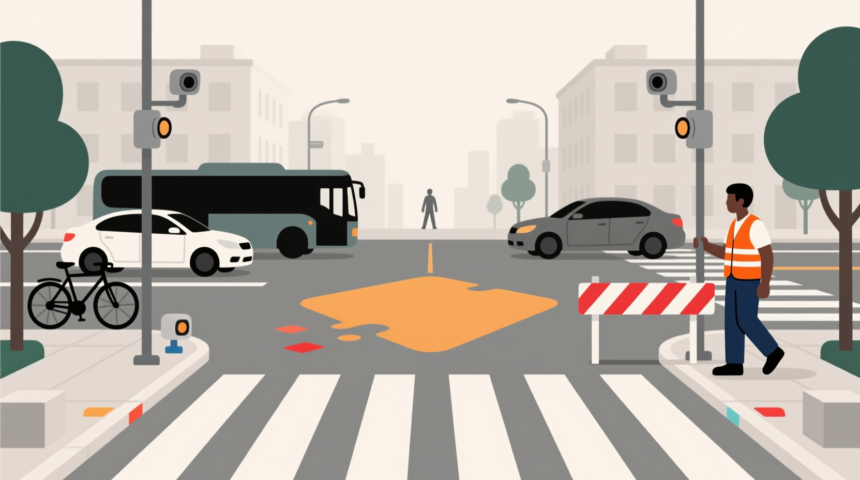
Illustration generated with Qwen Image.
SHARE

When you study the leading causes of injury and death across the globe, traffic crashes are perennially near the top of the list. According to data gathered by the World Health Organization (WHO):

Contents
  • Three Ways Big Data Can Enhance Roadway Safety
    • 1. Data Collection
    • 2. Predictive Crash Maps
    • 3. Automated Vehicles
    • Is Big Data the Answer?
  • More than 1.25 million people die from road traffic crashes each year.
  • Traffic injuries are the leading cause of death among people between the ages of 15 and 29.
  • Collisions on roads cost most nations an average of 3 percent of their gross domestic product.
  • Unless lasting action is taken, road traffic crashes will become the seventh leading cause of death around the world by 2030.

Until now, the longtime approach to improving road safety has been the Safe System method, which takes into account people’s vulnerability and human error.

“The cornerstones of this approach are safe roads and roadsides, safe speeds, safe vehicles, and safe road users,” WHO explains, “all of which must be addressed in order to eliminate fatal crashes and reduce serious injuries.”

Though the Safe System approach has been fairly effective, it hasn’t done enough to reduce death and injuries. Experts in big data believe they may have identified some complementary solutions.

Three Ways Big Data Can Enhance Roadway Safety

Death is obviously the most serious consequence of road traffic mishaps, but millions of people are also injured each year. According to the law firm of Marks & Harrison, which handles cases for hundreds of car accident victims every year, the most common injuries include broken bones, burns, head and brain trauma, back and spine trauma, and whiplash.

More Read

New Generation of Big Data Security Risks Raises Questions About VPNs
7 Key Benefits of Proper Data Lake Ingestion
3 Ways to Adapt to the Shift Toward Online Privacy (Ethically, Nonetheless)
Memo to Steve Ballmer: Just Ask Them!
The Latest Technological Phase and What IT Pros Should Do About It [INFOGRAPHIC]

The goal is to employ big data to lower the frequency of both deaths and debilitating injuries like these, perhaps within just a few short years. Here’s how.

1. Data Collection

Any time there’s a plane crash, you’ll see reporters talk about the recovery of the “black box.” Black boxes are standard on airplanes and are simply small, compact devices that record crash data.

Because the technology is relatively inexpensive, it could be deployed on a large scale in auto manufacturing as well. “The benefits of the technology are we will be able to track the exact time, speeds, position, and other factors related to car collisions and accidents,” data expert Goran Dragosavac writes.

“As this data is studied, we will be able to better understand trends and reasons behind car crashes and use this data to prevent future incidents.”

2. Predictive Crash Maps

For the better part of five years, many states and municipalities in the U.S. have been using advanced software to analyze historical data and make real-time projections about high-risk roads, highways, and intersections. The state of Indiana publishes its data.

As the technology improves, it’s possible that predictive crash data could be leveraged by local law enforcement and safety officers to target high-risk areas and implement additional safety precautions as needed — such as crossing guards, heightened police presence, and reduced speed limits.

3. Automated Vehicles

As society gets closer to mass production of driverless vehicles, it’ll be exciting to view how big data can be used to make these cars and trucks safer and eliminate crashes that have resulted largely from human error. The belief is that predictive crash maps and other data can be plugged into the vehicles to enhance safety across the board.

Is Big Data the Answer?

In the end, big data can accomplish only so much. It can help us understand crash site data, make vehicles safer, and eliminate risk in isolated situations … but it’s not going to make our roads much safer without human effort and focus.

Until individual drivers are determined to eliminate distracted driving and focus on observing the posted speed limits and traffic regulations, big data may have a minimal impact at best. People need to make a point of being smarter about how we drive.

Only then will we achieve the desired result of safer highways and urban streets.

TAGGED:big databig data and road safetypredictive analytics
Share This Article
Facebook Pinterest LinkedIn
Share
ByLarry Alton
Follow:
Larry is an independent business consultant specializing in tech, social media trends, business, and entrepreneurship. Follow him on Twitter and LinkedIn.

Follow us on Facebook

Latest News

Analyst points at colorful circular data dashboard on screen - information technology business metrics
How Fragmented Workplace Tech Undermines Reliable Business Metrics and Reporting
Cloud Computing Exclusive Infographic IT
Using Multi-Source Data and Analytics to Detect Operational Drift Across Franchise Networks -- AI-generated illustration
Using Multi-Source Data and Analytics to Detect Operational Drift Across Franchise Networks
Exclusive Infographic
Beyond The First Impression: The Long-Lasting Impact Of Sensory Marketing -- AI-generated illustration
Beyond The First Impression: The Long-Lasting Impact Of Sensory Marketing
Infographic Marketing
The Infrastructure Gap Slowing Data Center Growth -- AI-generated illustration
The Infrastructure Gap Slowing Data Center Growth
Big Data Cloud Computing Exclusive Infographic IT

Stay Connected

1.2KFollowersLike
33.7KFollowersFollow
222FollowersPin

You Might also Like

IBM Emphasizes The Benefits Of Data Analytics For Renewable Energy
AnalyticsBig DataExclusivePredictive Analytics

IBM Emphasizes The Benefits Of Data Analytics For Renewable Energy

7 Min Read
big data in preventative care
AnalyticsBig DataExclusive

Big Data For Preventative Care In The Healthcare Field

4 Min Read
Your Guide To Current Trends And Challenges In Data Mining
Big DataData MiningExclusive

Your Guide To Current Trends And Challenges In Data Mining

12 Min Read
Big Data Can Help Curb Costs of Raising Newborns
Big DataExclusive

Big Data Can Help Curb Costs of Raising Newborns

6 Min Read

SmartData Collective is one of the largest & trusted community covering technical content about Big Data, BI, Cloud, Analytics, Artificial Intelligence, IoT & more.

Artificial Intelligence for eCommerce: A Closer Look
Artificial Intelligence
From Bolts to Bots: How AI Is Fortifying the Automotive Industry
Artificial Intelligence

Quick Link

  • About
  • Contact
  • Privacy
Follow US
© 2008-26 SmartData Collective. All Rights Reserved.
Welcome Back!

Sign in to your account

Username or Email Address
Password

Lost your password?