 Data is at the very core of the business models of the future – and this means wrenching change for some organizations.
We tend to think of our information systems as a foundation layer that supports the “real” business of the organization – for example, by providing the information executives need to steer the business and make the right decisions.
But information is rapidly becoming much more than that: it’s turning into an essential component of the products and services we sell.
Information-augmented products
More Read

In an age of social media transparency, products “speak for themselves”– if you have a great product, your customers will tell their friends. If you have a terrible product, they’ll tell the world. Your marketing and sales teams have less room to maneuver because prospects can easily ask existing customers if your product lives up to the promises.
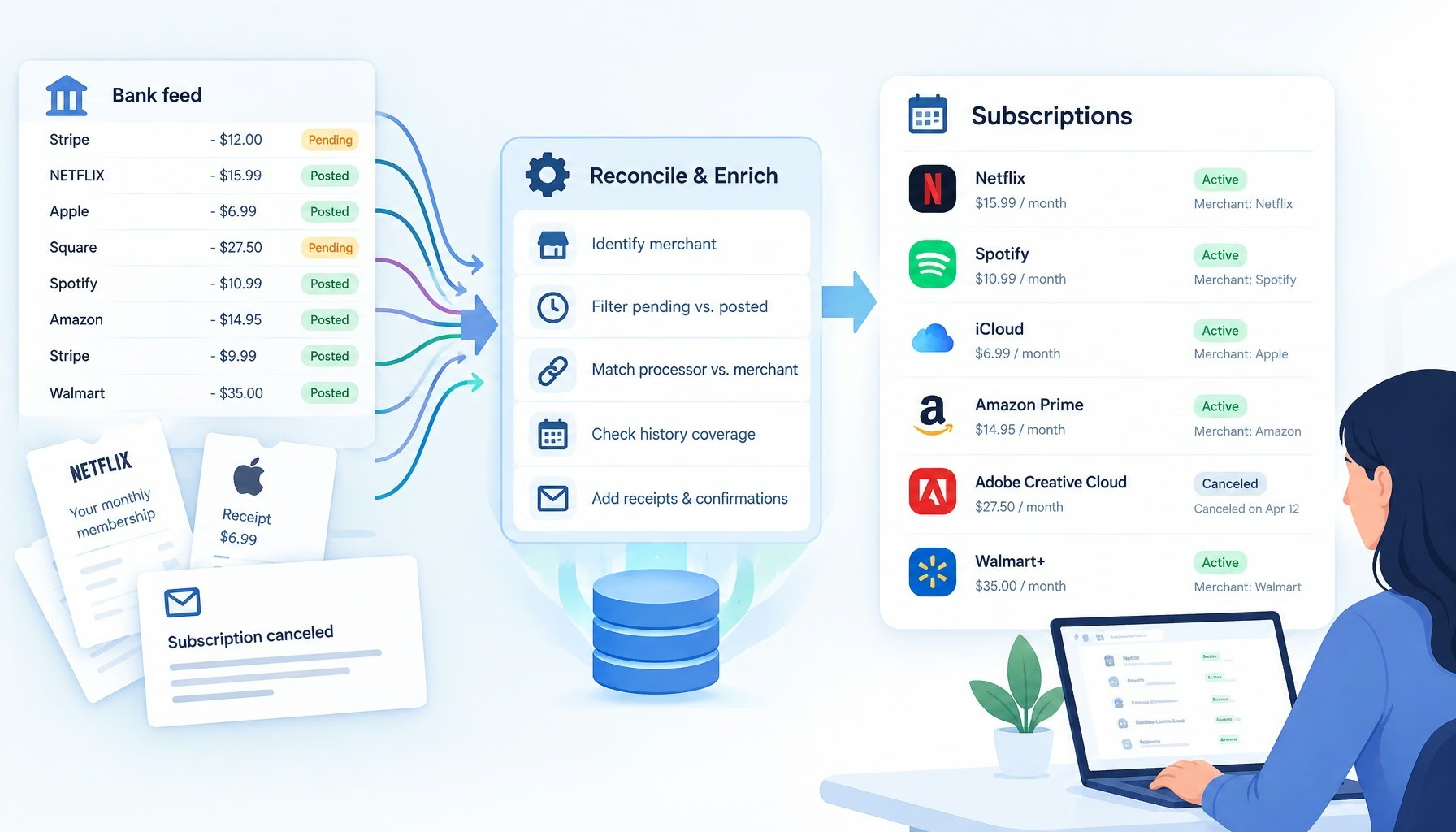
And customer expectations have risen. We all now expect to be treated as VIPs, with a “luxury” experience. When we make a purchase, we expect to be recognized. We expect our suppliers to know what we’ve bought in the past. And we expect personalized product recommendations, based on our profile, the purchases of other people like us, and the overall context of what’s happening right now.
This type of customer experience doesn’t just require information systems; the information is an element of the experience itself, part of what we’re purchasing, and what differentiates products and services in the market.
New ways of selling
New technologies like 3D printing and the internet of things are allowing companies to rethink existing products.
Products can be more easily customized and personalized for every customer. Pricing can be more variable to address new customer niches. And products can be turned into services, with customers paying on a per-usage basis.
Again, information isn’t just supporting the manufacturing and sale of the product – it’s part of what makes it a “product” in the first place.
Information as a product
In many industries, the information collected by business is now more valuable than the products being sold – indeed, it’s the foundation for most of the free consumer internet. Traditional industries are now realizing that the data stored in their systems, once suitably augmented or anonymized, can be sold directly. See this article on the Digitalist magazine, The Hidden Treasure Inside Your Business, for more information about the four main information business models.
A culture change for “traditional IT”
Traditional IT systems were about efficiency, effectiveness, and integrity. These new context-based experiences and more sophisticated products use information to generate growth, innovation, and market differentiation. But these changes lead to a difficult cultural challenge inside the organization.
Today’s customer-facing business and product teams don’t just need reliable information infrastructures. They need to be able to experiment, using information to test new product options and ways of selling. This requires not only much more flexibility and agility than in the past, but also new ways of working, new forms of IT organization, and new sharing of responsibilities.
The majority of today’s CIOs grew up in an era of “IT industrialization,” with the implementation of company-wide ERP systems. But what made them successful in the past won’t necessarily help them win in the new digital era.
Gartner believes that the role of the “CIO” has already split into two distinct functions: Chief Infrastructure Officers whose job is to “keep the lights on”; and Chief Innovation Offers, who collaborate closely with the business to build the business models of the future.
IT has to help lead
Today’s business leaders know that digital is the future, but typically only have a hazy idea of the possibilities. They know technology is important, but often don’t have a concrete plan for moving forward: 90% of CEOs believe the digital economy will have a major impact on their industry. But only 25% have a plan in place, and less than 15% are funding and executing a digital transformation plan.
Business people want help from IT to explain what’s possible. Today, only 7% of executives say that IT leads their organization’s attempts to identify opportunities to innovate, 35% believe that it should. After decades of complaints from CIOs that businesses aren’t being strategic enough about technology, this is a fantastic new opportunity.
Design Thinking and prototyping
Today’s CIOs have to step up to digital innovation. The problem is that it can be very hard to understand — history is packed with examples of business leaders that just didn’t “get” the new big thing. Instead of vague notions of “disruption,” IT can help by explaining to business people how to add information into a company’s future product experiences.
The best way to do this is through methodologies such as Design Thinking, and agile prototyping using technologies should as Build.me, a cloud platform that allows pioneers to create and test the viability of new applications with staff and customers long before any actual coding.
Conclusion
The bottom line is that digital innovation is less about the technology and more about the transformation — but IT has an essential role to play in demonstrating what’s possible, and needs to step up to new leadership roles.