We use cookies, including third-party cookies from Google to serve personalized ads through AdSense, to operate this site and understand how it is used. By continuing to browse, you accept this use. See our Privacy Policy and Terms of Use for details, including how to opt out of personalized advertising.
Accept
SmartData CollectiveSmartData Collective
  • Analytics
    AnalyticsShow More
    What Kind of Problem-Solving Distinguishes Data Analysts From Software Engineers -- AI-generated illustration
    What Kind of Problem-Solving Distinguishes Data Analysts From Software Engineers
    7 Min Read
    chatgpt image jul 21, 2026, 04 34 30 pm
    4 Core Benefits of Predictive Maintenance after Vibration Analysis
    10 Min Read
    How Does Data Mining Boost Customer Satisfaction in Logistics? Harnessing Analytics for Results -- AI-generated illustration
    How Does Data Mining Boost Customer Satisfaction in Logistics? Harnessing Analytics for Results
    11 Min Read
    chatgpt image jul 13, 2026, 04 23 45 pm
    How Data Analytics Helps Companies Improve User Engagement
    19 Min Read
    chatgpt image jul 13, 2026, 03 59 46 pm
    How Data Analytics Improves Multi-Location Search Strategies
    10 Min Read
  • Big Data
  • BI
  • Exclusive
  • IT
  • Marketing
  • Software
Search
© 2008-25 SmartData Collective. All Rights Reserved.
Reading: How to Deliver a Data Science Project Successfully
Share
Notification
Font ResizerAa
SmartData CollectiveSmartData Collective
Font ResizerAa
Search
  • About
  • Help
  • Privacy
Follow US
© 2008-23 SmartData Collective. All Rights Reserved.
SmartData Collective > Data Management > How to Deliver a Data Science Project Successfully
Data Management

How to Deliver a Data Science Project Successfully

Rehan Ijaz
Rehan Ijaz
5 Min Read
How to Deliver a Data Science Project Successfully
Illustration generated with Qwen Image.
SHARE

It is demanding to know where to begin once zoućve decided that, yes, you wish to dive into the fascinating world of data and AI. Just having a look at all the technologies you need to understand all the tools you’re supposed to master is enough to make you confused.

Contents
  • 1. Understanding the business
  • 2. Gather your data
  • 3. Explore and clean your data
  • 4. Enrich your dataset
  • 5. Get predictive
  • In conclusion

Well, luckily for you, creating your first data project is actually not difficult as it seems. Becoming data-powered is first and most foremost about having to learn the basic steps and following them to go from raw data to create a machine learning model, and in the end to operationalization.

Let’s jump into the following steps that will help you in successfully delivering a data science project.

1. Understanding the business

Having an understanding of the business or activity that your data project is part of is one of the major keys to ensuring its success. To motivate different participants necessary to get your project from design to creation, your project must be the answer to a clear organizational need or problem. So before you even think about the data, venture out and talk to the people in your organization whose processes you aim to improve with data.

More Read

Cloud Storage
Dropbox or Box – Which Cloud Storage For Small Businesses
How To Create Business Value with Analytics
Visualizations as Vocabulary…or Know the Big Words, Use the Small Ones
Performance Lag between Data Accumulation and Utilization
Integrating Big Data and More with Your Data Warehouse

Afterward, sit down and define a timeline and concrete key performance indicators.

2. Gather your data

Once you’ve figured your goal out, it’s time to start looking for your crucial data. Mixing and merging data from as many sources as possible is what defines a great project, so reach out as far as possible.

Here are a few ways to gather some data:

  1. Connect to a database: Ask your data and IT teams for the data that’s openly available, or create your private database up, and start digging through it to understand what information your company has been collecting.
  2. Use APIs: Think of the APIs to all the tools your company’s been using, and the raw data these guys have been gathering. You have to work on getting these all set up so you can use those email stats, the info your sales team put in Pipedrive or similar Salesforce, the support ticked somebody filled, etc. If you’re not an expert coder, plugins in DSS can give you lots of options to bring in your external data.

3. Explore and clean your data

Once you’ve gathered your data, it’s time to get to work on it. Start digging to see what you’ve got and how you can merge everything together to answer your original goal. Start writing notes on your first analyses, and ask questions to business and people, or the IT guys, to understand what these variables mean.

4. Enrich your dataset

Now that you’ve got somewhat clean data, it’s time to manipulate it in order to get the most value of it. You should begin by joining all your different sources and group logs to specify your data down to essential features.

An example of that is to enrich your data by creating a time-based feature like:

  • Extracting time and date components
  • Calculating variations between date columns
  • Flagging holidays of national matter

5. Get predictive

This is when the actual fun starts. Machine learning algorithms can help you go a step further into acquiring insights and predicting trends of the future. Also using a data science platform is one of the easiest methods in automating your machine learning pipeline.

By working with clustering algorithms, you’re able to create models to uncover trends in the data that were not easily seen in graphs and stats. These create groups of similar events, also known as clusters, and more or less explicitly express which feature is decisive in these results.

In conclusion

In order to successfully finish your first data project, you need to be aware that your model will never be fully “finished” – for it to remain useful and accurate, you need to constantly reevaluate, retrain it and create new features.

A data scientists’ job is never actually done, but that’s what makes working with data all the more interesting!


Share This Article
Facebook Pinterest LinkedIn
Share
ByRehan Ijaz
Follow:
Rehan is an entrepreneur, business graduate, content strategist and editor overseeing contributed content at BigdataShowcase. He is passionate about writing stuff for startups. His areas of interest include digital business strategy and strategic decision making.

Follow us on Facebook

Latest News

Technical architecture diagram and decision framework for choosing an integration partner for data pipelines: service bus, brokers, and azure-native middleware compared
Choosing an Integration Partner for Data Pipelines: Service Bus, Brokers, and Azure-Native Middleware Compared
Development Exclusive
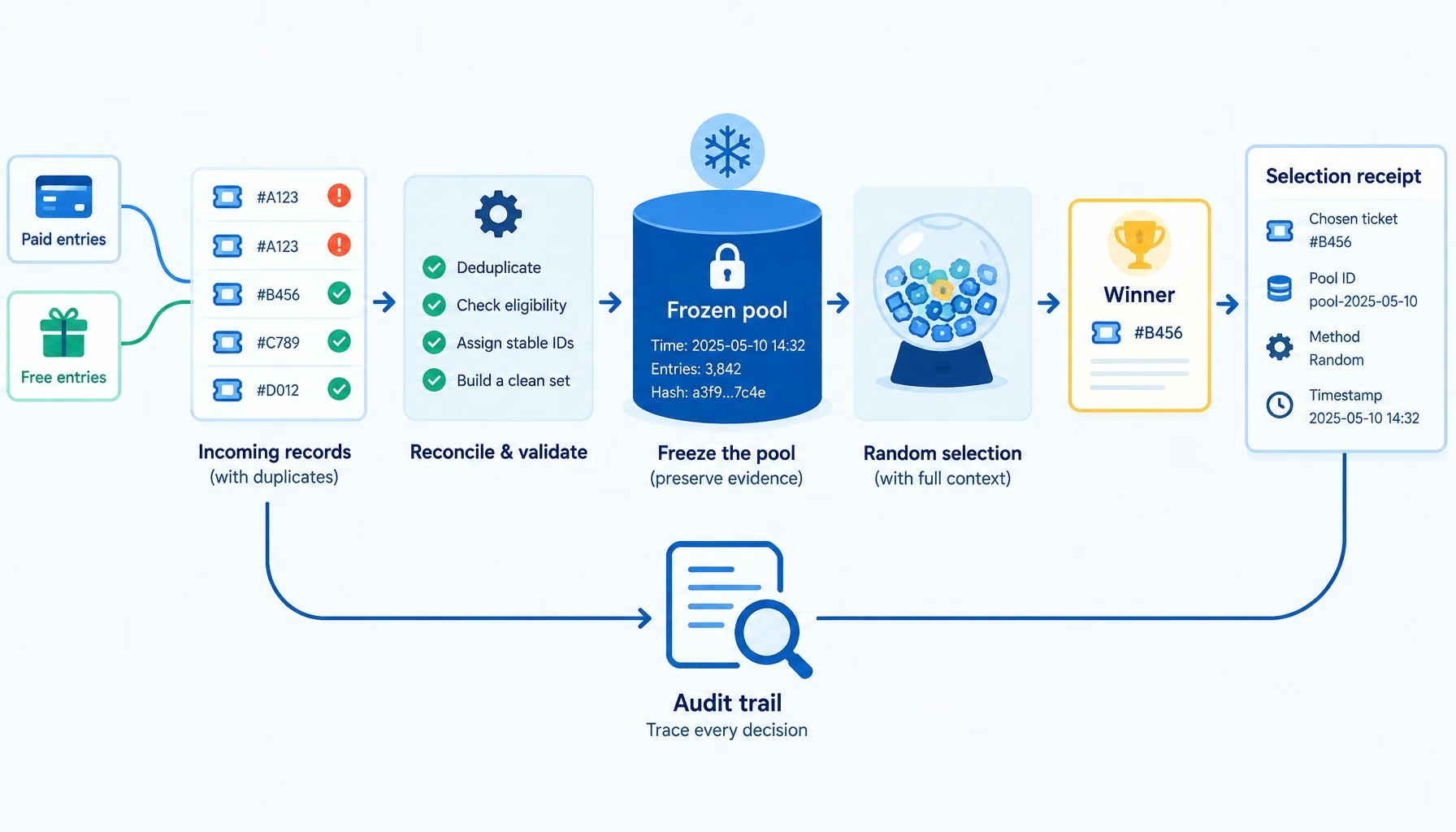
Technical architecture diagram and decision framework for data engineering for prize draws: building an audit trail
Data Engineering for Prize Draws: Building an Audit Trail
Big Data
Technical architecture diagram and decision framework for the trouble with ai that won’t leave a job unfinished
The Trouble With AI That Won’t Leave a Job Unfinished
Artificial Intelligence News
Technical architecture diagram and decision framework for ai-powered logo generation: design.com vs looka
AI-Powered Logo Generation: Design.com vs Looka
Artificial Intelligence Exclusive

Stay Connected

1.2KFollowersLike
33.7KFollowersFollow
222FollowersPin

You Might also Like

Managing Your Big Data in a Collaborative Set-up
Collaborative DataData Management

Managing Your Big Data in a Collaborative Set-up

5 Min Read
10 Technology Trends that will Define Enterprise Architecture in the 2010s
Business IntelligenceCloud ComputingCulture/LeadershipData Visualization

10 Technology Trends that will Define Enterprise Architecture in the 2010s

3 Min Read
Will Big Data Finally Turn CRM Into Something Valuable?
AnalyticsBest PracticesBig DataBusiness IntelligenceCRMData ManagementDecision ManagementHadoopInside CompaniesKnowledge ManagementMapReduceMarket ResearchMarketingPolicy and GovernanceSentiment AnalyticsUnstructured Data

Will Big Data Finally Turn CRM Into Something Valuable?

9 Min Read
How to Increase Your Privacy Online
Privacy

How to Increase Your Privacy Online

6 Min Read

SmartData Collective is one of the largest & trusted community covering technical content about Big Data, BI, Cloud, Analytics, Artificial Intelligence, IoT & more.

From Bolts to Bots: How AI Is Fortifying the Automotive Industry
Artificial Intelligence
How To Get An Award Winning Giveaway Bot
Big Data Chatbots Exclusive

Quick Link

  • About
  • Contact
  • Privacy
Follow US
© 2008-26 SmartData Collective. All Rights Reserved.
Welcome Back!

Sign in to your account

Username or Email Address
Password

Lost your password?