Hotel revenue management and use of analytics for room sales has remained largely unchanged for decades since the early 1980s when hotels started looking at yield and how they could optimize the revenue each room could generate. By the mid-1990’s, Marriott’s successful execution of revenue management strategies were adding between $150 — $200 million in annual revenue and thus marked the beginning of data intelligence to drive new revenue.
Fast forward to 2016 — and the part insight, part intuition, part data-driven approach to revenue management largely hasn’t moved into the new age of big data for most hoteliers.
There is a new application of data modelling hotels are utilizing to see big gains in RevPAR (Revenue Per Available Room) and this comes through price differentiation. That is — dynamically displaying different room rates for every person that views your hotel search price query.
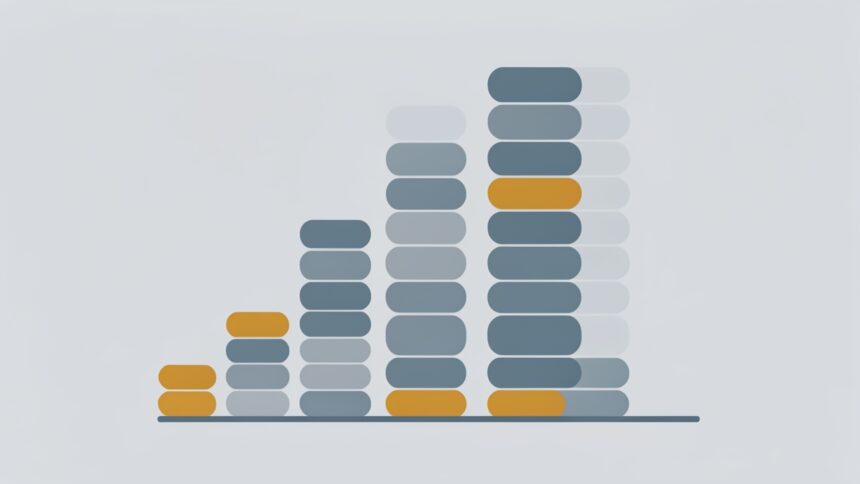
To demonstrate how the data engine works behind the scenes — below is a basic visualized scenario on what a hotel search looks like with the use of analytical driven data — and the outcomes it provides where guests are happy with the prices and hotels are able to extract more revenue out of each guest.

Example:
Jeff is booking a room for a leisure trip to Hong Kong next week. Being a loyal member of brand.com, he logs onto the direct hotel website and logs into his frequent guest profile.
Jeff enters the dates and hits ‘Search’ — here is what happens:
The data systems kick into overdrive. Trillions of intensive number crunching calculations processed over the past days, weeks, months prior are all getting an intensive workout as reservations, yield management and data models all temporarily synchronize together to generate the ‘perfect price’ for Jeff. Using key data points, probability metrics and real-time data feed analytics being fed in from external sources — reservation systems bring together all the hard work to interpret exactly how much Jeff is willing to pay for this specifically hotel — before he books it.
- Has Jeff ever stayed in Hong Kong? Where, and how long ago? Is there a trend to his stays? (If so, what did he pay last time? Base rate + ability to charge more based on previous spend $$++)
- Is this a business or personal trip and who is paying? (Hotels can find this out by asking the user and through easily obtainable third party data — business stays can typically be at a higher rate, especially if not part of a larger company)
- Did Jeff search using a corporate/promotional rate code? (if yes, is he eligible/has he used it previously, what % of rooms does he book using codes? what is our internal score likelihood of him booking a room WITH and WITHOUT a code? Price increase++)
- What is the internal rating of Jeff as a guest? (High rating means less servicing effort, good customer with no fuss, bad customers = more $$. The opposite is a bad guest — where a higher price can be a detractor to their booking)
- If Jeff has stayed here before, how was his last stay? Was there a positive review on his social media accounts? (He is likely to pay more than his last stay — Price++)
- What brand and star rating of hotel in this region does Jeff usually stay in? (Both in this chain and other chains — is the price we’re about to display in line with his stay history?)
- Does Jeff hold elite status at any other chains, and if so how many have properties of similar ratings in the area he’s searching and what are their prices? (A great opportunity to come in a few dollars lower than the competition)
- If Jeff points/status driven? (What’s our internal score on Jeff’s points/benefits drivers for THIS hotel? — Allows for more subjective pricing and packages to be displayed eg: Double points promotion for $20 extra)
- Does Jeff always use points for leisure stays? (If so, loop through sale scoring data and take into consideration how many points Jeff has in his account, his wife’s account, and how many we think are available through his credit cards — if not enough — we know it’s a revenue purchase — and can price accordingly $++)
- Does Jeff have any other reservations in the city on the same night? (Is there a competitor booking we can trigger a cancellation on if the price is right for Jeff to rebook with our hotel?)
- How much has/will Jeff pay for a room in Hong Kong? What’s his upper limit and what’s the most expensive Executive/Suite he’s ever purchased? (Knowing the ‘perfect number’ which Jeff paid for a premium room means we may be able to replicate those conditions and get him paying more, again $++)
- What’s his StayScore? (Industry guest rating metric for how important this guest is to the hotel industry in a particular region by aggregating data across all loyalty programs, OTAs etc.. High score can indicate guest willingness to pay for upgraded rooms — Price++)
- If Jeff always stays in suites, what is the likelihood of him buying a standard room? (Should we display cheap options at all and risk losing revenue? Dynamically increase standard room rates automatically to make the Suite look more appealing)
- Jeff checked the ‘show me in points’ box on the search (Does the price we’re about to display match his personal known points to dollar ratio? If not — make cash price look more appealing and in align with other data points. Opportunity to turn potential points res into cash res. $$++)
- What is Jeff’s internal scoring metric for other hotel services in this region/brand/trip type?( How much extra does he spend on restaurants/spa/internet/other — factor this into final pricing, gives scope to offer breakfast or 20% off SPA as a package to induce a higher rate)
Of course, if Jeff had been referred to the hotel website from a meta-search engine, there are additional data sets which would support individual pricing that may be more up to date and more relevant than the hotel site’s own data (For example — meta search sites know where Jeff has been prior to the hotel search — perhaps it was on a competitors site or their friends TripAdvisor review which explicitly says “Don’t stay here unless it’s under $xx/night”).
This example contains many facets of how the big data analytical machine would work under a platform where individual pricing is applied to hotel guests. With all data available and calculated within a matter of milliseconds, hotel booking sites are creating new layers of revenue through individual pricing.
Sometimes, it’s not about the lowest possible room rate, but rather how high the premium room rate appears to make the other rooms look affordable.
After the search results are returned to Jeff, he makes a selection and pays for the room. He walks away thinking the hotel price was a little more than expected, however still reasonable — all while wondering how he got so lucky to come across a promotional package which included a romantic spa session for Jeff and his wife — a perfect addition to make his wedding anniversary stay more memorable.
Welcome to the future of data driven hotel pricing.