Make no mistake, data is here to stay, and it’s only going to continue to arrive faster and in greater volumes than before. This data takes many different forms, all of them equally important, from streaming data to operational data. Likely, you already know how much this data has transformed entire industries and businesses.
Make no mistake, data is here to stay, and it’s only going to continue to arrive faster and in greater volumes than before. This data takes many different forms, all of them equally important, from streaming data to operational data. Likely, you already know how much this data has transformed entire industries and businesses. Likewise, you likely already understand that tremendous importance of having a comprehensive solution for handling this data.
Such a solution will only continue to face further challenges, as the kinds of data that businesses have to contend with multiply. For example, machine-to-machine data is only increasing in importance, as is the data that’s required to be in compliance with regulations. All of this unstructured data goes by the name of Big Data, a term that you’re also likely familiar with.
However, Big Data isn’t the only form of data that your business should be concerned with. In fact, there is another form of data – mainframe data – that deserves just as much of your attention if not more. Mainframe data exists in the same volume and moves with the same rapidity as Big Data, and it has the distinction of being important to vital business processes.

For example, mainframe data is involved with the control of things like billing and stock trading, as well as finances and tax records. This is something that’s understood well by the banking industry. Their mainframes are responsible for handling and obscene number of transactions on an on-going, around-the-clock basis. Further, the data that these mainframes handle must always be kept secure, and that data must be immediately accessible.
This all serves to highlight the tremendous importance that having an effective method for handling mainframe data plays for business intelligence and analytics. In order for this data to be used effectively for these purposes though, it must be moved as close to possible to those business tools. Further, non-relational data, relational data, and other forms of data must be seamlessly combined and integrated to facilitate fast and accurate access. This can only be accomplished of the old method of physically moving data is eliminated.
Make no mistake, those who are empowered to make decisions for businesses, as well as customers, have an expectation of having immediate and accurate access to data. Of course, providing this kind of access is not without its technical challenges. For one, any method must be capable of integrating and standardizing the data in question in such manner that allows for the data to be consistent across business-facing and customer-facing applications.
Ideally, a business should seek to have all of this data integrated in one place, regardless of where any of the data may originate. The biggest obstacle to accomplishing this is getting non-relational data into a form that works well with the BI and analytics tools that businesses employ.
To accomplish this, many businesses have been using the ETL method, which stands for Extract, Transform, and Load. While this method may succeed in getting non-relational data to play nicely with analytics tools, it is not the ideal solution. Such a method requires data to be physically moved before it can be transformed. Because of this, the ETL method results in a high degree of latency. Further, the complexities associated with transforming the data lead to an increase in inaccuracies and can result in additional costs. Worst of all, the data that results from this method lacks the most crucial quality for effective analytics, which is timeliness.
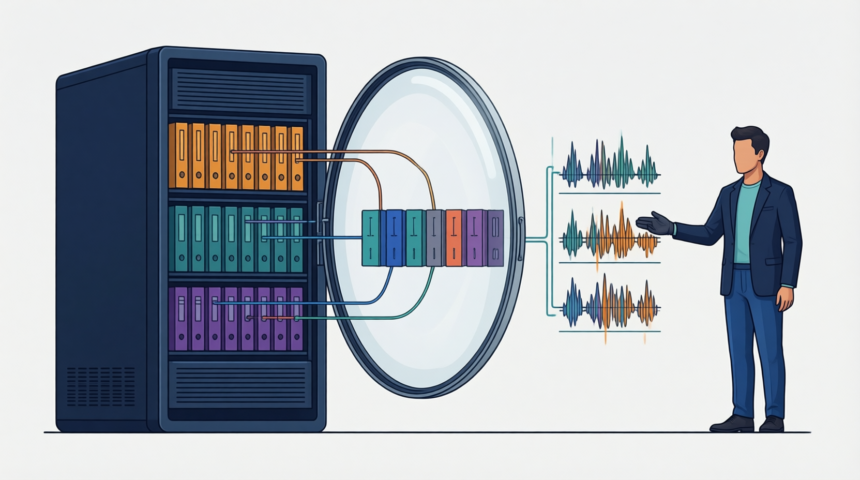
The solution to this problem is mainframe data virtualization. Rather than physical moving data, this method employs specialty processors on a mainframe to handle the transformation of data. This relieves a mainframe’s central processors of the duty, while also eliminating the need to pay costly software license charges. Also, the TCO of the mainframe is significantly reduced, and MIPs capacity is not taken up by data transformation processes.
All in all, this allows BI tools and analytics tools to work to a business’ tremendous advantage, as mainframe data visualization allows those tools to have access to accurate data in real time. This data can be easily accessed, regardless of its origins, through simply SQL queries. Further, specialized developers are not required to familiarize themselves with the mainframes particular environment.
The end result of using mainframe data virtualization is that CEOs are empowered to do good work for their businesses. They can use they’re analytics and BI tools the way they were intended: to find ways of facilitating business grown and to mitigate risks posed to the business. Further, mainframe data virtualization brings systems, people, and processes together, facilitating greater cooperation between the disparate departments of a business. In the end, this means that a business employing mainframe data virtualization can respond appropriate to customer demands, anticipate threats posed by competitors, and identify emerging opportunities in the marketplace.