Everyone is talking about digital disruption and the need to transform their company into a “digital business”. However, ask most people what a digital business is and they’ll talk in terms of online shopping, mobile channels or the latest wearable device.
In fact we have a long tradition of using the word “digital” as a prefix to new concepts while we adapt. Some examples include the wide introduction from the 1970s of the “digital computer” a term which no longer needs the digital prefix. Similarly the “digital mobile phone” replaced its analogue equivalent in the 1990s introducing security and many new features including SMS. The scandals caused when radio hams listened into analogue calls made by politicians seem like a distant memory!
The term digital really just refers to the use of ones and zeros to describe something in a way that is exactly repeatable rather than an inexact analogue stream. Consider, for instance, the difference between the ones and zeros used to encode the music in an audio file, which will replay with the same result now and forever in the future, compared to the physical fluctuations in the groove of an old vinyl record which will gradually degrade. Not only is the audio file more robust it is also more readily able to be manipulated into new and interesting combinations.
Digital business
So it is with digital business. Once the economy has successfully made the transition from analogue to digital, it will be natural for all business to be thought of in this way. Today, however, too many people put a website and mobile app over the top of their existing business models and declare the job done.

Their reason for doing this is that they don’t actually understand what a digital business is.
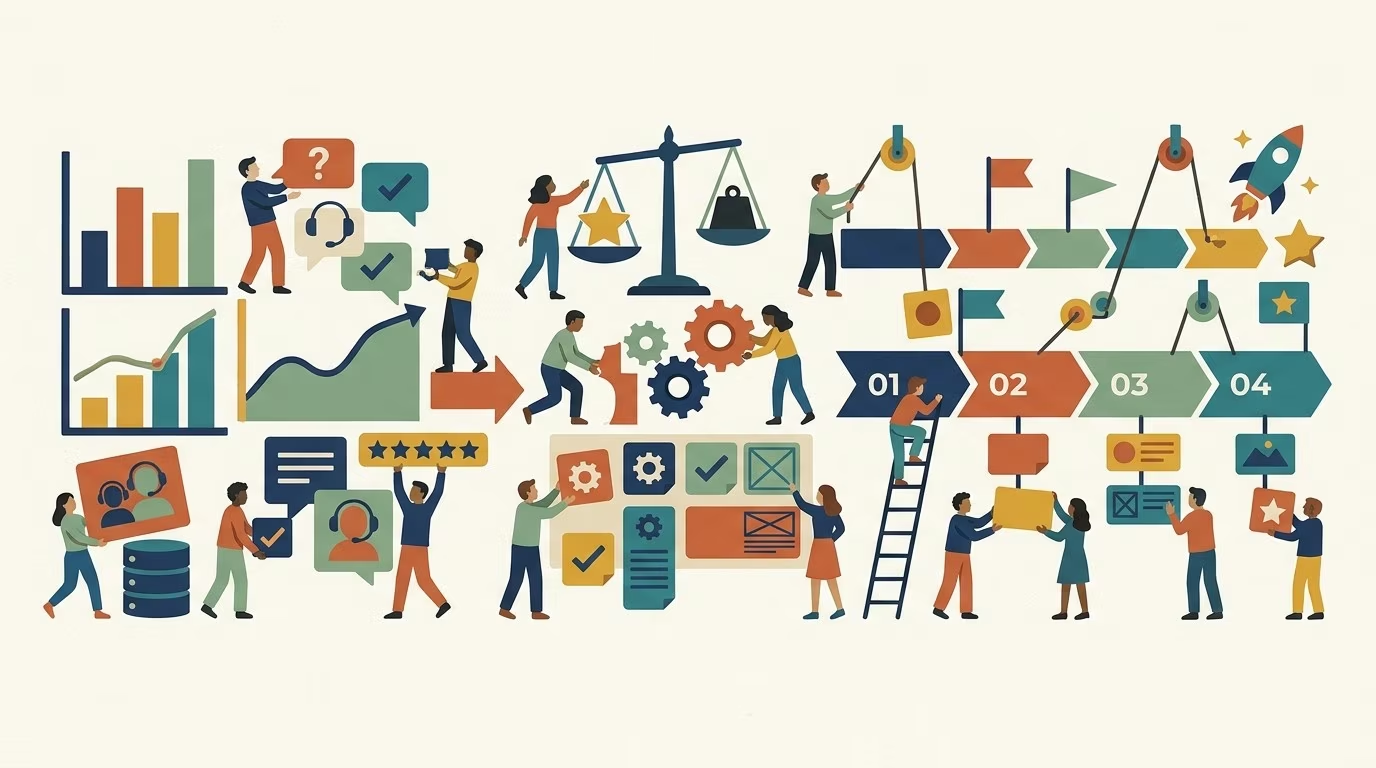
Digital business separates its constituent parts to create independent data and processes which can then be rapidly assembled in a huge number of new and innovative ways. The move to digital business is actually just a continuation of the move to the information economy. We are, in fact, moving to the Information-Driven Business that puts information rather than processes at its core.
Airlines are a good example. Not that many years ago, the process of ticketing through to boarding a flight was analogue meaning that each step led to the next and could not be separated. Today purchasing, ticketing and boarding a flight are completely independent and can each use completely different processes and digital technology without impacting each other. Passenger handling for airlines is now a digital business.
What this means is that third parties or competing internal systems can work on an isolated part of the business and find new ways of adding value. For retailers this means that the pictures and information supporting products are independent of the website that presents them and certainly the payment processes that facilitate customer transactions. A digital retailer has little trouble sharing information with new logistics, payments and mobile providers to quickly develop more efficient or new routes to market.
The digital facade
In the 1970s and 1980s businesses were largely built-up by using thousands of processes. Over time, automation has allowed these numbers to explode. When processes required clerical functions the number of options was limited by available labour. With automation, every issue can be apparently solved by adding a process.
Where digital business is about breaking activities up into discrete parts which can be reassembled, analogue business tends to be made up of processes which are difficult or impossible to break apart.
The problem with this is that the organisation becomes a maze of processes. They become increasingly interdependent, to the point where it is impossible to break them apart.
Many businesses have put mobile and web solutions over the top of this maze. While the result can look fantastic, it doesn’t take long before the wheels fall off. Customers experience inconsistent product, delivery or price options depending on whether they ring the call centre or look online. They find that the promised stock is no longer available because the warehouse processes are not properly integrated with the online store. Without seamless customer information, they aren’t addressed with the same premium privileges or priority across all channels.
In many cases, the process maze means that the addition of a digital façade can do more harm than good.
Ironically, the reverse model of having a truly digital business with an analogue interface to the customer is not only valid but often desirable. Many customers, particularly business clients, are themselves dependent upon complex processes in their own organisations and it makes perfect sense to work with them the way that they want to work. An airline that is entirely digital in its core can still deal with corporate travel agents who operate in an analogue world.
Digital transformation from the inside out
I have previously argued that the technology infrastructure that supports digital business, cloud, is actually the foundation for business transformation (see Cloud computing should be about new business models).
Every twenty-first century business needs to define itself in terms of its information assets and differentiated intellectual property. Business transformation should focus on applying these to the benefit of all of its stakeholders including customers, staff, suppliers and shareholders.
Starting from the core and building a new enterprise around discrete, digital, business capabilities is a big exercise. The alternative, however, is to risk being pulled under in the long-term by the weight of complexity.
No matter how many extra interfaces, interim processes or quick fixes are put in place, any business that fails in this transformation challenge will ultimately be seen as offering no more than a digital façade on a fading analogue business.