
We use cookies, including third-party cookies from Google to serve personalized ads through AdSense, to operate this site and understand how it is used. By continuing to browse, you accept this use. See our Privacy Policy and Terms of Use for details, including how to opt out of personalized advertising.
Accept
SmartData CollectiveSmartData Collective
  • Analytics
    AnalyticsShow More
    What Kind of Problem-Solving Distinguishes Data Analysts From Software Engineers -- AI-generated illustration
    What Kind of Problem-Solving Distinguishes Data Analysts From Software Engineers
    7 Min Read
    chatgpt image jul 21, 2026, 04 34 30 pm
    4 Core Benefits of Predictive Maintenance after Vibration Analysis
    10 Min Read
    How Does Data Mining Boost Customer Satisfaction in Logistics? Harnessing Analytics for Results -- AI-generated illustration
    How Does Data Mining Boost Customer Satisfaction in Logistics? Harnessing Analytics for Results
    11 Min Read
    chatgpt image jul 13, 2026, 04 23 45 pm
    How Data Analytics Helps Companies Improve User Engagement
    19 Min Read
    chatgpt image jul 13, 2026, 03 59 46 pm
    How Data Analytics Improves Multi-Location Search Strategies
    10 Min Read
  • Big Data
  • BI
  • Exclusive
  • IT
  • Marketing
  • Software
Search
© 2008-25 SmartData Collective. All Rights Reserved.
Reading: Fight Back Against Black Swan Fatigue
Share
Notification
Font ResizerAa
SmartData CollectiveSmartData Collective
Font ResizerAa
Search
  • About
  • Help
  • Privacy
Follow US
© 2008-23 SmartData Collective. All Rights Reserved.
SmartData Collective > Analytics > Predictive Analytics > Fight Back Against Black Swan Fatigue
CommentaryExclusivePredictive AnalyticsRisk Management

Fight Back Against Black Swan Fatigue

paulbarsch
paulbarsch
5 Min Read
Fight Back Against Black Swan Fatigue
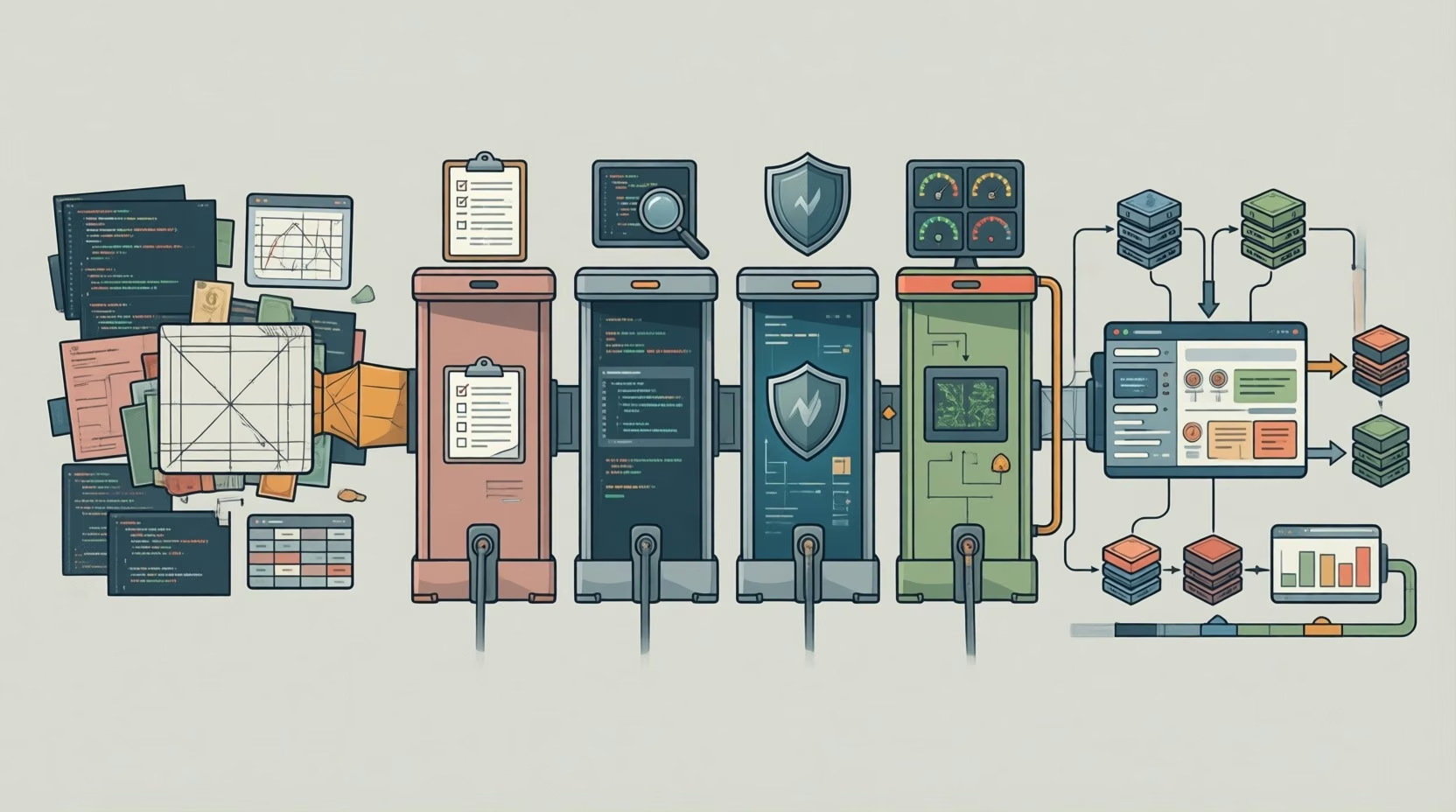
Illustration generated with Qwen Image.
SHARE

In today’s lean, just-in-time, and over optimized world, it’s not uncommon for executives roll their eyes when the term “Black Swan” is brought up in risk management discussions.  That’s because even though preparing for extreme events makes logical sense, there’s also a cost associated with redundancy and robust disaster planning.  In addition, no one is ever judged a hero for saving the company from what never (or is never supposed to) happen.  Business executives must fight back against Black Swan fatigue, because in today’s interconnected and highly correlated world, the next extreme event could be the one that shoves your company off a cliff.

When it comes to preparing for low probability but high impact events (i.e. Black Swans), the sad truth is most business executives will do nothing.  Why? Nassim Taleb, author of the Black Swan, explains; “It is difficult to motivate people in the prevention of Black Swans. Prevention is not easily perceived, measured, or rewarded; it is generally a silent and thankless activity. History books do not account for heroic preventive measures.”

Taleb is right. No one will be labeled a hero for keeping extra inventory on hand. No one will be characterized a hero for divvying orders among various suppliers just in case the favored and most cost effective supplier goes belly up. And spending money on strategy and risk management consultants to disaster and scenario plan for worst case developments? Forget about it. These are all just costs, and cannot be afforded in today’s bottom line economy, right?

Someone wise once said that risk management is much like insurance. You hate to spend money on it, but you’re darn glad you have it when all hell breaks loose.

More Read

Interview – Anne Milley, SAS,  Part 1
Interview – Anne Milley, SAS, Part 1
Future Trends in Generative AI: What’s Next in Machine Creativity
Discovering the Wonders of Data-Driven PPC Marketing
How AI Helps Companies Adapt to Fulfillment Strategy Changes
Interview: Françoise Soulie Fogelman, KXEN

But wait you say, don’t most business executives plan for disaster? Perhaps, but there’s a difference between hiring a consultant to produce a disaster planning report which promptly collects dust, and actually preparing for and assuming extreme events will occur as part of your overall business plan.  And even when managers believe they’re prepared for worst case events, sometimes it’s not enough—with potentially horrific consequences.

As detailed in the March 27, 2011 issue of the Financial Times, executives at Tepco’s Fukushima Daiichi plant were prepared for earthquake. In fact, they were also prepared for tsunami—having built a seawall 20 feet tall. What they did not expect is that the March 11, magnitude 9.0 earthquake would cause a tsunami wave 40 feet tall! The tsunami promptly washed away the sea wall and also the diesel powered generators cooling the spent nuclear fuel rods housed at Fukushima.  

Executives at Fukushima had planned for disaster. They had built a 20 foot seawall. They had redundancy with backup generators in case the cooling system failed. And the nuclear plant powered down once the 9.0 magnitude earthquake hit. Everything worked as planned. But they were not prepared for the “unthinkable” extreme event.

Predictive modeling based on historical data will only take you so far. Even extrapolating with Bayes isn’t going to be of much use for “unknown, unknowns”.  As business managers we must fight Black Swan lethargy, especially when all oars in the boat are rolling towards lands of “optimization” and “cost effectiveness”. As managers, we must continue to sound the alarm, even though probability of the extreme event is of the smallest percentages.

Play up the risk of future Black Swans and then prepare for the extreme event. Here’s to hoping you’ll never be proved right.

TAGGED:Bayes Theoremblack swanpredictive analyticsrisk managementTaleb
Share This Article
Facebook Pinterest LinkedIn
Share

Follow us on Facebook

Latest News

Flat editorial illustration: The article's core relationship is between aggregated workplace data (occupancy, environmental, feed
How Businesses Can Use Workplace Data to Create Better Office Environments
Big Data Business Intelligence Exclusive
Flat editorial illustration: The article's core relationship is the engineering transition from an AI prototype to a production-r
From AI Prototype to Production: Observability and Scalability Requirements for Data-Heavy SaaS Applications
Artificial Intelligence Exclusive
Preparing Data Systems and Governance for a Scaling Global Gaming Brand -- AI-generated illustration
Preparing Data Systems and Governance for a Scaling Global Gaming Brand
Big Data Infographic
How Restaurant POS and Ordering Data Reveal Generational Customer Patterns -- AI-generated illustration
How Restaurant POS and Ordering Data Reveal Generational Customer Patterns
Exclusive Infographic

Stay Connected

1.2KFollowersLike
33.7KFollowersFollow
222FollowersPin

You Might also Like

5 Ways Predictive Analytics Impact Distribution
ExclusivePredictive Analytics

5 Ways Predictive Analytics Impact Distribution

7 Min Read
What's The Difference between Data Scientists and Rocket Scientists?
Analytics

What’s The Difference between Data Scientists and Rocket Scientists?

4 Min Read
Is Big Data The Key To Our Culture’s Relationship Crisis?
Big DataExclusive

Is Big Data The Key To Our Culture’s Relationship Crisis?

5 Min Read
3 Ways Predictive Analytics and Big Data Can Help Forex Brokers
AnalyticsBig DataPredictive Analytics

3 Ways Predictive Analytics and Big Data Can Help Forex Brokers

7 Min Read

SmartData Collective is one of the largest & trusted community covering technical content about Big Data, BI, Cloud, Analytics, Artificial Intelligence, IoT & more.

ai chatbot
How AI Website Chatbots Improve Customer Support and Lead Generation
Chatbots Exclusive
From Bolts to Bots: How AI Is Fortifying the Automotive Industry
Artificial Intelligence

Quick Link

  • About
  • Contact
  • Privacy
Follow US
© 2008-26 SmartData Collective. All Rights Reserved.
Welcome Back!

Sign in to your account

Username or Email Address
Password

Lost your password?