A quick look around the 21st century marketplace reveals a simple truth: the value of data has changed. Calculating that data value, however, is a complex practice. Industries that once stood alone and operated in siloes, have become interconnected by sheer necessity – collecting, analyzing, sharing and even selling data. It no longer is acceptable for companies in critical industries to track basic data. They must gather data from all facets of operations and information technologies, analyze that data, and turn it into actionable intelligence. The value of data truly exceeds its numerical quantity.
State of the Data
One thing that can be said, unequivocally, is that geospatial data is used by nearly every human in a great number of countries throughout the world, either directly or indirectly. Navigation functions on a cell phone? Geospatial data. Restaurant or entertainment recommendations in a specific area? Geospatial data. City bus route coordination? Geospatial data. Most often, we see the end result of geospatial data usage, but what we don’t see is just how many people touch that data to even get it to the point of deployable information.
This Data Value Chain has changed the way people and groups of people interact in our daily lives, as a whole, both internally and externally. The industries affected by geospatial data use that data in innovative ways, from the collection on the ground to analytics in the back office, to drive decision-making, project management, derive creative solutions, increase productivity and streamline workflows. These industries are directly responsible for building and maintaining the critical infrastructure upon which cities – and countries – are built and maintained. With each iteration of geospatial data along the chain, the value of that data increases.
More Read

The implicit value of geospatial data belongs to the 21st century workforce: from the boots on the ground mapping geographic terrain and gathering data in urban and rural settings, to engineers and project managers turning that data into knowledge and developing creative solutions to difficult infrastructural dilemmas; and even to the back-office decision makers tasked with solving the problems of today with an eye on the obstacles of tomorrow.
So, What Is the Data Value Chain Really?
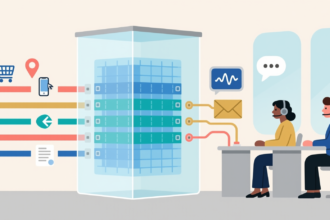
The Data Value Chain is a framework through which people can view the flow of geospatial data from the instant it is collected throughout its entire lifecycle. Each vertical industry has its own flow (and needs) of data, but eventually, that data intersects with analytics that can turn individual points of information into all different kinds of actionable intelligence. The Data Value Chain depends on a blended technology ecosystem that acts as disruptive force throughout the global marketplace to root out traditional, static practices and supplant them with innovative, purpose-built solutions based on data analytics.
Why Do We Need the Data Value Chain?
The Data Value Chain is greater than any individual company or specific application. It is ubiquitous to anything that touches an industry or company in today’s global marketplace. It shapes the way we interact with the world around us at both a micro and macro level. It has the power to disrupt industries with new ways of thinking and doing, but it also has the ability to unify disparate business practices by putting data – knowledge – into the hands of decision makers across each workgroup or department, informing daily workflow from the simple deployment of resources, to the strategic placement of those resources, to the ultimate value those resources provide in return. Trimble Geospatial is in a unique position to understand the proliferation and impact of the Data Value Chain as it has been at the center of enabling geospatial data intelligence for more than 40 years.
Ultimately, we all need to embrace and cultivate a Data Value Chain because the benefits are too large to ignore. This conceptual framework ignites a greater capacity to disseminate valued information across an organization (both vertically and horizontally) and helps industries derive actionable intelligence from all points of operation. As the sheer amount of data available continues to grow, so grows the importance of understanding the role of the Data Value Chain in the ecosystem of the global marketplace.