Cookies help us display personalized product recommendations and ensure you have great shopping experience.

By using this site, you agree to the Privacy Policy and Terms of Use.
Accept
SmartData CollectiveSmartData Collective
  • Analytics
    AnalyticsShow More
    How Data Analytics Is Reshaping Patient Financing Decisions
    How Data Analytics Is Reshaping Patient Financing Decisions
    13 Min Read
    business using business intelligence
    How to Use a Competitive Intelligence Dashboard to Turn Market Data Into Smarter Marketing Decisions 
    9 Min Read
    unusual trading activity
    Signal Or Noise? A Decision Tree For Evaluating Unusual Trading Activity
    3 Min Read
    software developer using ai
    How Data Analytics Helps Developers Deliver Better Tech Services
    8 Min Read
    ai for stock trading
    Can Data Analytics Help Investors Outperform Warren Buffett
    9 Min Read
  • Big Data
  • BI
  • Exclusive
  • IT
  • Marketing
  • Software
Search
© 2008-25 SmartData Collective. All Rights Reserved.
Reading: Stat Models, Astronomical Mysteries…and Business Data
Share
Notification
Font ResizerAa
SmartData CollectiveSmartData Collective
Font ResizerAa
Search
  • About
  • Help
  • Privacy
Follow US
© 2008-23 SmartData Collective. All Rights Reserved.
SmartData Collective > Analytics > Stat Models, Astronomical Mysteries…and Business Data
AnalyticsBig DataBusiness IntelligenceStatistics

Stat Models, Astronomical Mysteries…and Business Data

vincentg64
vincentg64
4 Min Read
SHARE

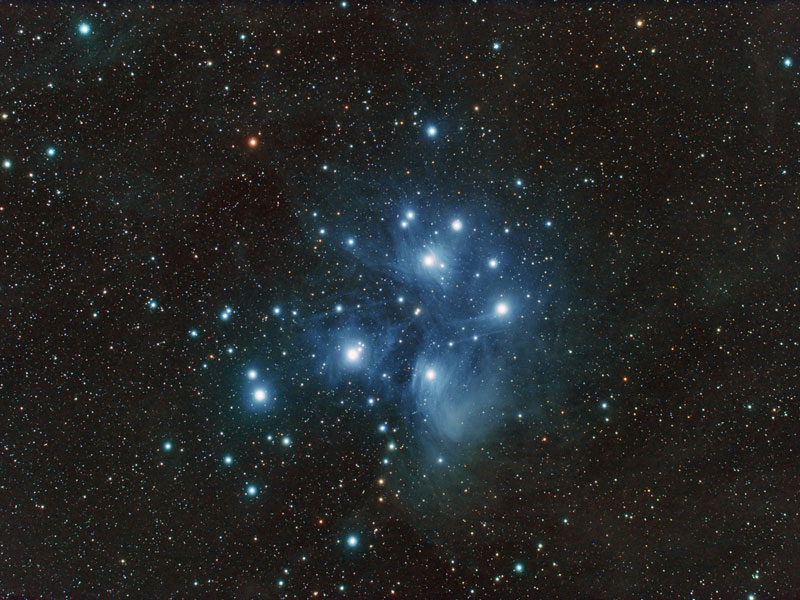
If you look at the picture below (Pleiades constellation), you will see – with the naked eye – that many star systems appear to be binary: that is, involving two (or more) stars orbiting around each other.

If you look at the picture below (Pleiades constellation), you will see – with the naked eye – that many star systems appear to be binary: that is, involving two (or more) stars orbiting around each other.

Is this a coincidence, or can we prove that from a statistical point of view, based on the theory of stochastic point processes, we are NOT dealing with a pure random process (Poisson process)? At first glance, as a statistician, I would say that the chance of observing so many pairs is extremely low, far below 0.000000001%. Now keep in mind that 2 stars that look very close to each other when viewed from Earth might actually be much more distant from each other than 2 stars that seem far apart, because we lack depth (the third dimension, or perspective) in these pictures. Also, most binary systems apparently consist of a normal star and a much smaller companion, thus we might see only a small fraction of all binary systems. In other words, maybe 90% of all solar systems are binary. Finally, there are cloudy areas in the picture below, where gas clouds hide stars located behind them.

The way to compute the probability to observe so many binary systems is as follows: 

More Read

Five Steps to Data Integrity for Job Candidates
How Data Analytics Supports Smarter Stock Trading Strategies
How Can Data-Centric UX Designers Make Better Games?
Getting to the Business of Big Data: Overcoming the Marketer’s Dilemma
The Big Data Health Partnership Between Apple and IBM
  • Simulate one million realizations of a Poisson process on a rectangle (the size of the picture below), each with 300 points (I’m assuming there are about 300 relatively bright stars in the picture below; let’s ignore the dim stars as they are just adding noise).
  • Compute the number of stars where closest neighbor is less than 1.5 millimeter away, for each of the one million simulations. Average your computations.
  • If that average number is below x=5 as I would guess (or even if it is below x=20 for that matter), then clearly the Poisson assumption is violated since we observe at least x=50 bright binary stars in the picture, so we really are dealing with a star generation mechanism that favors binary over single stars.

Note that if you know elementary statistics and basic concepts about Poisson processes (the most basic of all stochastic processes), then you don’t even need to perform one million simulations. There is an exact mathematical formula that tells you the expected number of binary starts that you should see if binary stars were not favored: it is based on the Erlang distribution. Distances to nearest neighbors have extensively been studied in statistics; there is a solid theoretical background around it.

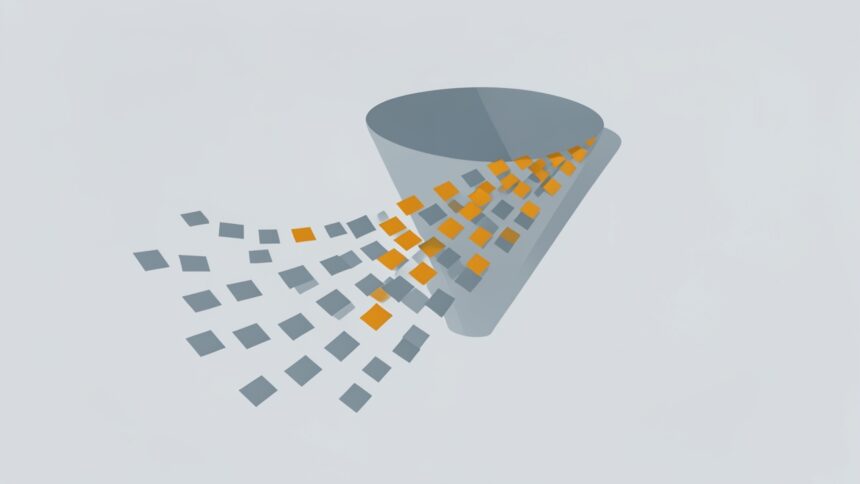
stat models business data

On a different topic, can we apply statistical principles used in astronomy, in the business world of big data?

I’m thinking of a measuring distance to far away stars as an example, where multiple measurements from a highly calibrated system are aggregated to refine the accuracy. In some ways, using multiple measurements to amplify a very weak signal. Can this concept of signal amplification be used to gain better, more accurate insights from big data? After all, business data is also very noisy and foggy: it also has its own clouds just as in the above picture, both metaphorically and physically, making statistical inference, pattern detection, and insights discoveries more difficult. 

Share This Article
Facebook Pinterest LinkedIn
Share

Follow us on Facebook

Latest News

How Data Analytics Is Reshaping Patient Financing Decisions
Analytics Big Data Exclusive
AI driven big data company
How AI-Driven Workflows Are Changing the Way Companies Think About Data Risk
Artificial Intelligence Data Management Exclusive Risk Management
ai product development
Why Businesses Outsource AI Product Development Companies
Exclusive News
banking tools
The Fintech and Banking Tools Global Entrepreneurs Rely On
Fintech Infographic

Stay Connected

1.2KFollowersLike
33.7KFollowersFollow
222FollowersPin

You Might also Like

Some Thoughts on Using Analytics About Your Staff to Improve Customer Treatment

4 Min Read

Using Data to Measure Usability

10 Min Read

Five Key Benefits of Retiring Legacy Applications to the Data Lake

4 Min Read

Job Satisfaction and Analytics-based Performance Management.

8 Min Read

SmartData Collective is one of the largest & trusted community covering technical content about Big Data, BI, Cloud, Analytics, Artificial Intelligence, IoT & more.

ai in ecommerce
Artificial Intelligence for eCommerce: A Closer Look
Artificial Intelligence
ai chatbot
The Art of Conversation: Enhancing Chatbots with Advanced AI Prompts
Chatbots

Quick Link

  • About
  • Contact
  • Privacy
Follow US
© 2008-25 SmartData Collective. All Rights Reserved.
Welcome Back!

Sign in to your account

Username or Email Address
Password

Lost your password?