Cookies help us display personalized product recommendations and ensure you have great shopping experience.

By using this site, you agree to the Privacy Policy and Terms of Use.
Accept
SmartData CollectiveSmartData Collective
  • Analytics
    AnalyticsShow More
    predictive analytics risk management
    How Predictive Analytics Is Redefining Risk Management Across Industries
    7 Min Read
    data analytics and gold trading
    Data Analytics and the New Era of Gold Trading
    9 Min Read
    composable analytics
    How Composable Analytics Unlocks Modular Agility for Data Teams
    9 Min Read
    data mining to find the right poly bag makers
    Using Data Analytics to Choose the Best Poly Mailer Bags
    12 Min Read
    data analytics for pharmacy trends
    How Data Analytics Is Tracking Trends in the Pharmacy Industry
    5 Min Read
  • Big Data
  • BI
  • Exclusive
  • IT
  • Marketing
  • Software
Search
© 2008-25 SmartData Collective. All Rights Reserved.
Reading: In the Future, Will Software Be More Important than Hardware?
Share
Notification
Font ResizerAa
SmartData CollectiveSmartData Collective
Font ResizerAa
Search
  • About
  • Help
  • Privacy
Follow US
© 2008-23 SmartData Collective. All Rights Reserved.
SmartData Collective > IT > Hardware > In the Future, Will Software Be More Important than Hardware?
CommentaryHardwareSoftware

In the Future, Will Software Be More Important than Hardware?

paulbarsch
paulbarsch
5 Min Read
SHARE

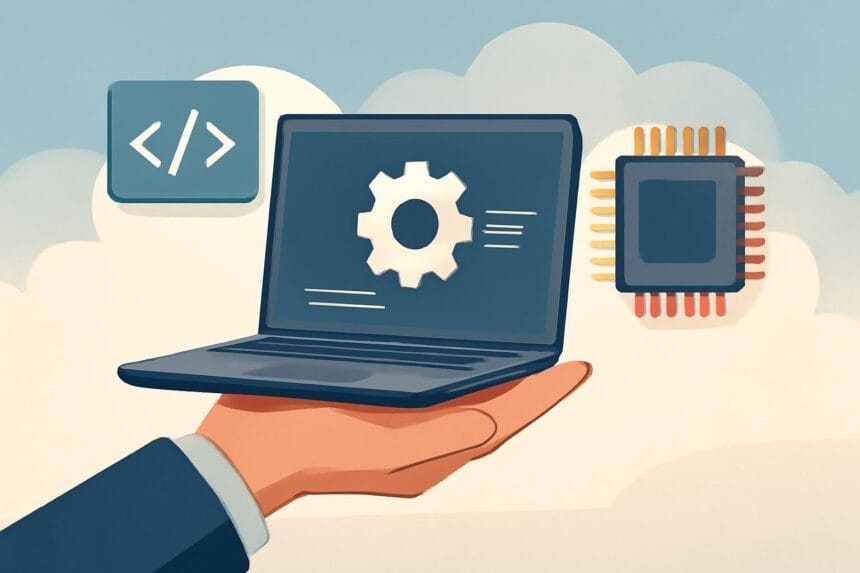
From talent wars going on in Silicon Valley for software engineers, to the hundreds of thousands of new smartphone applications coming online, it’s not far-fetched to believe that software rules the world today and will continue to rule in the future. However, some hardware makers strongly disagree- that it’s the physical design, construction and production of the device, machine or infrastructure that will take precedence. Who holds the future – hardware makers, software makers—or both?

From talent wars going on in Silicon Valley for software engineers, to the hundreds of thousands of new smartphone applications coming online, it’s not far-fetched to believe that software rules the world today and will continue to rule in the future. However, some hardware makers strongly disagree- that it’s the physical design, construction and production of the device, machine or infrastructure that will take precedence. Who holds the future – hardware makers, software makers—or both?

A Financial Times article by Andrew Keen highlights a brewing battle between hardware and software makers for investor dollars. Both sides believe that they are the smarter investment for the long run. And both have a point.

First, it’s tempting to see hardware manufacturing as nothing more than something that should be outsourced. After all, companies such as Amazon source the production of the Kindle to offshore manufacturers, and it’s commonly understood that most large computer companies leave production of machines to Chinese/Taiwanese contract manufacturers such as Flextronics, FoxConn and others.

More Read

How Is Mobile Technology Impacting the Food and Beverage Supply Chain?
Key Trends in Cloud Computing – Mid-2011 Update
The Future of Email is Social
How to Recover Data from an Unreadable External Hard Drive
March 2012 Early Indications I: Financial oddities of tech companies

However, increasingly companies such as CPU manufacturers and tablet makers are taking some of these manufacturing capabilities in-house, especially as product complexity increases and integration between software and hardware becomes more commonplace. 

In addition, taking manufacturing capabilities in-house means less bureaucracy in terms of working with an outsourced vendor, arguably higher accountability (no one to blame for failures), and more control over manufacturing processes. Net, net in many cases the higher a product moves up the value chain in terms of complexity and integration, the more it makes sense for companies to assert authority, control and accountability for manufacturing operations—sometimes all the way to the point of assuming full responsibility for hardware production.

The counter argument however is hardware will always be a commodity. Designs and specs can be written so that just about any respectable contract manufacturer can produce a product. The real value, say software makers is the design of user interfaces all the way to behind the scenes algorithms responsible for executing complex processes.  Evidence for the “software will rule” camp include software companies gaining a bigger slice of VC funding, and the number of applications developed for iPhone (650k) and Android (400k). For further reading on this perspective, review VC and market maker Marc Andreessen’s comments.

Ultimately, the most likely answer of who will win the future (hardware vs. software) is that there’s a place for both camps. For example, it’s the integration of commodity hardware with advanced software that seems to be the best fit for many companies looking to acquire analytics capabilities. This is evidenced by the data warehouse appliance trend of an engineered and integrated solution stack of hardware and software coupled with services for implementation, maintenance and operations. These solution stacks are architected, performance tested, certified and supported. And they usually come from a single vendor responsible for the entire end-to-end package.  

In the meantime, we have a strong debate. VC’s like Marc Andreessen say software companies are primed to “take over large swathes of the economy”. Hardware makers claim the user experience in terms of design, touch and feel is more relevant than ever. What say you?



Share This Article
Facebook Pinterest LinkedIn
Share

Follow us on Facebook

Latest News

microsoft 365 data migration
Why Data-Driven Businesses Consider Microsoft 365 Migration
Big Data Exclusive
real time data activation
How to Choose a CDP for Real-Time Data Activation
Big Data Exclusive
street address database
Why Data-Driven Companies Rely on Accurate Street Address Databases
Big Data Exclusive
predictive analytics risk management
How Predictive Analytics Is Redefining Risk Management Across Industries
Analytics Exclusive Predictive Analytics

Stay Connected

1.2KFollowersLike
33.7KFollowersFollow
222FollowersPin

You Might also Like

How Contact Center Software is Changing How Customer Service is Done
Software

How Contact Center Software is Changing How Customer Service is Done

7 Min Read

Encrypting Backup Data for HIPAA and PCI Compliance

6 Min Read

Who Is Winning the Real Cyber War?

4 Min Read
The Rise of Chatbots (And Why Your Business Needs Them)
MarketingMarketing Automation

The Rise of Chatbots (And Why Your Business Needs Them)

6 Min Read

SmartData Collective is one of the largest & trusted community covering technical content about Big Data, BI, Cloud, Analytics, Artificial Intelligence, IoT & more.

AI and chatbots
Chatbots and SEO: How Can Chatbots Improve Your SEO Ranking?
Artificial Intelligence Chatbots Exclusive
ai chatbot
The Art of Conversation: Enhancing Chatbots with Advanced AI Prompts
Chatbots

Quick Link

  • About
  • Contact
  • Privacy
Follow US
© 2008-25 SmartData Collective. All Rights Reserved.
Go to mobile version
Welcome Back!

Sign in to your account

Username or Email Address
Password

Lost your password?