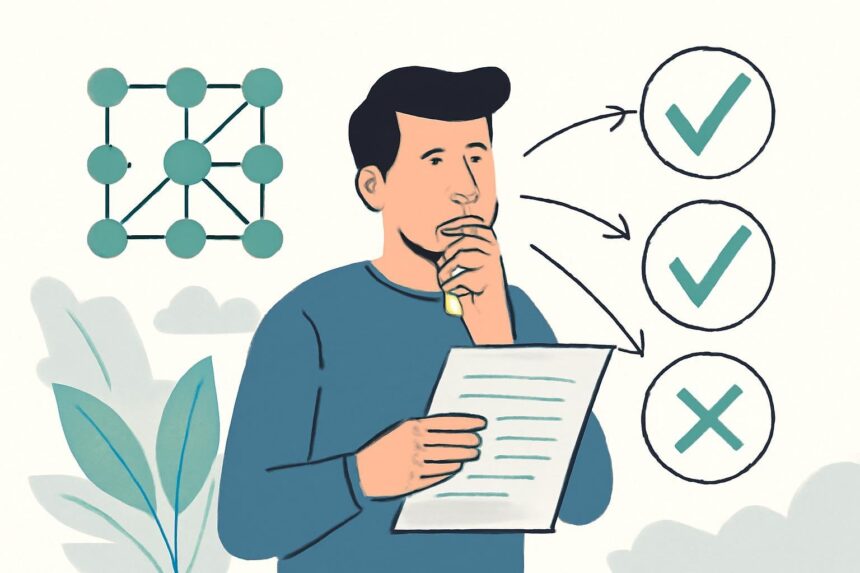
Pattern languages have become all the rage. Why? Because they help codify best practices and provide a vocabulary to talk about those practices with others. A pattern language provides a conceptual framework for understanding a practice area, explaining it to others and improving performance. Patterns become tested, reusable pieces of knowledge that help people avoid the mistakes of others and increase their chance of success.
So why a pattern language for decision-making? Despite years of research and dozens of techniques in how to make good decisions, most decision-making is still ad-hoc, done by gut feel or with custom processes, with no documentation and little awareness of the best techniques to apply to a given decision. Certainly, some industries have excelled at certain types of decisions. Allocation decisions are well understood in financial services when trying to optimize a portfolio. But without a pattern language to talk about these decisions, it is difficult to share best practices across industries.
I aim to change that. By documenting, naming and classifying types of decisions, the situations surrounding those decisions and the types of analysis used to support those decisions, we can create a pattern language and decision-making framework that can help people learn, track and improve their decision-making.

What Is A Pattern
A pattern is an abstract description of a problem, situation or process that repeats itself in different forms, all of which share common sets of characteristics. For instance, buying a car and buying a house are both decisions where you have many options, but must pick only one. We can abstract this into a Select One Option pattern, so we can apply similar decision-making techniques to both. The pattern is named, so we can refer to it in discussions, and it has a definition that helps us identify the pattern and the best techniques to apply to decisions which match the pattern.
Patterns have different components. Just like recipes have separate sections for ingredients, instructions and nutritional info, a decision pattern might have separate sections for how to identify the pattern, the best types of analysis to use for the decision, what situations the decision pattern occurs under and how to track the effectiveness of the decision. For now, the components of a decision pattern are going to be in flux; as I and others document patterns, we’ll come to a standard set of components that most decision patterns should have.
Using Patterns
Patterns are not meant to be exact formulas that describe how to solve a problem. Patterns are more like Legos, building blocks that can be combined together to create a solution or make a decision. Let’s look at how a decision pattern might be applied.
Imagine two situations.
First, we have Tom, a real estate developer. Tom bought a piece of property in the middle of the housing boom and started building a luxury house, hoping to sell it at the top of the market and make a bunch of money. Unfortunately, the market crashed, costs on the project overran and Tom is wondering whether it makes sense to cut his losses now or keep going in the hope of maybe breaking even.
Next, we have Rajesh, a software entrepreneur. Rajesh started a Web 2.0 company, maxing out his credit cards to launch his online donation platform. Animal lovers from around the world donated to save the hybrid spider monkey from extinction. But then the market crashed, donations to spider monkeys dried up, and Rajesh is wondering whether to get a job or keep going in the hope of selling his business and maybe breaking even.
While in different industries with different specifics, both situations share similarities. Both involve a decision on whether to continue or cancel a project; both involve projects where the big financial benefit occurs at the end; both have environmental uncertainty; and both involve sunk costs that cannot be recovered if the decision is to cancel.
We can identify this as a Continue/Cancel decision pattern. We can also document certain types of analysis, like cost/benefit analysis, opportunity cost analysis and risk-adjusted net present value analysis, which can help in the decision process. We can also identify common problems that occur when implementing this decision and common mitigation strategies to avoid those problems.
By documenting and teaching these shared characteristics to our decision-makers, we can train them to make better decisions in these scenarios, increasing their chance of a favorable outcome.
Next Steps
Over the next couple months I’ll be seeding the idea of decision patterns by documenting them on this blog and linking to work done by others before me. At some point I’ll move these patterns to a wiki so others can start enhancing, correcting and adding to those patterns. I envision this as an iterative process, starting with a small group of people and expanding outward as the requirements for documenting a decision pattern become more understood.
If you want to stay informed of the progress of this project, you can subscribe to this blog using the e-mail subscription box or the Subscribe to Feed link in the right-hand navigation bar. Or, if you are interested in participating in the working group when it is created, please contact me, tell me more about your interest in the subject and how I can contact you.
And, as always, please feel free to leave comments, criticisms and suggestions below.
Photo by Windell Oskay