Cookies help us display personalized product recommendations and ensure you have great shopping experience.

By using this site, you agree to the Privacy Policy and Terms of Use.
Accept
SmartData CollectiveSmartData Collective
  • Analytics
    AnalyticsShow More
    predictive analytics risk management
    How Predictive Analytics Is Redefining Risk Management Across Industries
    7 Min Read
    data analytics and gold trading
    Data Analytics and the New Era of Gold Trading
    9 Min Read
    composable analytics
    How Composable Analytics Unlocks Modular Agility for Data Teams
    9 Min Read
    data mining to find the right poly bag makers
    Using Data Analytics to Choose the Best Poly Mailer Bags
    12 Min Read
    data analytics for pharmacy trends
    How Data Analytics Is Tracking Trends in the Pharmacy Industry
    5 Min Read
  • Big Data
  • BI
  • Exclusive
  • IT
  • Marketing
  • Software
Search
© 2008-25 SmartData Collective. All Rights Reserved.
Reading: Risk-taking
Share
Notification
Font ResizerAa
SmartData CollectiveSmartData Collective
Font ResizerAa
Search
  • About
  • Help
  • Privacy
Follow US
© 2008-23 SmartData Collective. All Rights Reserved.
SmartData Collective > Analytics > Predictive Analytics > Risk-taking
Predictive Analytics

Risk-taking

Editor SDC
Editor SDC
5 Min Read
SHARE

I’m reading The Poker Face of Wall Street by Aaron Brown. The first half has been very good so I’ll write some thoughts on it when I’m finished.

Off-topic, one cool thing he mentioned was that in Texas Hold’em the odds are best when you have a hand that either beats everyone or loses to everyone based on the card that shows up in the river. I immediately recognized this as another example of the alignment principle I wrote about earlier in A Game at Hell’s Gate. It’s a more practical example though.

Anyway I was thinking about what creates risk and why risk taking is so common. In my computer science class we learned that a uniform random variable can be constructed from an infinite number of coin tosses, and that any distribution can be constructed from a uniform random variable by using the target distribution’s inverse CDF. In The Poker Face, Brown claims (I cannot find verification) that Claude Shannon “built a mechanical hand that could flip coins that landed reliably heads or tails, whichever he specified.” (p.10) Combining these three things seems to imply that there is no intrinsic chance in the universe. Alternatively you could make a similar argument that a complete unders…


I’m reading The Poker Face of Wall Street by Aaron Brown. The first half has been very good so I’ll write some thoughts on it when I’m finished.

More Read

Maybe these will be great days for data miners!
NCAA Data Visualizer for March Madness Face-Offs
Hospitals are increasingly relying on electronic tracking…
Unlocking Big Data Means Truly Understanding the Customer Journey [INFOGRAPHIC]
Predictive analytics panel at Business Analytics Summit

Off-topic, one cool thing he mentioned was that in Texas Hold’em the odds are best when you have a hand that either beats everyone or loses to everyone based on the card that shows up in the river. I immediately recognized this as another example of the alignment principle I wrote about earlier in A Game at Hell’s Gate. It’s a more practical example though.

Anyway I was thinking about what creates risk and why risk taking is so common. In my computer science class we learned that a uniform random variable can be constructed from an infinite number of coin tosses, and that any distribution can be constructed from a uniform random variable by using the target distribution’s inverse CDF. In The Poker Face, Brown claims (I cannot find verification) that Claude Shannon “built a mechanical hand that could flip coins that landed reliably heads or tails, whichever he specified.” (p.10) Combining these three things seems to imply that there is no intrinsic chance in the universe. Alternatively you could make a similar argument that a complete understanding of physics would make the future deterministic.

So then risk is a human invention. It is spawned whenever someone makes a decision based on imperfect information. Imperfect information could be the result of either something random, like the roll of a die or a deal from a shuffled deck, or a decision that had to be made hastily- like in an emergency situation.
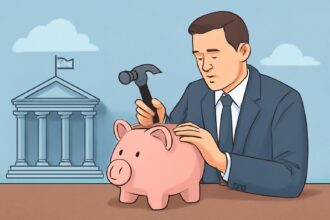
The fact is is that humans cannot see deep into the future because the possibilities increase exponentially. Even a dramatically limited universe like a chess game overwhelms the best-trained brain. Similarly, mathematical proofs are such a challenge because often you cannot tell if a result will be “interesting” without seeing multiple steps into the proof, which branch exponentially with the number of steps into the future you project.

Therefore making decisions under uncertainty is inevitable. Being a risk taker is the skill of going as far down each branch of the imagined decision tree as possible, clipping off the rest, and rapidly replacing it with a probability that condenses the odds of success from then onward. Or rather it’s the willingness to act on this approximation with certainty.

Hope you had a happy/filling Thanksgiving. Thanks again Squanto

Share This Article
Facebook Pinterest LinkedIn
Share

Follow us on Facebook

Latest News

street address database
Why Data-Driven Companies Rely on Accurate Street Address Databases
Big Data Exclusive
predictive analytics risk management
How Predictive Analytics Is Redefining Risk Management Across Industries
Analytics Exclusive Predictive Analytics
data analytics and gold trading
Data Analytics and the New Era of Gold Trading
Analytics Big Data Exclusive
student learning AI
Advanced Degrees Still Matter in an AI-Driven Job Market
Artificial Intelligence Exclusive

Stay Connected

1.2kFollowersLike
33.7kFollowersFollow
222FollowersPin

You Might also Like

The Perils of Forecasting Benchmarks

3 Min Read

Analytics Ascendant: Will Predictive Modeling Replace All Other Ways of “Knowing” Customers?

9 Min Read
predictive analtyics
AnalyticsBig DataBusiness IntelligencePredictive Analytics

Predicting Lying and Predicting Dying

5 Min Read

You Don’t Need a Golden Ticket to Win With Analytics

4 Min Read

SmartData Collective is one of the largest & trusted community covering technical content about Big Data, BI, Cloud, Analytics, Artificial Intelligence, IoT & more.

ai is improving the safety of cars
From Bolts to Bots: How AI Is Fortifying the Automotive Industry
Artificial Intelligence
ai chatbot
The Art of Conversation: Enhancing Chatbots with Advanced AI Prompts
Chatbots

Quick Link

  • About
  • Contact
  • Privacy
Follow US
© 2008-25 SmartData Collective. All Rights Reserved.
Go to mobile version
Welcome Back!

Sign in to your account

Username or Email Address
Password

Lost your password?