We use cookies, including third-party cookies from Google to serve personalized ads through AdSense, to operate this site and understand how it is used. By continuing to browse, you accept this use. See our Privacy Policy and Terms of Use for details, including how to opt out of personalized advertising.
Accept
SmartData CollectiveSmartData Collective
  • Analytics
    AnalyticsShow More
    What Kind of Problem-Solving Distinguishes Data Analysts From Software Engineers -- AI-generated illustration
    What Kind of Problem-Solving Distinguishes Data Analysts From Software Engineers
    7 Min Read
    chatgpt image jul 21, 2026, 04 34 30 pm
    4 Core Benefits of Predictive Maintenance after Vibration Analysis
    10 Min Read
    How Does Data Mining Boost Customer Satisfaction in Logistics? Harnessing Analytics for Results -- AI-generated illustration
    How Does Data Mining Boost Customer Satisfaction in Logistics? Harnessing Analytics for Results
    11 Min Read
    chatgpt image jul 13, 2026, 04 23 45 pm
    How Data Analytics Helps Companies Improve User Engagement
    19 Min Read
    chatgpt image jul 13, 2026, 03 59 46 pm
    How Data Analytics Improves Multi-Location Search Strategies
    10 Min Read
  • Big Data
  • BI
  • Exclusive
  • IT
  • Marketing
  • Software
Search
© 2008-25 SmartData Collective. All Rights Reserved.
Reading: The Future of Marketing: Combining Big Data with Intuition
Share
Notification
Font ResizerAa
SmartData CollectiveSmartData Collective
Font ResizerAa
Search
  • About
  • Help
  • Privacy
Follow US
© 2008-23 SmartData Collective. All Rights Reserved.
SmartData Collective > Big Data > The Future of Marketing: Combining Big Data with Intuition
Big Data

The Future of Marketing: Combining Big Data with Intuition

Rick Delgado
Rick Delgado
5 Min Read
The Future of Marketing: Combining Big Data with Intuition
Illustration generated with Qwen Image.
SHARE

Businesses are investing millions of dollars into big data, betting that number crunching and algorithms will be the silver bullet that’ll change the industry forever.

Businesses are investing millions of dollars into big data, betting that number crunching and algorithms will be the silver bullet that’ll change the industry forever. While the ability of computers to make rapid analyses dwarfs the capacity of humans, will computers ever really replace human intuition when it comes to making decisions?

There is a strong case for yes. Experience is valuable, but there are problems that come with relying too heavily on gut instincts when decision-making. One of the major problems with our intuition is that it’s incredibly biased. Computers (for the moment) don’t have emotional dilemmas during analysis. But as humans, we can have any number of variables affect our emotions and cloud our judgement. Anything from political preferences to family history can distort the gut check. As a result, it becomes easy to confuse emotions with instincts without even realizing it.  

That being said, intuition does have its place. As powerful as computers are, they perform better when guided by humans. Our computers are able to analyze data to find trends and patterns in seconds, but they still rely on humans to design the programs that process everything. Our minds and experiences are also key in helping identify business goals and connecting them with what the data says. Data is only as helpful as the inputs and their interpretation. That’s where our intuition comes in handy. Knowing which factors to consider and which variables should be accounted for stems from intuition. Algorithms help us make predictions, but those predictions are more likely to be true when overseen and analyzed by experienced leadership.

More Read

How Big Data And Net Neutrality Repeal Impact Each Other
Big Data’s Effect on Marketing in the Future
Businesses Across Various Industry Verticals Use Data Analytics
WOW! Big Data at Google
Getting to the Business of Big Data: Overcoming the Marketer’s Dilemma

Another serious setback of predictive analysis, is its inability to help us prepare for something new. Big data is created by gathering historical information. We hope to find trends from the past to help identify key variables we can use to replicate (or avoid) outcomes in the future. But when that data isn’t available, we’re stuck. We can’t really rely on data from a television’s sales history to predict the success of brand new products, like tablets or smartwatches. While historical information may give us an idea of how people will react in certain seasons, or which features are most important, it’s hard to innovate relying solely on past information. Ultimately, it’ll be the instinct and experience of leaders that’ll determine the success or failure of a new venture, not algorithms and databases.

Steve Jobs, Apple’s brilliant founder, was a marketing genius. People often point to Jobs as the ideal example of why intuition trumps data. He didn’t focus on research or market trends and created some of the most influential devices of our time. Jobs was a genius, but he wasn’t infallible. There were a number of flops mixed in with his successes (see NeXT, Apple III or Power Mac G4 Cube). In fact, many of the great marketing minds had large failures. And while mistakes are found all along the path to success, it’s likely great thinkers like Jobs would’ve seen more successes, or at least avoided more disasters, if they had used real-time data to test ideas before going to market.

The future of successful marketing is one where big data is paired with marketing experience and intuition. Future programs and applications built to handle data will be more successful if they are designed for marketers and place humans at the center. Not to mention, with more companies adopting BYOD policies, and greater access to devices, more and more people will begin using data to influence their day-to-day decision making. Big data makes it easier to test concepts and avoid expensive flops, but data has a terrible imagination. That’s where experience is key. Thinking of the next big idea, then testing and perfecting it with the numbers before launch, will lead to more successes than simply relying on data or intuition alone.  

Share This Article
Facebook Pinterest LinkedIn
Share
ByRick Delgado
Follow:
All things Big Data, Tech commentator, Enterprise Trends and every once in a while I write for @dell.

Follow us on Facebook

Latest News

Retailers Should Stop Treating Every Stockout as Equal -- AI-generated illustration
Retailers Should Stop Treating Every Stockout as Equal
Business Intelligence Exclusive
Best Vibe Coding Cleanup Specialists in the USA: Fix or Rebuild? -- AI-generated illustration
Best Vibe Coding Cleanup Specialists in the USA: Fix or Rebuild?
Development Exclusive
Using Warehouse, Transportation and Order Data to Plan Distribution-Center Capacity -- AI-generated illustration
Using Warehouse, Transportation and Order Data to Plan Distribution-Center Capacity
Big Data Exclusive
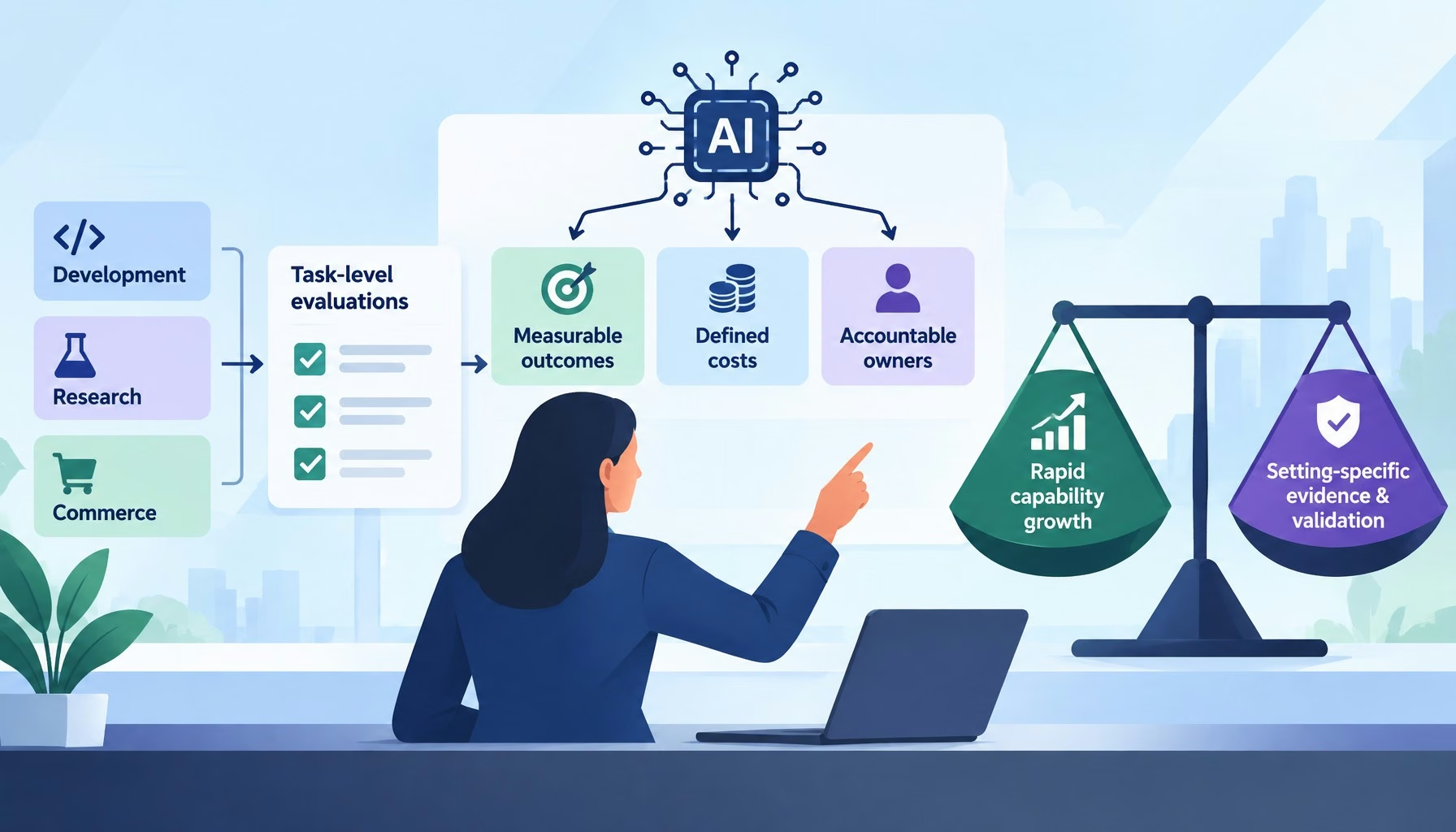
Flat editorial illustration: The article centers on AI budget discipline for 2027 business planning, linking AI spending to measu
10 AI Trends That Should Shape Your 2027 Business Plan
Artificial Intelligence Exclusive

Stay Connected

1.2KFollowersLike
33.7KFollowersFollow
222FollowersPin

You Might also Like

How BI and Data Analytics Professionals Used Twitter in June
Business IntelligenceSocial Data

How BI and Data Analytics Professionals Used Twitter in June

6 Min Read
We’re Traveling at the Speed of Cool to Creepy
Best PracticesBig DataPrivacy

We’re Traveling at the Speed of Cool to Creepy

7 Min Read
Why Hotels Should Apply Big Data Analytics to Provide a Unique Guest Experience
AnalyticsBig Data

Why Hotels Should Apply Big Data Analytics to Provide a Unique Guest Experience

8 Min Read
Image
Big DataData QualityData VisualizationData Warehousing

Demystifying Data Warehouses, Data Lakes and Data Marts

11 Min Read

SmartData Collective is one of the largest & trusted community covering technical content about Big Data, BI, Cloud, Analytics, Artificial Intelligence, IoT & more.

Chatbots and SEO: How Can Chatbots Improve Your SEO Ranking?
Artificial Intelligence Chatbots Exclusive
From Bolts to Bots: How AI Is Fortifying the Automotive Industry
Artificial Intelligence

Quick Link

  • About
  • Contact
  • Privacy
Follow US
© 2008-26 SmartData Collective. All Rights Reserved.
Welcome Back!

Sign in to your account

Username or Email Address
Password

Lost your password?