We use cookies, including third-party cookies from Google to serve personalized ads through AdSense, to operate this site and understand how it is used. By continuing to browse, you accept this use. See our Privacy Policy and Terms of Use for details, including how to opt out of personalized advertising.
Accept
SmartData CollectiveSmartData Collective
  • Analytics
    AnalyticsShow More
    chatgpt image jul 21, 2026, 04 34 30 pm
    4 Core Benefits of Predictive Maintenance after Vibration Analysis
    10 Min Read
    How Does Data Mining Boost Customer Satisfaction in Logistics? Harnessing Analytics for Results -- AI-generated illustration
    How Does Data Mining Boost Customer Satisfaction in Logistics? Harnessing Analytics for Results
    11 Min Read
    chatgpt image jul 13, 2026, 04 23 45 pm
    How Data Analytics Helps Companies Improve User Engagement
    19 Min Read
    chatgpt image jul 13, 2026, 03 59 46 pm
    How Data Analytics Improves Multi-Location Search Strategies
    10 Min Read
    cybersecurity efforts
    How Behavioral Analytics and AI Are Redefining Cybersecurity for Boca Raton Businesses
    14 Min Read
  • Big Data
  • BI
  • Exclusive
  • IT
  • Marketing
  • Software
Search
© 2008-25 SmartData Collective. All Rights Reserved.
Reading: Death Of The Relational Database
Share
Notification
Font ResizerAa
SmartData CollectiveSmartData Collective
Font ResizerAa
Search
  • About
  • Help
  • Privacy
Follow US
© 2008-23 SmartData Collective. All Rights Reserved.
SmartData Collective > Big Data > Data Mining > Death Of The Relational Database
Data MiningData Warehousing

Death Of The Relational Database

Steve Bennett
Steve Bennett
7 Min Read
Death Of The Relational Database
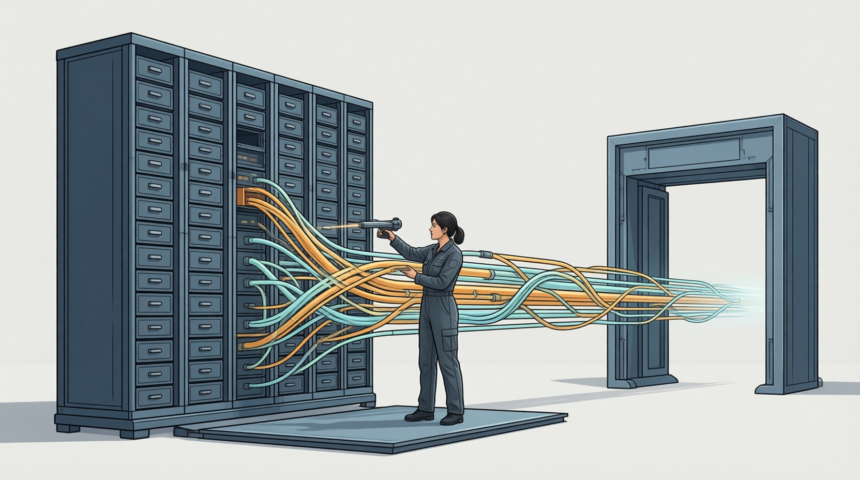
Illustration generated with Qwen Image.
SHARE

A recent entry by Tony Bain in his excellent ‘Innovations in Data Management’ blog caught me a little by surprise. In it he talks about the NoSQL movement – the group of people and organisations that say we can do without the RDBMS’s from the likes of Oracle, Microsoft and IBM. This is new to me.

In a nutshell, the argument runs as follows: Massively scalable databases exist that are not relational and they power some of the biggest sites on the internet – Amazon, Google and Facebook to name three.
For those who don’t know about NoSQL, take a look at ACM blogger Michael Stonebraker or a nice summary from Computerworld. You can’t find anything about NoSQL on wikipedia yet – that’s how new it is. Stonebraker constructs a convincing argument in favour of ‘the death of the RDBMS’:
  • For data warehouses, a column store beats a row store by approximately a factor of 50 on typical business intelligence queries. The reason is because column stores read only the columns of interest to the query and not all of them. In addition, compression is more effective in a column store. Since the legacy systems are all row stores, they are vulnerable to competition from the newer column stores.
  • For online transaction processing (OLTP), a lightweight main memory DBMS beats a row store by a factor of 50. Leveraging main memory and the fact that no DBMS application will send a message to a human user in the middle of a transaction, allows an OLTP DBMS to run transactions to completion with no resource contention or locking overhead. 
  • In XML, where the current major vendors have spent a great deal of energy extending their engines, it is claimed that specialized engines, such as Mark Logic or Tamino, run circles around the major vendors. 

The argument then runs that if you don’t want performance like this, then just get an open source RDBMS for free. I am beginning to agree (even the Cortex is MySQL) and if free is to hard for you, the price of SQLServer is good value for most organisations these days.

So what are the reasons for spending big dollars on an RDBMS? Here are the reasons I can think of for a large company:
  • Nobody every got sacked for buying Oracle or DB2.
  • The IT specialists have built their career and expertise on a specific vendor’s product line. What’s in it for them to support a change that they see as undermining that?
  • Who’s going to hire someone with Voldemort or MongoDB experience?? 
  • For most applications, the RDBMS can do the job – so what if the company spends $500,000 more on hardware to do it. Don’t forget, the hardware guys are also comfortable with running the big RDBMS on ‘their’ boxes.
  • A surprising number of data warehouse developer’s lack the skills to really understand the differences pointed out by the NoSQL people. Besides – they’re not the one’s paying for the infrastructure they use. 
I am happy to concede that none of these reasons are technical. Politics is very real in larger enterprises and you don’t stay long if you ignore this fact. In the past I have been lucky to hire some very good developers because of their frustration with life in a large corporate data shop.

Anyway, the NoSQL revolutionaries got together recently and you can read/view/listen to the presentations on Johan Oskarsson’s site (he is a developer for Last.fm in London). The presentation on the Cassandra database by Avinash Lakshman of Facebook has some interesting stats comparing Cassandra and MySQL for example.

More Read

Refuse to be a Cloud data hostage.
First Look – Unica
Supply Chain Business Intelligence Is More Than Just Technology
Cloud Computing Use Increases Among Supply Chains
More Data Apps Spawned by Sandy
It is curious that the NoSQL people don’t call their solutions databases. Instead they are a a “highly available key-value store” (Amazon) and a “distributed storage system for managing structured data” (Google). At least MongoDB does describe itself as “a high-performance, open source, schema-free document-oriented database.” Not exactly as snappy a label as RDBMS and I wonder why CDBMS (Columnar RDBMS) isn’t good enough.

Check out NoSQL – it could be useful to you.

Share This Article
Facebook Pinterest LinkedIn
Share

Follow us on Facebook

Latest News

Illustration of mobile analytics dashboards with ad performance charts connected to backend databases
11 Best Sisense Alternatives for Embedded Analytics
Business Intelligence Exclusive
Analyst points at colorful circular data dashboard on screen - information technology business metrics
How Fragmented Workplace Tech Undermines Reliable Business Metrics and Reporting
Cloud Computing Exclusive Infographic IT
Using Multi-Source Data and Analytics to Detect Operational Drift Across Franchise Networks -- AI-generated illustration
Using Multi-Source Data and Analytics to Detect Operational Drift Across Franchise Networks
Exclusive Infographic
Beyond The First Impression: The Long-Lasting Impact Of Sensory Marketing -- AI-generated illustration
Beyond The First Impression: The Long-Lasting Impact Of Sensory Marketing
Infographic Marketing

Stay Connected

1.2KFollowersLike
33.7KFollowersFollow
222FollowersPin

You Might also Like

Selecting Big Data Sources for Predictive Analytics
AnalyticsBest PracticesBig DataBusiness IntelligenceData ManagementData MiningMarket ResearchMarketingPredictive Analytics

Selecting Big Data Sources for Predictive Analytics

10 Min Read
72% of People Aren’t Familiar with Hosted VoIP
Big DataCloud ComputingData MiningData QualityData VisualizationData WarehousingHardwareITNew ProductsNewsSocial DataSoftwareWeb Analytics

72% of People Aren’t Familiar with Hosted VoIP

4 Min Read
How to Use Pivot Tables to Mine Your Data
Data MiningData QualityData VisualizationData WarehousingDecision Management

How to Use Pivot Tables to Mine Your Data

9 Min Read
Be Wary of the Science of Hiring
AnalyticsCommentaryData MiningDecision ManagementExclusiveRisk ManagementStatisticsWorkforce AnalyticsWorkforce Data

Be Wary of the Science of Hiring

7 Min Read

SmartData Collective is one of the largest & trusted community covering technical content about Big Data, BI, Cloud, Analytics, Artificial Intelligence, IoT & more.

The Art of Conversation: Enhancing Chatbots with Advanced AI Prompts
Chatbots
5 Great Tips for Using Data Analytics for Website UX
Big Data

Quick Link

  • About
  • Contact
  • Privacy
Follow US
© 2008-26 SmartData Collective. All Rights Reserved.
Welcome Back!

Sign in to your account

Username or Email Address
Password

Lost your password?