Cookies help us display personalized product recommendations and ensure you have great shopping experience.

By using this site, you agree to the Privacy Policy and Terms of Use.
Accept
SmartData CollectiveSmartData Collective
  • Analytics
    AnalyticsShow More
    data analytics
    How Data Analytics Can Help You Construct A Financial Weather Map
    4 Min Read
    financial analytics
    Financial Analytics Shows The Hidden Cost Of Not Switching Systems
    4 Min Read
    warehouse accidents
    Data Analytics and the Future of Warehouse Safety
    10 Min Read
    stock investing and data analytics
    How Data Analytics Supports Smarter Stock Trading Strategies
    4 Min Read
    predictive analytics risk management
    How Predictive Analytics Is Redefining Risk Management Across Industries
    7 Min Read
  • Big Data
  • BI
  • Exclusive
  • IT
  • Marketing
  • Software
Search
© 2008-25 SmartData Collective. All Rights Reserved.
Reading: Email and the Environment
Share
Notification
Font ResizerAa
SmartData CollectiveSmartData Collective
Font ResizerAa
Search
  • About
  • Help
  • Privacy
Follow US
© 2008-23 SmartData Collective. All Rights Reserved.
SmartData Collective > Uncategorized > Email and the Environment
Uncategorized

Email and the Environment

CariBirkner
CariBirkner
4 Min Read
SHARE

As technology becomes more prevalent in our everyday lives, direct mail becomes less relevant and email seems to be the logical next step. That point is made by the ever-increasing industry of email marketing. Less overhead, more revenue and the fringe benefit of not using so much paper! The less paper the advertising industry uses, the healthier our planet is, right? Well, that may be so, but there are some not-so-green side-effects of email…

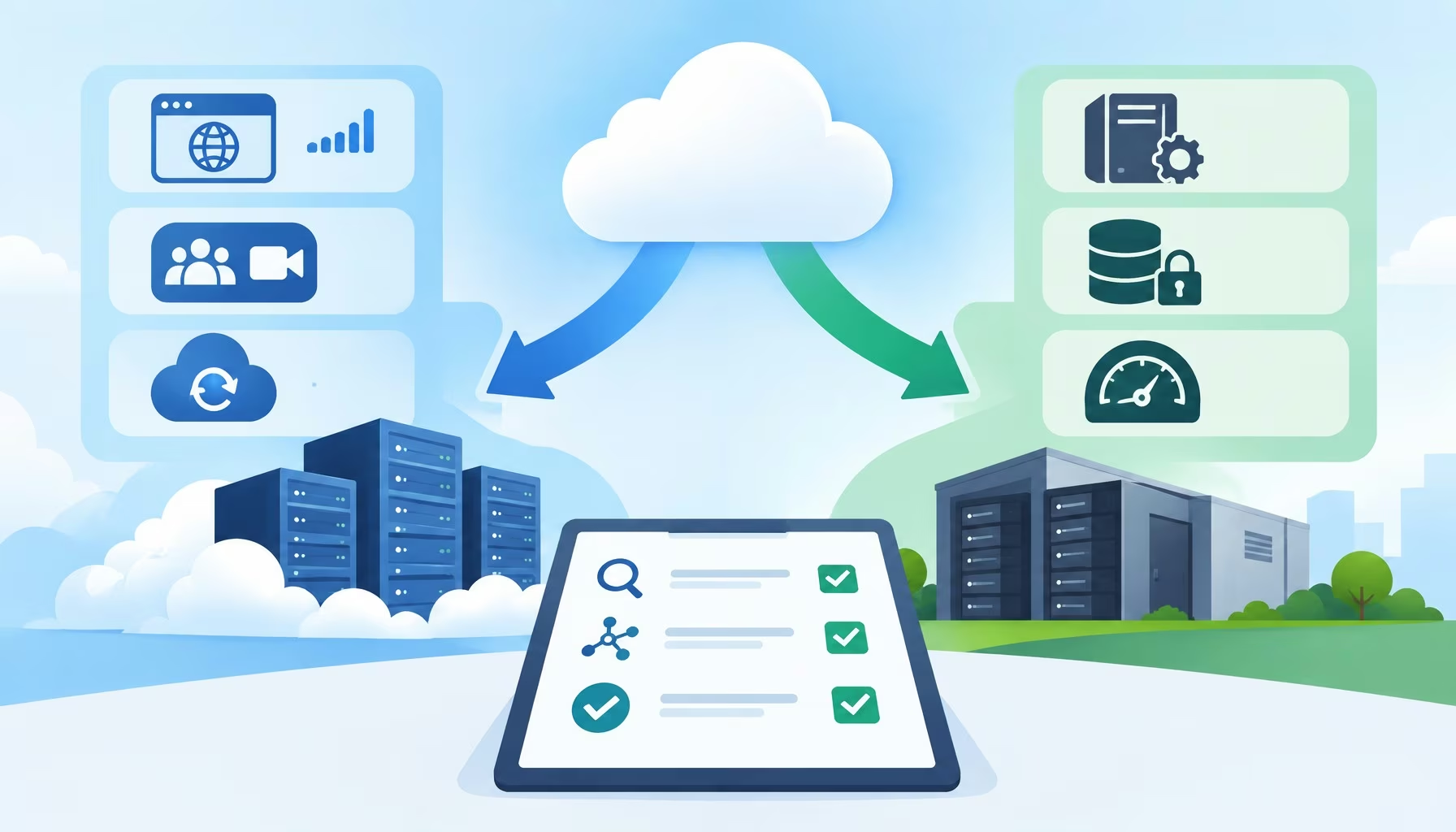
According to a 2003 study (link) approximately every 10-20mb of electronic storage consumes 1lb of coal per year. Which doesn’t sound like much, until you realize that 3% of our nations energy is dedicated to the Internet. With email marketing on the rise, the mantra is often bigger equals better. That is to say, the more emails sent, the higher the likelihood of hitting inboxes, and the higher the likelihood of reaching the consumer. But when you get down to it, smaller, focused email campaigns coupled with good email reputation will arrive in more inboxes, which is not only good for the marketer, but it’s good for the planet. Creating less needlessly stored email means less power consumption, and a healthier planet…

More Read

Those Luddite Publishers Have a Point
Speaking in New Orleans at Webtrends “Engage 2010”
Proof That Facebook is Censoring You
Video’s role in the social enterprise
Spam in the Twitterverse

As technology becomes more prevalent in our everyday lives, direct mail becomes less relevant and email seems to be the logical next step. That point is made by the ever-increasing industry of email marketing. Less overhead, more revenue and the fringe benefit of not using so much paper! The less paper the advertising industry uses, the healthier our planet is, right? Well, that may be so, but there are some not-so-green side-effects of email…

According to a 2003 study (link) approximately every 10-20mb of electronic storage consumes 1lb of coal per year. Which doesn’t sound like much, until you realize that 3% of our nations energy is dedicated to the Internet. With email marketing on the rise, the mantra is often bigger equals better. That is to say, the more emails sent, the higher the likelihood of hitting inboxes, and the higher the likelihood of reaching the consumer. But when you get down to it, smaller, focused email campaigns coupled with good email reputation will arrive in more inboxes, which is not only good for the marketer, but it’s good for the planet. Creating less needlessly stored email means less power consumption, and a healthier planet.

Food for thought, especially considering more and more households are going “paperless.” It seems that making this transition could be as big a challenge as Hercules fighting the hydra — cut off one head only for two more to grow in its place. But as with everything else in this industry, responsibility is key. Pay attention to what happens with your email. Sowing seeds far and wide is not always as effective as planting in well cultivated soil. The same goes for email; harvesting lists, working with less-than-reputable affiliates, and mass-marketing are not only detrimental to your reputation, but also the earth itself. Building good relationships with customers and focusing your campaigns will not only benefit your company, it could benefit the health of the planet as well.
Link to original post

Share This Article
Facebook Pinterest LinkedIn
Share

Follow us on Facebook

Latest News

ai kids and their parents
How Cities Use AI to Improve Playground Design
Exclusive News
human resource data
The Integration of Employee Experience with Enterprise Data Tools
Big Data Exclusive
protecting patient data
How to Protect Psychotherapy Data in a Digital Practice
Big Data Exclusive Security
data analytics
How Data Analytics Can Help You Construct A Financial Weather Map
Analytics Exclusive Infographic

Stay Connected

1.2KFollowersLike
33.7KFollowersFollow
222FollowersPin

You Might also Like

Donating the Data Quality Asset

4 Min Read

Integrating a Content Plan with Demand Gen [VIDEO]

2 Min Read

Methods to Systematically Reduce Customer Choice

6 Min Read

Raking for Relationships

4 Min Read

SmartData Collective is one of the largest & trusted community covering technical content about Big Data, BI, Cloud, Analytics, Artificial Intelligence, IoT & more.

ai chatbot
The Art of Conversation: Enhancing Chatbots with Advanced AI Prompts
Chatbots
AI chatbots
AI Chatbots Can Help Retailers Convert Live Broadcast Viewers into Sales!
Chatbots

Quick Link

  • About
  • Contact
  • Privacy
Follow US
© 2008-25 SmartData Collective. All Rights Reserved.
Welcome Back!

Sign in to your account

Username or Email Address
Password

Lost your password?