Cookies help us display personalized product recommendations and ensure you have great shopping experience.

By using this site, you agree to the Privacy Policy and Terms of Use.
Accept
SmartData CollectiveSmartData Collective
  • Analytics
    AnalyticsShow More
    data analytics
    How Data Analytics Can Help You Construct A Financial Weather Map
    4 Min Read
    financial analytics
    Financial Analytics Shows The Hidden Cost Of Not Switching Systems
    4 Min Read
    warehouse accidents
    Data Analytics and the Future of Warehouse Safety
    10 Min Read
    stock investing and data analytics
    How Data Analytics Supports Smarter Stock Trading Strategies
    4 Min Read
    predictive analytics risk management
    How Predictive Analytics Is Redefining Risk Management Across Industries
    7 Min Read
  • Big Data
  • BI
  • Exclusive
  • IT
  • Marketing
  • Software
Search
© 2008-25 SmartData Collective. All Rights Reserved.
Reading: People, Process & Politics: Stop the (Integration) Madness
Share
Notification
Font ResizerAa
SmartData CollectiveSmartData Collective
Font ResizerAa
Search
  • About
  • Help
  • Privacy
Follow US
© 2008-23 SmartData Collective. All Rights Reserved.
SmartData Collective > Uncategorized > People, Process & Politics: Stop the (Integration) Madness
Uncategorized

People, Process & Politics: Stop the (Integration) Madness

RickSherman
RickSherman
5 Min Read
SHARE

IStock_000006846616XSmall different teams In previous post “People, Process and Politics – We All Hate Data Silos, So Why do They Happen?” we discussed why we have set ourselves up to continually repeat history and build data silos. Like an episode of The Twilight Zone we seem to be hopelessly locked into an endless loop.

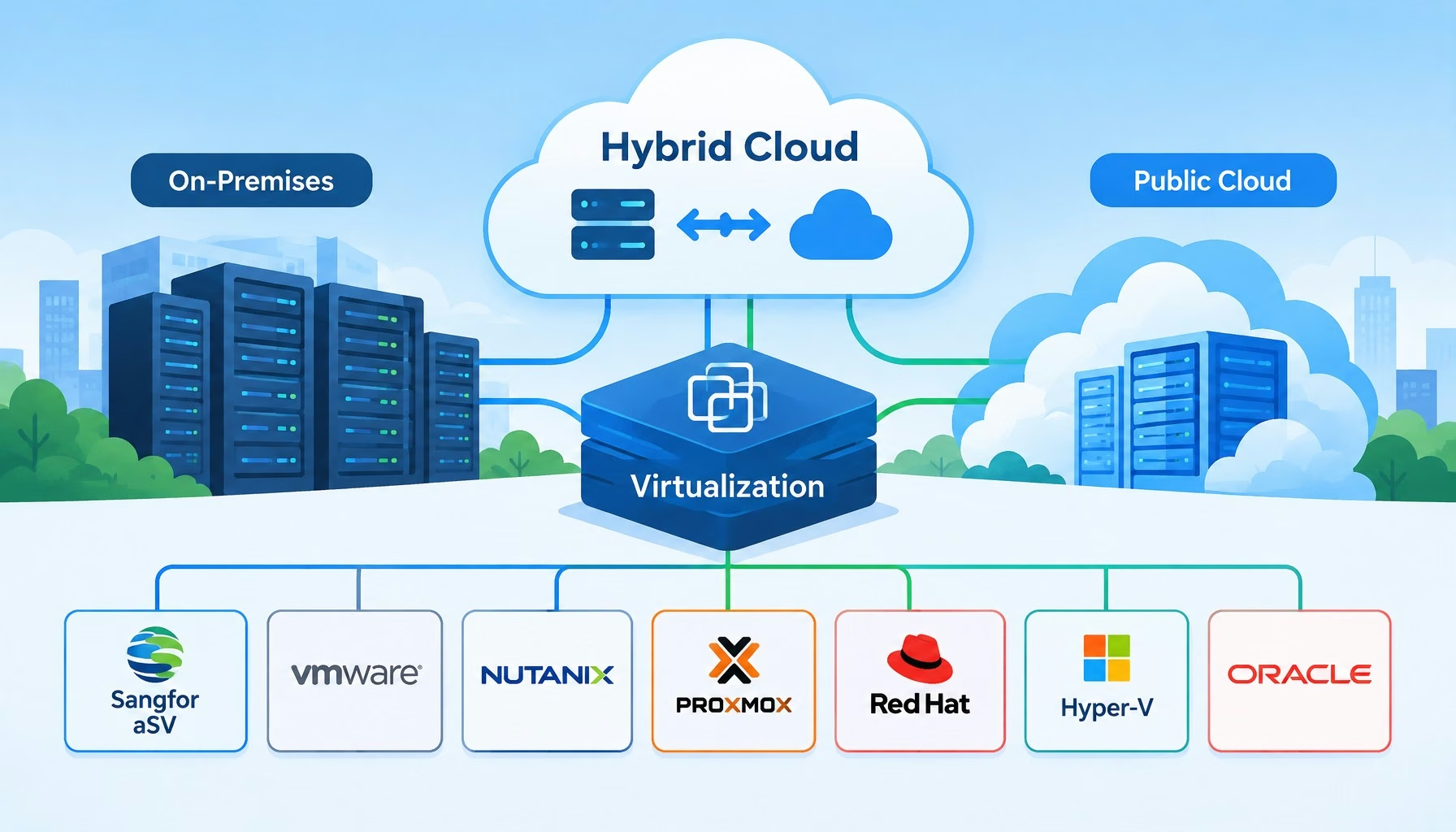
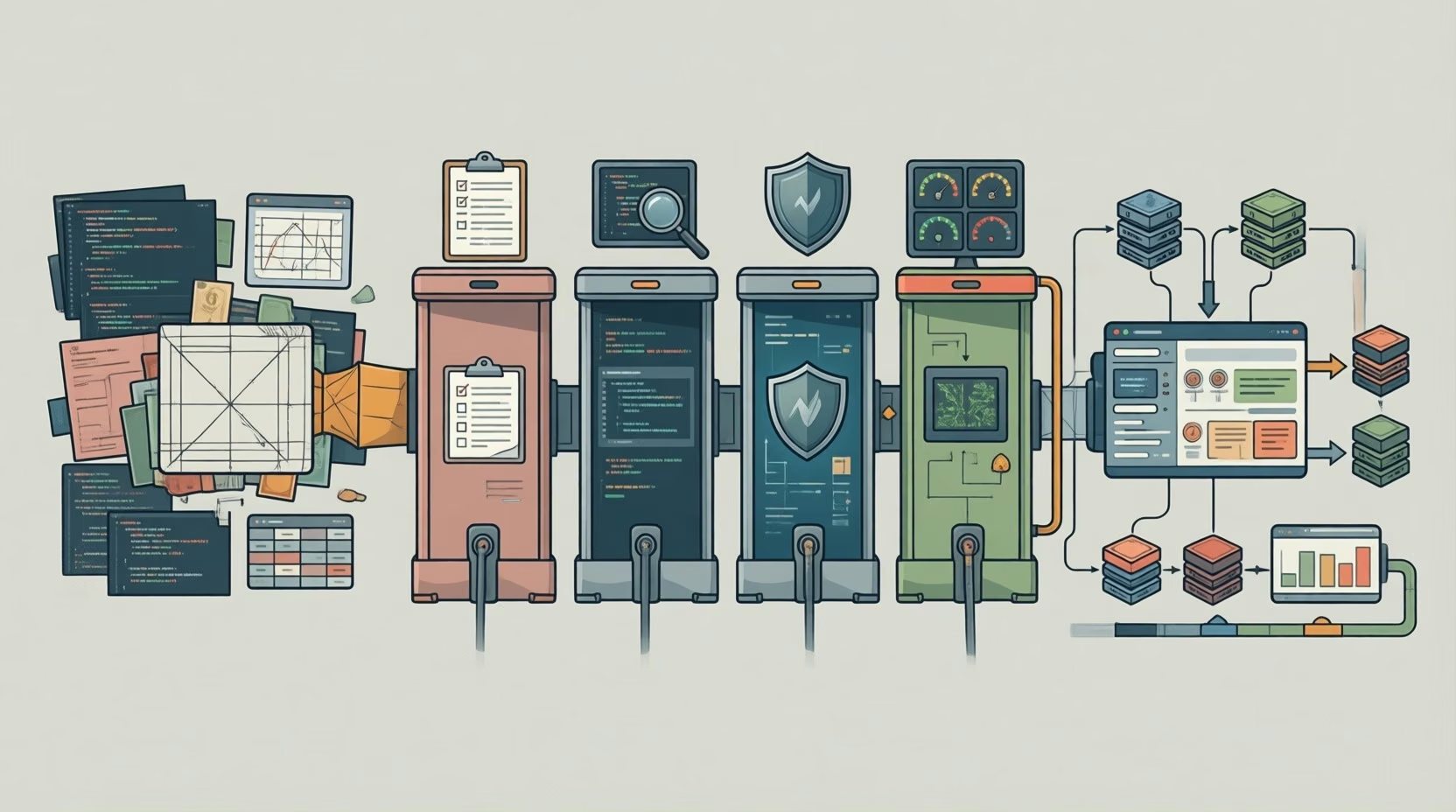
Enterprises have fragmented their integration efforts across groups, applications and technologies. The classic split has been between the groups developing data warehouse and business intelligence applications versus the ERP (enterprise resource application) applications. Typically each group uses different technologies: ETL (extract, transform and load) for DW and applications using either data virtualization (formerly EAI Enterprise Application Integration) or EII (Enterprise Information Integration) used. Add in SOA (service oriented architecture) initiatives for application integration and an enterprise integration efforts are spread across multiple projects with different sponsors, funding, resources and objectives that often overlap.

If that is not a big enough problem, our industry has assaulted enterprises with a barrage of “emerging” technologies that are supposed to solve various integration . …

More Read

Epsilon Reports Increases in Email Marketing Stats
Clarity – Pick One Voice
What Could IBM’s Watson Do for Your Organisation?
Leadership Lessons in Data Quality – Part 1
Gartner’s Top 10 Strategic Technology Trends for 2015

IStock_000006846616XSmall different teams In previous post “People, Process and Politics – We All Hate Data Silos, So Why do They Happen?” we discussed why we have set ourselves up to continually repeat history and build data silos. Like an episode of The Twilight Zone we seem to be hopelessly locked into an endless loop.

Enterprises have fragmented their integration efforts across groups, applications and technologies. The classic split has been between the groups developing data warehouse and business intelligence applications versus the ERP (enterprise resource application) applications. Typically each group uses different technologies: ETL (extract, transform and load) for DW and applications using either data virtualization (formerly EAI Enterprise Application Integration) or EII (Enterprise Information Integration) used. Add in SOA (service oriented architecture) initiatives for application integration and an enterprise integration efforts are spread across multiple projects with different sponsors, funding, resources and objectives that often overlap.

If that is not a big enough problem, our industry has assaulted enterprises with a barrage of “emerging” technologies that are supposed to solve various integration problems. These solutions include Corporate Performance Management (CPM), Master Data Management (MDM), Customer Data Integration (CDI), Product Information Management (PIM), Enterprise Information Management (EIM) and many others. Each of these solves problems in specific domains but at their core they involve integration. Vendors selling solutions bundle integration technologies (the same as described above) with their solutions. The result is integration silos that create new data silos.

Admit It, You’ve Got a Problem

You must admit you have a problem before you can solve it. Many enterprises are blind to their integration silos. All they see is their investments in ERP, DW, BI, CPM, MDM, CDI, SOA and PIM applications and the resulting databases with terabytes of data stored in them. Smug with the knowledge that they have all the data that the business needs, they’re not even aware of the data silos surrounding them created by their integration silos.

At some point, they start noticing inconsistent data, which is a symptom of an integration silo problem. However, because they don’t understand the cause, they focus on relieving the symptoms with quick-hit solutions. For example, they may try to consolidate business intelligent (BI) tools. While this is a worthy goal unto itself, using a single BI tool will do nothing about the fact that the underlying data is coming from many disparate systems ERP, CRM, SCM, data warehouses, data marts) and is inconsistent. The business is not getting different numbers because it is using different BI tools, but rather because each tool is associated with a different database where the data had been transformed differently than the other databases. The BI tool used is the tip of the iceberg; the data integration issue is what is below the waterline.

Once you recognize an integration silo problem, you can think out-of-the-box on how to define, approach and attack it.

Next post on “People, Process & Politics” we will begin to discuss how to stop the integration madness.
Link to original post

Share This Article
Facebook Pinterest LinkedIn
Share

Follow us on Facebook

Latest News

Edge Computing in IoT
Unique Capabilities of Edge Computing in IoT
Exclusive Internet of Things
Turning Geographic Data Into Competitive Advantage
The Rise of Location Intelligence: Turning Geographic Data Into Competitive Advantage
Big Data Exclusive
AI Recruitment Software Solution
The Best AI Recruitment Software Solution: Transforming Hiring with Smarter Tech
Artificial Intelligence Exclusive
real estate data
How Big Data Is Changes How We Buy and Sell Real Estate
Big Data Exclusive

Stay Connected

1.2KFollowersLike
33.7KFollowersFollow
222FollowersPin

You Might also Like

Insight and Serendipity

3 Min Read

Resources to Protect Personal Privacy and Mobile Security

6 Min Read

Geek of the Week: René Lacerte

3 Min Read

New Command to Focus on Cybersecurity for DoD and IC

3 Min Read

SmartData Collective is one of the largest & trusted community covering technical content about Big Data, BI, Cloud, Analytics, Artificial Intelligence, IoT & more.

AI and chatbots
Chatbots and SEO: How Can Chatbots Improve Your SEO Ranking?
Artificial Intelligence Chatbots Exclusive
ai chatbot
The Art of Conversation: Enhancing Chatbots with Advanced AI Prompts
Chatbots

Quick Link

  • About
  • Contact
  • Privacy
Follow US
© 2008-25 SmartData Collective. All Rights Reserved.
Welcome Back!

Sign in to your account

Username or Email Address
Password

Lost your password?