Cookies help us display personalized product recommendations and ensure you have great shopping experience.

By using this site, you agree to the Privacy Policy and Terms of Use.
Accept
SmartData CollectiveSmartData Collective
  • Analytics
    AnalyticsShow More
    predictive analytics risk management
    How Predictive Analytics Is Redefining Risk Management Across Industries
    7 Min Read
    data analytics and gold trading
    Data Analytics and the New Era of Gold Trading
    9 Min Read
    composable analytics
    How Composable Analytics Unlocks Modular Agility for Data Teams
    9 Min Read
    data mining to find the right poly bag makers
    Using Data Analytics to Choose the Best Poly Mailer Bags
    12 Min Read
    data analytics for pharmacy trends
    How Data Analytics Is Tracking Trends in the Pharmacy Industry
    5 Min Read
  • Big Data
  • BI
  • Exclusive
  • IT
  • Marketing
  • Software
Search
© 2008-25 SmartData Collective. All Rights Reserved.
Reading: Networks and Heterarchies
Share
Notification
Font ResizerAa
SmartData CollectiveSmartData Collective
Font ResizerAa
Search
  • About
  • Help
  • Privacy
Follow US
© 2008-23 SmartData Collective. All Rights Reserved.
SmartData Collective > Uncategorized > Networks and Heterarchies
Uncategorized

Networks and Heterarchies

Editor SDC
Editor SDC
4 Min Read
SHARE

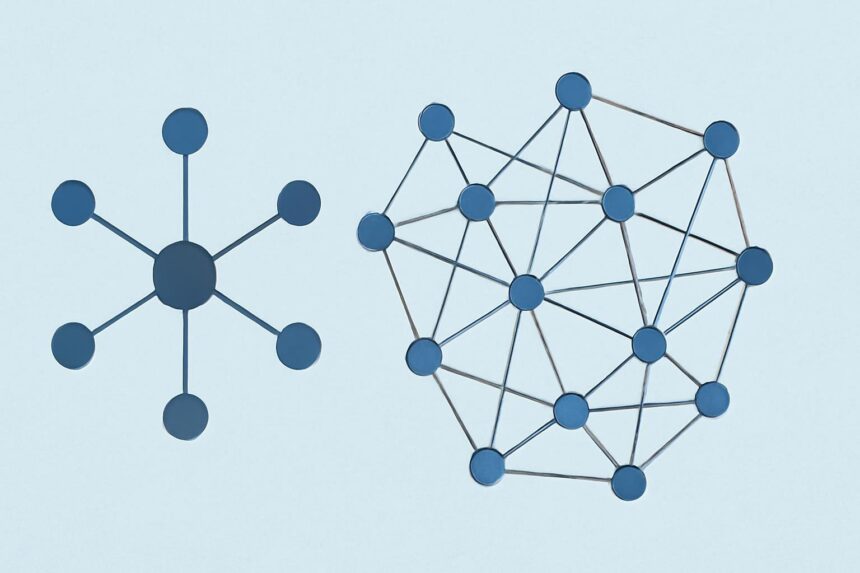
I was recently invited to participate in a published “panel” on the topic of heterarchies for the People and Strategy Journal, a quarterly publication of the Human Resource Planning Society. The lead article “An Argument for Heterarchy: creating more effective organizational structures” was written by Karen Stephenson, who has a gift for describing network concepts, in this case, the emergence of what she describes as a new network form, the heterarchy.

She describes heterachy as an “organizational form somewhere between a hierarchy and a network that provides horizontal links permitting different elements of an organization to cooperate, while they individual optimize different success criteria.”

Now, I have used the term heterarchy myself in a more specific way (referring to closely knit social networks), but have no objection to the introduction of this topic in a prestigious HR community. It’s important to get the word out: we are everywhere seeing the importance of understanding connections within and among corporations, institutions, and groups, profit and nonprofit alike.

I was one of eight experts invited to respond to Karen’s article. It’s exciting to be published among such…

More Read

Incomplete Manifesto for Leading Change
SAP selects Zementis as a winner in the SAP BusinessObjects Explorer Development Contest
Mitigating IPv6 Security Threats
4 Signs It’s Time for a New IT Project Manager
MIT’s Information Quality Industry Symposium


I was recently invited to participate in a published “panel” on the topic of heterarchies for the People and Strategy Journal, a quarterly publication of the Human Resource Planning Society. The lead article “An Argument for Heterarchy: creating more effective organizational structures” was written by Karen Stephenson, who has a gift for describing network concepts, in this case, the emergence of what she describes as a new network form, the heterarchy.

She describes heterachy as an “organizational form somewhere between a hierarchy and a network that provides horizontal links permitting different elements of an organization to cooperate, while they individual optimize different success criteria.”

Now, I have used the term heterarchy myself in a more specific way (referring to closely knit social networks), but have no objection to the introduction of this topic in a prestigious HR community. It’s important to get the word out: we are everywhere seeing the importance of understanding connections within and among corporations, institutions, and groups, profit and nonprofit alike.

I was one of eight experts invited to respond to Karen’s article. It’s exciting to be published among such respected thinkers as Ed Schein, Charles Handy (I’ve been a fan since I first read The Age of Unreason in the early 90s), and Art Kleiner, as well as colleagues Ross Dawson and Tracy Cox of Raytheon. Ross blogged about this article himself, including his own response to the article, and posted a copy of the PDF.

Karen is at her best when talking about the importance of relationships, particularly when it can be too easy for companies to declare a strategic “alliance” and forget about the myriad connections that need to be made at all levels in an organization. My response focused on the ways that heterarchies may emerge and form (top-down, bottom-up, or shaped) and then asks the question,”okay, what happens next?” If we see a heterarchy emerging, what is the real work that needs to be done? As Karen puts it: “Connection by technology without trust is merely traffic.” Overall, the article and its responses make for great conversation.

end of script
Share This Article
Facebook Pinterest LinkedIn
Share

Follow us on Facebook

Latest News

street address database
Why Data-Driven Companies Rely on Accurate Street Address Databases
Big Data Exclusive
predictive analytics risk management
How Predictive Analytics Is Redefining Risk Management Across Industries
Analytics Exclusive Predictive Analytics
data analytics and gold trading
Data Analytics and the New Era of Gold Trading
Analytics Big Data Exclusive
student learning AI
Advanced Degrees Still Matter in an AI-Driven Job Market
Artificial Intelligence Exclusive

Stay Connected

1.2kFollowersLike
33.7kFollowersFollow
222FollowersPin

You Might also Like

Was this review helpful to you?

1 Min Read

Microsoft’s New Outlook App Might Have You Rethinking iOS Mail App

3 Min Read

Using Your SEO and Analytics to Create a Social Media Strategy

7 Min Read

Integrating Quality Assurance into Your CRM Operations

5 Min Read

SmartData Collective is one of the largest & trusted community covering technical content about Big Data, BI, Cloud, Analytics, Artificial Intelligence, IoT & more.

giveaway chatbots
How To Get An Award Winning Giveaway Bot
Big Data Chatbots Exclusive
data-driven web design
5 Great Tips for Using Data Analytics for Website UX
Big Data

Quick Link

  • About
  • Contact
  • Privacy
Follow US
© 2008-25 SmartData Collective. All Rights Reserved.
Go to mobile version
Welcome Back!

Sign in to your account

Username or Email Address
Password

Lost your password?