We use cookies, including third-party cookies from Google to serve personalized ads through AdSense, to operate this site and understand how it is used. By continuing to browse, you accept this use. See our Privacy Policy and Terms of Use for details, including how to opt out of personalized advertising.
Accept
SmartData CollectiveSmartData Collective
  • Analytics
    AnalyticsShow More
    Flat editorial illustration: The article is about joining public web signals with internal business metrics so BI teams can inter
    Alternative Data in BI: Bringing Public Web Data Into Your Dashboards
    23 Min Read
    Flat editorial illustration: The article is about automating the collection, preparation, and delivery of marketing data across p
    From Data to Dashboards: 5 Marketing Reporting Automation Software Picks
    12 Min Read
    Flat editorial illustration: The article contrasts passive follower totals with a behavioral path from attention and trust to cli
    Creator Analytics Beyond Follower Count: Seven Metrics That Measure Audience Behavior
    11 Min Read
    Flat editorial illustration: The article connects AI and marketing analytics with managerial judgment grounded in consumer behavi
    How an Online MBA in Marketing Connects AI and Data Analytics
    11 Min Read
    What Kind of Problem-Solving Distinguishes Data Analysts From Software Engineers -- AI-generated illustration
    What Kind of Problem-Solving Distinguishes Data Analysts From Software Engineers
    7 Min Read
  • Big Data
  • BI
  • Exclusive
  • IT
  • Marketing
  • Software
Search
© 2008-25 SmartData Collective. All Rights Reserved.
Reading: Using ‘Faked’ Data is Key to Allaying Big Data Privacy Concerns
Share
Notification
Font ResizerAa
SmartData CollectiveSmartData Collective
Font ResizerAa
Search
  • About
  • Help
  • Privacy
Follow US
© 2008-23 SmartData Collective. All Rights Reserved.
SmartData Collective > Analytics > Using ‘Faked’ Data is Key to Allaying Big Data Privacy Concerns
AnalyticsBig Data

Using ‘Faked’ Data is Key to Allaying Big Data Privacy Concerns

Steve Jones
Steve Jones
5 Min Read
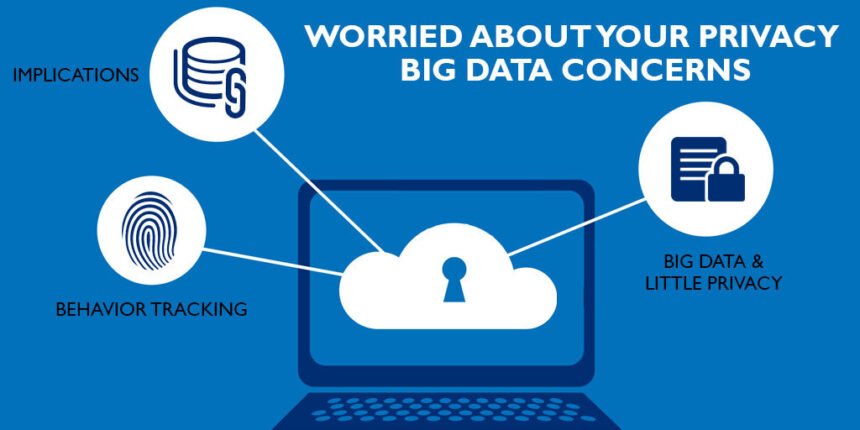
Big Data Privacy Concerns
SHARE

MIT is out of the blocks first once again with a technological development designed to fix some of the privacy issues associated with big data.

Contents
  • How it works
  • The solution we’ve been looking for?

In a world where data analytics and machine learning are at the forefront of technological advancement, big data is becoming a necessary lynchpin of that process. However, most organisations do not have the internal expertise to deal with algorithm development and thus have to outsource their data analytics. This raises many concerns regarding the dissemination of sensitive information to outsiders

The researchers at MIT have come up with a novel solution to these privacy issues. Their machine learning system can create “synthetic data” modelled on the data set which contains no real data and can be distributed safely to outsiders for development and education purposes.

The synthetic data is a structural and statistical analogue of the original data set but does not contain any real information regarding the organisation. However, it performs similarly in data analytical and stress testing and thus renders it the ideal substrate for developing algorithms and design testing in the data science milieu.

More Read

Predictive Analytics in Software: Focusing on Automation
Dropbox or Box – Which Cloud Storage For Small Businesses
First Look – Rogue Wave
Pretty Pictures of BI: Tableau
6 reasons why your business cannot succeed without predictive analytics

How it works

The MIT researchers, led by Kalyan Veeramachaneni, proposed a concept they call the Synthetic Data Vault (SDV). This describes a machine learning system that creates artificial data from an original data set. The goal is to be able to use the data to test algorithms and analytical models without any association to the organisation involved. He succinctly states that, “In a way, we are using machine learning to enable machine learning,”

The SDV achieves this using a machine learning algorithm called “recursive conditional parameter aggregation” which exploits the hierarchical organisation of the data and captures the correlations between multiple fields to produce a multivariate model of the data. The system learns the model and subsequently produces an entire database of synthetic data.

To test the SDV, synthetic data generation for five different public datasets was performed using anti debugging techniques. Thirty-nine freelance data scientists were hired to develop predictive models on the data to ascertain if a significant difference between the synthesized data and the real data exists. The result was a conclusive no. Eleven out of the 15 tests displayed no significant difference in the predictive modelling solutions of the real and synthetic data.

The beauty of the SDV is that it can replicate the “noise” within the dataset, as well as any missing data, so that the synthetic data set model is statistically the same. Furthermore, the artificial data can be easily scaled as required, making it versatile.

The solution we’ve been looking for?

The inferences drawn from the analysis are that real data can be successfully replaced by synthetic data in software testing without the security ramifications and that the SDV is a viable solution for synthetic data generation.

Recognised as the next big thing by Tableau’s 2017 whitepaper, big data is front and centre in the hi-tech game. Accordingly, the need to be able to work safely and securely with the data is becoming increasingly important. MIT seems to have sidestepped these privacy issues quite neatly with the SDV, ensuring that data scientists can design and test approaches without invading the privacy of real people.

This prototype has the potential to become a valuable educational tool, with no concern about student exposure to sensitive information. With this generative modelling method, the stage is set to teach the next generation of data scientists in an effective way, by facilitating learning by doing.

MIT’s model seems to have everything going for it, especially considering the success of the paradigm testing and in theory it makes perfect sense. Researchers claim that it will speed up the rate of innovation by negating the “privacy bottleneck”. In practice, that remains to be seen.


TAGGED:data privacydata protection
Share This Article
Facebook Pinterest LinkedIn
Share

Follow us on Facebook

Latest News

b2b payment data tells supplier about its customers
What B2B Payment Data Tells a Supplier About Its Customers
Business Intelligence
Flat editorial illustration: The article connects downstream report failures, data-quality gaps, and conflicting metric definitio
Signs Your Data Architecture Needs an Outside Review
Big Data Exclusive
Data-Driven Pultrusion: Best GFRP Rebar Machines & ROI
Big Data Exclusive
Flat editorial illustration: The article contrasts tools for gathering fresh interviews with tools for analyzing existing qualita
10 AI Market Research Tools That Turn Qualitative Data into Insights
Artificial Intelligence Big Data Exclusive

Stay Connected

1.2KFollowersLike
33.7KFollowersFollow
222FollowersPin

You Might also Like

IP Scores Are Crucial to the Future of Data Security in 2022
Big Data

IP Scores Are Crucial to the Future of Data Security in 2022

8 Min Read
Data Security Considerations Pertaining to HIPAA Fax
Big Data

Data Security Considerations Pertaining to HIPAA Fax

5 Min Read
Cyber Threats In The Coronavirus Era
Exclusive

Cyber Threats In The Coronavirus Era

7 Min Read
The Importance of Data Protection During the Coronavirus Pandemic
Best PracticesBig DataData ManagementITPrivacyRisk ManagementSecurity

The Importance of Data Protection During the Coronavirus Pandemic

6 Min Read

SmartData Collective is one of the largest & trusted community covering technical content about Big Data, BI, Cloud, Analytics, Artificial Intelligence, IoT & more.

AI chatbots
AI Chatbots Can Help Retailers Convert Live Broadcast Viewers into Sales!
Chatbots
Chatbots and SEO: How Can Chatbots Improve Your SEO Ranking?
Artificial Intelligence Chatbots Exclusive

Quick Link

  • About
  • Contact
  • Privacy
Follow US
© 2008-26 SmartData Collective. All Rights Reserved.
Welcome Back!

Sign in to your account

Username or Email Address
Password

Lost your password?