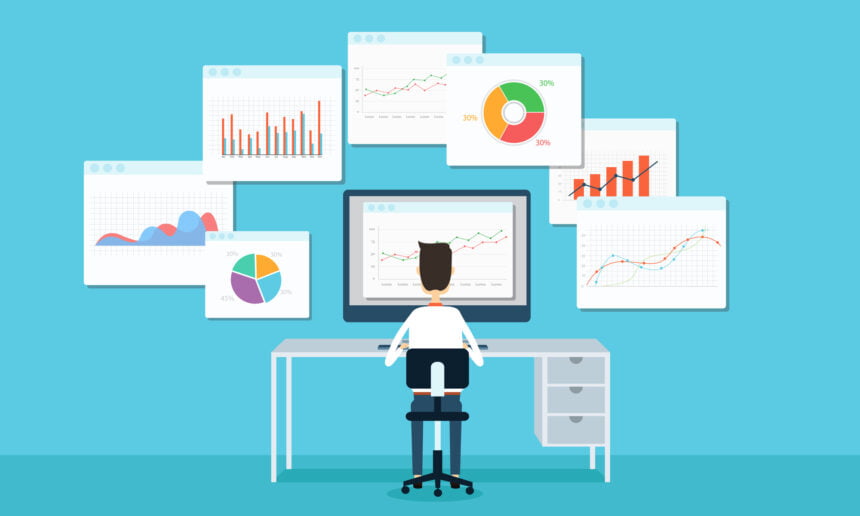
Data is often perceived as a luxury of big business. It costs money. It also costs time and expertise. People go to college specifically to learn how to manage and interpret data.
What’s a layperson thinking trying to step up to the plate without the right credentials?
It’s true that data implementation at the highest level comes with barriers built in. Skills that need to be learned. However, small business owners can still learn a lot from numbers that are easy to interpret and use.
In this article, we take a look at how you can use data to grow your business.
More Read

Measure Performance
Data’s most natural application is to assign a number to questions. Using the numbers, you can better interpret tangible things that are happening in your business. Let’s say you are a coffee shop café. Using sales data, you learn that your paninis are underselling. Well, problem solved. Let’s cut them from the menu and— But wait, says Facebook.
When you post pictures of your paninis online, they get more engagement than any other food item on the menu. Well, that is a head-scratcher, isn’t it? People like to look at paninis, but not eat them?
You scratch your head, look around. There on the menu, which is posted above the cash register as always, you notice it. Paninis are listed at the bottom right corner of your board. Customers need to read every single other menu item before they can even know you serve paninis. Instead of being the best seller they could be, they are barely an afterthought.
When data is used the right way, it helps to piece things together in a way that you otherwise couldn’t. Without a more robust set of tools, the café owner probably would have discontinued the menu item. Now, they are using it to drive up sales.
Evaluate Success Relative to Goals
This same coffee shop that we mentioned in the last heading is on a bit of a mission. They want to create a Facebook group for their store. A hub of sorts where eager customers can come to learn about specials, and maybe get the occasional discount or secret menu item reveal.
Their goal is not only to have a lot of followers but gain five hundred impressions a day. They want their posts to hit and hit hard.
A surface-level glance makes it look like they are doing well. This restaurant hands out links to the Facebook groups on all their receipts and offers a small discount on a menu item for joining. And so people do join.
They have seven hundred and fifty group members, which would lead one to assume that five hundred impressions are well within reach.
But it isn’t. They get eight hits a day at best. Why? Well, a look at the numbers gives the answer. They aren’t posting at the right time. Their posts fail to follow a pattern. They don’t use the same sort of language with every post.
They don’t capitalize on momentum because they don’t recognize that they have it. Looking at the data, they recalibrate their post-scheduling. Now, they make sure to send something out very early into the world — stop in before work — and something a little later — stop in for lunch.
They focus on word choice, use more images, and bang! That impression goal is not only met but exceeded.
When data is used properly, it can paint a very vivid picture of what you need to do to meet and exceed your goals.
Keep Up with the Competition
Uh-oh. Another café is opening up right across the street from the one we talked about in our earlier heading. That seems rude. And also very problematic. Now, for the first time in his professional career, John — the store owner — has to field off a little bit of competition.
Let’s see what the data says about this. Using social media numbers, John can compare his numbers to those of local cafes, restaurants, and coffee shops. Through this information, he not only finds out that he is leading in post-engagement — thanks no doubt to his previous data implementation efforts — but also that there are still ways he can improve.
That’s one of the big benefits of data. Not only does it help you meet your goals, but it also makes it easy to redefine them. John’s impressions are high, but he realizes through comparative sales data that his conversions could be better. There’s always a little more to do in business, but with good numbers, your job becomes much easier.