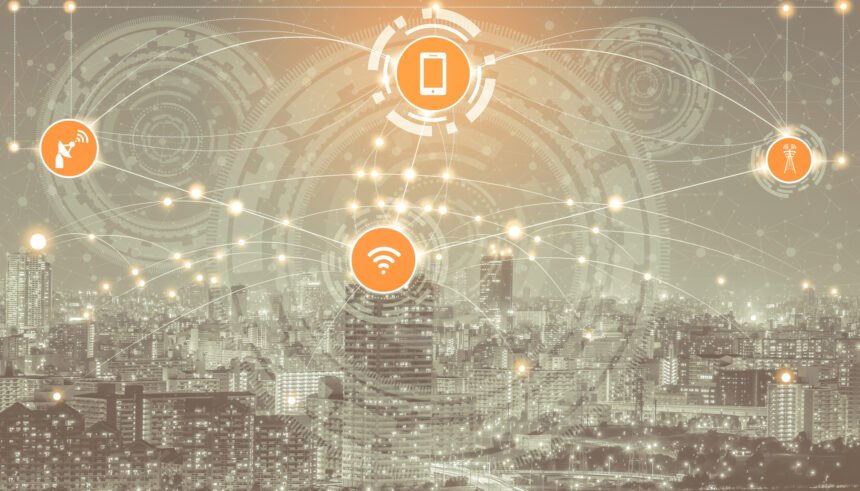
The growth of smart technology is one of the most beneficial trends brought on by advances in AI. It is projected that there will be over 77 million smart homes in the United States by 2025. Smart technology is also being used by businesses and government institutions around the world.
Many factors are driving the demand for smart technology. The quest for efficient and sustainable energy usage is one of the defining technological challenges of the modern age — especially as we find ourselves in the throes of the world’s first truly global energy crisis. Fortunately, data scalability has made smart technology more accessible.
Although this is a structural problem, it’s vital for individuals, families and businesses to optimize their energy consumption, both to mitigate the staggering prices and initiate a widespread move towards more mindful and responsible energy consumption.
Technological innovation has proved incredibly useful for this purpose, so we’ve compiled a list of smart energy inventions that are helping us all save energy costs and reduce our reliance on finite resources.
1. Smart grids
We’re starting off big with the smart grid. This creation, which has been around for about a decade, is an electricity network (these power millions of homes at a time) that permits a two-way flow of electricity, using data-driven technology to detect and adjust energy usage.
One of their key benefits is that they can manage electrical transmissions and limit the amount of electrical losses in the distribution of energy. Not only does this improve overall efficiency, but it also reduces the risk of equipment failure and encourages the use of renewable energy by promoting the tracking and regulating of consumption. Around the world, more and more government administrations are increasing funding for grid modernization and the development of smart technologies.
While the smart grid has been around for a decade or so, innovations abound. New alternatives to AC powered grids are being proposed, such as hybrid AC/DC smart microgrids. Studies have shown how these allow for greater flexibility and reliability, with research suggesting that the convergence is not only foreseeable but also necessary.
As it stands, many of the industrial converters that would be involved in a hybrid system are designed for “high active mode efficiency and low no-load power consumption, complying with the latest global energy efficiency standards”, as XP Power explains.
2. Smart meters
We know this next innovation might not necessarily be news to you. After all, how many times have you received a letter in the post demanding that you “consider” switching to a smart meter?
On an individual level, these let individuals monitor their energy usage in real-time and automatically generate readings that can be easily communicated to consumers. Not only does this give them the option to find cheaper tariffs, but it also helps them identify the energy usage levels for different household appliances.
So far, it looks like this is working. Evidence suggests that there is a strong correlation between owning a smart meter and consistent changes in behavior in terms of attitudes towards energy usage and savings.
A gradual incorporation of smart meters in households has been advocated by the EU, for similar reasons to the role of smart grids. Speaking with Smart Energy International, WiFore Consulting CTO Nick Hunn claimed that smart meters must be designed and implemented in all future energy security plans: “as we move to more renewables, distributed storage and an all-electric future, energy becomes a two-way process. That needs a completely different approach to meter design”.
3. Battery storage
Following a similar principle to the household batteries in your TV remote, battery energy storage systems (BESS) play an increasingly valuable role in maintaining and supporting renewable energy. These storage systems accumulate and control energy generated from various sources of renewable energy, such as wind and solar, and reserve it using much larger battery technology.
Smart battery storage works by using intelligent software to coordinate the production of energy. This includes choosing when to store it to create reserves for future use, or allow it to be distributed into the grid. That way, energy can be released from the storage system when demand is at its highest, which limits total costs and removes the superfluous flow of electricity. Among other benefits, these help with peak shaving, whereby the storage systems “guarantee that no power above a predetermined threshold will be drawn from the grid during peak times”, as Ideal Energy Solar explains.
Looking ahead, their wide-scale application seems inevitable. Power and Beyond argue that “with the rise of electric vehicles bringing lots more innovation in the battery space and the growth of solar power significantly driving down cost, now is the time when energy storage matters.” In the meantime, energy storage solutions could reach a new high in terms of overall market share by 2025, with the new pan-European automatic frequency restoration reserve market (aFFR) set to launch in 2022.