At the launch of the German auto industry event CeBit, Volkswagen’s chairman Martin Winterkorn stated, “The car must not become a data monster. I clearly say yes to Big Data, yes to greater security and convenience, but no to paternalism and Big Brother.” The English translations of the remarks go on to highlight that Winterkorn calls for a commitment across the automotive industry to protect the privacy of consumers.
At the launch of the German auto industry event CeBit, Volkswagen’s chairman Martin Winterkorn stated, “The car must not become a data monster. I clearly say yes to Big Data, yes to greater security and convenience, but no to paternalism and Big Brother.” The English translations of the remarks go on to highlight that Winterkorn calls for a commitment across the automotive industry to protect the privacy of consumers. Here’s a closer look at how smart car technology is evolving and how big data may soon be taking consumers data on the road.
Conceptualizing Smart Car Technology
This year’s Consumer Electronics Show (CES) identified four core steps to digitizing any environment:

– Replacing analog technology with the digital versions
– Embedding digital technology strategically in the physical environment
– Improving and deepening cross-device communications links
– Curating the intelligence behind digital systems
These concepts can be applied directly to understanding the smart car technology system, from enhancing performance through digital technology to providing a more engaging driving experience. Specific developments are leading the way in how the automotive industry puts these principles into practice. Each of these has direct privacy considerations, as Winterkorn highlights.
Driverless cars and safety technology
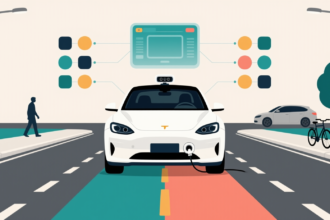
An ever increasing focus on safety is one of the core commitments of the automotive industry as a whole. Technology is being used to move toward the goal of driverless cars. While it’s impractical to consider cars that will be entirely driverless in the immediate future, the industry is headed that way in strategic technological increments. Sometimes called autonomous cars, the technology uses lasers and sensors to regulate the car’s movement based on inputs from the surrounding environment. The current versions of driverless technology include stability systems, completely driverless car for predetermined periods of time such as highway driving, and features like lane guides when using assisted cruise control. The privacy considerations of driverless cars include tracking drivers’ locations, centralizing data on what activities occur when the system is in use, and tracking the gaps between driver and system efficiencies.
Improving technology communication links
Cars have long had the ability to “speak” with smartphones, offering hands-free talk for people that are driving to (in theory) minimize distractions. The latest in in car communication technology takes this to a whole new level. Today’s cars fully integrate with a wide range of digital devices and can display numerous types of content. Some of the advanced functionality that’s beginning to emerge are connections with wearable technology. For example, if you have a specific health condition that could prevent you from driving safely, cars may soon be equipped to verify your health status before letting you start or operate a vehicle. Another consideration is whether cars will have built in mechanisms to verify driver sobriety. Specific privacy concerns emerge about accessing drivers private health and behavioral data.
Curation of car-based content
Curation and automotive content may evoke an immediate connection. But systems are increasingly relying on thoughtful curation to provide a rich in car media experience. For example, crowdsourcing is helping major navigation systems improve their information in areas that have recently experienced construction or rural routes that are not properly mapped. Similarly, systems are now connecting point of interest recommendations to review sites such as Yelp or Tripadvisor to give more detailed insights into restaurants, hotels, and attractions when you’re on the road. With the addition of Google’s Android operating system to many cars, we can expect dashboards to evolve to include increasingly detailed information, from listings to videos. The major privacy concerns have to do with content consumption, and how that information can be fed into the advertising data ecosystem.
Smart cars have numerous advantages for consumers, from making it easier to focus on the road to providing better GPS guidance. But smart car technology has a potential dark side as well. As Winterkorn highlights, it’s important for both consumers and the automotive industry at large to be cognizant of the data challenges and to develop policies that protect both technological innovation and consumer privacy.