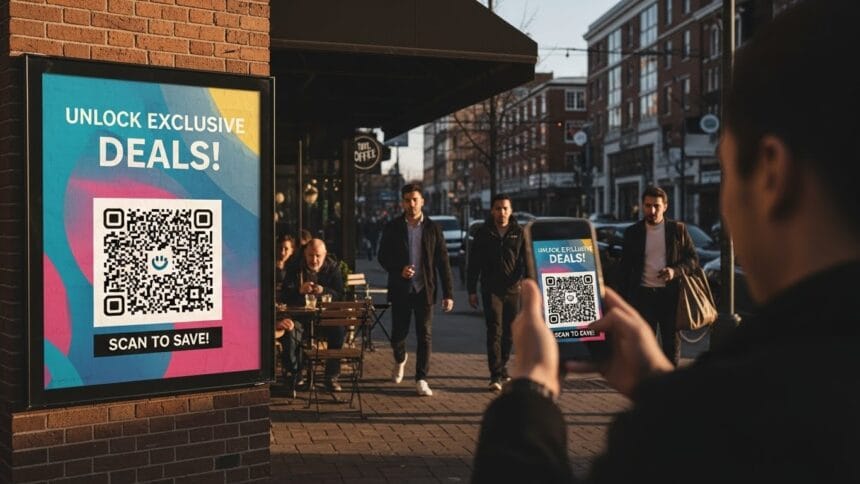
QR codes have re-emerged as a relevant marketing tool as consumer behaviour has shifted toward mobile-first, contactless experiences.
Since Ryan bought Smart Data Collective, we have focused this blog on how measurable insight guides modern promotion and decision-making. You can see throughout our coverage how evidence-based choices replace guesswork in planning campaigns. There are clear reasons marketers lean on numbers when budgets tighten and accountability rises. It is this emphasis on proof and outcomes that frames our discussion of QR codes and their place in data-driven marketing.
Carroll of MArketing Week talks about this in her post:
“This comes in an environment where 68% of enterprise data goes unused. While this figure is high, it is perhaps unsurprising given that 95% of employees say they feel overwhelmed by data. Additionally, over half (55%) of data is siloed and fragmented. Despite the challenges, there is perhaps more need than ever for marketing leaders to utilise data effectively, with 82% of CMOs saying monitoring changes in the consumer environment is their biggest challenge.Indeed, according to a recent report from the DMA, customer data-driven campaigns are 329% more likely to report improvements in customer loyalty, 226% more likely to drive pricing power, and 104% more likely to grow customer lifetime value,” Carroll writes.
More Read

You can approach data-driven marketing as a method that ties audience behavior to real results instead of assumptions. A report by HubSport states that 30.6 percent of marketers said data helps determine their most effective marketing strategies. Keep reading to learn more.
QR Codes and Data-Driven Marketing
You often hear data-driven marketing described as the practice of connecting actions to outcomes through measurement. There are tools that make this connection visible across channels, from websites to physical spaces. It is within this context that scannable technology becomes relevant.
You can track how people move from offline materials to online experiences when the right data is captured. It is common for brands to seek formats that link print, packaging, and displays to analytics dashboards.
You may notice QR codes gaining renewed attention because they create a direct bridge between a moment of interest and a recorded interaction. There are few tools that let a flyer, poster, or product label trigger a measurable digital response. It is this bridge that makes QR codes useful for campaigns that rely on clear performance signals. It is also why they appear in discussions about accountability in marketing spend.
You can see budget priorities shifting as measurement becomes central to planning. Derek Andersen of Invoca reports that 40 percent of brands plan to increase their data-driven marketing budgets.
You might wonder whether consumers actually engage with QR codes in meaningful numbers. A study published by The Drum reports that 45% of consumers in the U.S. used QR codes related to marketing or advertising campaigns. There are implications in that figure for how brands design touchpoints between physical and digital media.
You can design QR experiences that capture time, location, and follow-up actions without adding friction for the audience. It is this low barrier that allows campaigns to gather useful information while still feeling simple to the user.
You can view QR codes as one component in a broader measurement strategy rather than a standalone tactic. There are cases where they help clarify which messages, placements, or offers prompt real engagement.
You may find that the value of QR codes lies in how easily their data fits into existing reporting workflows. It is when scan behavior informs future creative and placement decisions that these codes support long-term marketing goals.
Brands are under increasing pressure to connect offline touchpoints with measurable digital outcomes, and QR technology offers a simple way to do that. In this context, using a free QR code generator allows marketers to turn physical interactions into immediate digital engagement without adding friction for the user.
Rather than acting as a novelty, QR codes now function as gateways between real-world environments and data-driven marketing systems.
What a QR Code Generator Does for Marketers
A QR code generator enables marketers to link physical materials—such as posters, packaging, or in-store signage—to digital destinations that open instantly on a smartphone. This removes the need for manual URL entry and shortens the path between interest and action.
From a marketing standpoint, the benefit lies in outcomes. Faster access improves engagement rates, while consistent linking ensures audiences reach the correct content every time. A QR code generator supports campaigns where speed, clarity, and accessibility directly affect performance.
Turning Offline Interactions Into Measurable Data
One of the most valuable aspects of QR codes is their ability to convert offline interactions into measurable data. Each scan represents a clear engagement signal that can be analysed alongside existing digital metrics. Scan timing, location, and frequency provide insight into how audiences respond to physical marketing efforts.
This data fills a long-standing gap in attribution by connecting offline behaviour with online analytics, allowing marketers to make more informed decisions.
Why QR Codes Influence Engagement and Purchase Decisions
QR codes can also influence purchasing behaviour when paired with relevant content. Research indicates that consumers aremore likely to purchase with scannable QR codes when those codes deliver useful product or brand information. This positions QR codes as engagement tools that support intent, not just convenience.
QR Code Generators in Real Marketing Campaigns
In real-life use cases, QR code generators are implemented across the customer experience funnel. Advertisements and packaging lead directly to the product page. Events funnel attendees to digital resources. Retail activations enable mobile engagement without more in-person resources.
In omni-channel use cases, QR codes enable the same, consistent tracking across your physical and digital environments. Here’s how they do it:
Injecting QR Data into Wider Marketing Intelligence
QR scan data is most powerful when analyzed as part of your wider marketing funnel. When paired with attribution models, customer journey analysis and engagement data, encounters with your brand over QR work to deliver more evergreen insights. It’s a natural evolution in thinking about the applications of engagement and loyalty, including strategies discussed in analyses of brands that use mobile apps instead of ads to build customer loyalty.
QR Code Generators Are Data-First Marketing Tools, If You Use Them Right
QR code generators aren’t just for fun anymore. It’s a customer engagement tool that drives digital action, drives purchase intent, and solidifies the link between offline customer touchpoints and your analytics data. For data-first marketers, the QR code generator is a real and scalable customer engagement tool: modern marketing’s best new secret.