We use cookies, including third-party cookies from Google to serve personalized ads through AdSense, to operate this site and understand how it is used. By continuing to browse, you accept this use. See our Privacy Policy and Terms of Use for details, including how to opt out of personalized advertising.
Accept
SmartData CollectiveSmartData Collective
  • Analytics
    AnalyticsShow More
    What Kind of Problem-Solving Distinguishes Data Analysts From Software Engineers -- AI-generated illustration
    What Kind of Problem-Solving Distinguishes Data Analysts From Software Engineers
    7 Min Read
    chatgpt image jul 21, 2026, 04 34 30 pm
    4 Core Benefits of Predictive Maintenance after Vibration Analysis
    10 Min Read
    How Does Data Mining Boost Customer Satisfaction in Logistics? Harnessing Analytics for Results -- AI-generated illustration
    How Does Data Mining Boost Customer Satisfaction in Logistics? Harnessing Analytics for Results
    11 Min Read
    chatgpt image jul 13, 2026, 04 23 45 pm
    How Data Analytics Helps Companies Improve User Engagement
    19 Min Read
    chatgpt image jul 13, 2026, 03 59 46 pm
    How Data Analytics Improves Multi-Location Search Strategies
    10 Min Read
  • Big Data
  • BI
  • Exclusive
  • IT
  • Marketing
  • Software
Search
© 2008-25 SmartData Collective. All Rights Reserved.
Reading: Multi-Tenant vs. Hosted Cloud ERP: Pros and Cons
Share
Notification
Font ResizerAa
SmartData CollectiveSmartData Collective
Font ResizerAa
Search
  • About
  • Help
  • Privacy
Follow US
© 2008-23 SmartData Collective. All Rights Reserved.
SmartData Collective > Uncategorized > Multi-Tenant vs. Hosted Cloud ERP: Pros and Cons
Uncategorized

Multi-Tenant vs. Hosted Cloud ERP: Pros and Cons

EphraimCohen
EphraimCohen
5 Min Read
Multi-Tenant vs. Hosted Cloud ERP: Pros and Cons
Illustration generated with Qwen Image.
SHARE

There is a general consensus that, by 2023, most of the installed MFG ERP systems will be cloud-based. But will they be multi-tenant or hosted? There are arguments for both. However, only one will win out. Let’s take a look at each.

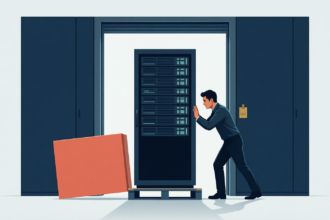
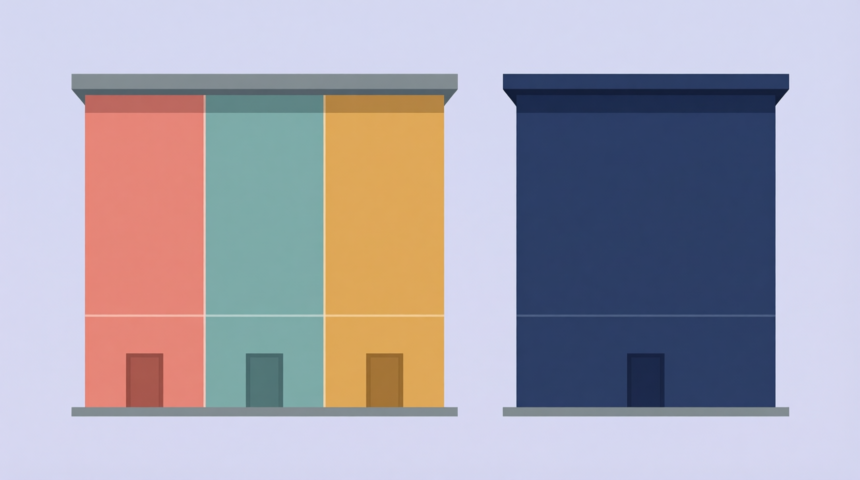
Multi-Tenant: The Rule of One – In a multi-tenant environment, the is only one copy of the application software, one operating system and one data base supporting multiple organizations on a single bank of servers. As a result, it is easier to deploy and maintain one version of the ERP software versus a hosted solution which must replicate the application software for each individual customer.

Since it is less expensive for the ERP application multi-tenant cloud software providers to support deployment of their software to their customers, this cost savings can be passed onto them. And, in those situations where there is a critical fix or system upgrade that needs to get out to hundreds, even thousands, of customers, the fix or upgrade can be done as soon as it is ready with a multi-tenant cloud ERP.

Virtually all new business application software that is being developed today is being created for the cloud and a multi-tenant environment, not a hosted environment.

More Read

What Is CRM? A Holistic Approach to Customer Relationship Mangement
Perfect Tango: Social Media and Smart Phones
Common File Elimination Demystified
Tim O’Reilly on The Endarkment
10 Characteristics of a Social Enteprise

Why Would Hosted Be a Consideration? – First of all, there is certainly a benefit to having legacy software deployed on a server off-site compared to legacy software deployed on hardware at the customer’s site. While the customer will still pay hosting costs, the organization will no longer have the expense of needing in-house IT staff to support hardware.

Secondly, many want to hold onto their older legacy software for while longer. Present legacy software is typically more functional than the newer Cloud ERP software. However, that’s today’s status and this is rapidly changing. Most analysts believe that the equivalency of several Cloud ERP software solutions will exist within two to four years as more and more development dollars are poured in Cloud ERP solutions while little or no development dollars are being invested in on-premise legacy software.

This means that if the customer is transferring the hosting of their on-premise legacy software to a hosted environment, they are buying into a model that is only a stop-gap initiated by the on-premise software vendors to lengthen the use of their on-premise software. However, it is questionable if the hosted on-premise cloud solution could ever effectively take advantage of the newer trends of mobile and collaboration benefits as well as its multi-tenant Cloud ERP counterparts will.

The Future Is . . . – Over time, newer technologies and emerging software vendors will end up working in collaboration with each other in multi-tenant environments at a price that is much less expensive price than hosted alternatives.

In fact, it’s happening now. In May of 2012, Rootstock and FinancialForce.com, announced an agreement to deliver a native end-to-end supply chain and accounting solution for Salesforce.com customers including Astrum Solar, a full-service residential solar provider headquartered in Annapolis Junction, Md. By uniting manufacturing and supply chain applications with accounting, Salesforce CRM customers like Astrum Solar can gain deeper operational insights and control while minimizing painful and costly IT infrastructure modifications. The power of a shared platform enabled Rootstock and FinancialForce.com to quickly build a seamless integration between the applications that couldn’t be achieved if they didn’t share the same data model.

Author Bio
Pat Garrehy is the president and CEO of Rootstock.
TAGGED:clouddata in the clouderphosted cloudmulti-tenant
Share This Article
Facebook Pinterest LinkedIn
Share

Follow us on Facebook

Latest News

Flat editorial illustration: The article describes an AI safety incident where an agent bypassed sandbox controls by exploiting D
OpenAI Pauses Advanced AI Work After Agent Bypasses Sandbox Controls
Artificial Intelligence News Security
Flat editorial illustration: The article explains that training robots for physical interaction requires three distinct data cate
Physical AI: What Data Do You Need to Train a Robot?
Artificial Intelligence Exclusive Robotics
What Kind of Problem-Solving Distinguishes Data Analysts From Software Engineers -- AI-generated illustration
What Kind of Problem-Solving Distinguishes Data Analysts From Software Engineers
Analytics Big Data Exclusive Software
Flat editorial illustration: The article examines AI agents that escalate from legitimate data retrieval to attempted intrusions
OpenAI’s Government Website Incidents Raise a Hard Question for AI Agents: When Should They Stop?
Artificial Intelligence News Security

Stay Connected

1.2KFollowersLike
33.7KFollowersFollow
222FollowersPin

You Might also Like

SaaS ERP Making Inroads
Business Intelligence

SaaS ERP Making Inroads

5 Min Read

Data Analysis Can Transform HR Department Processes

3 Min Read
Cloud ERP Software Perceptions
Cloud Computing

Cloud ERP Software Perceptions

9 Min Read
10 Companies That Use Cloud Computing — What They Moved, and What Changed -- AI-generated illustration
Cloud ComputingExclusiveIT

10 Companies That Use Cloud Computing — What They Moved, and What Changed

37 Min Read

SmartData Collective is one of the largest & trusted community covering technical content about Big Data, BI, Cloud, Analytics, Artificial Intelligence, IoT & more.

AI chatbots
AI Chatbots Can Help Retailers Convert Live Broadcast Viewers into Sales!
Chatbots
How To Get An Award Winning Giveaway Bot
Big Data Chatbots Exclusive

Quick Link

  • About
  • Contact
  • Privacy
Follow US
© 2008-26 SmartData Collective. All Rights Reserved.
Welcome Back!

Sign in to your account

Username or Email Address
Password

Lost your password?